

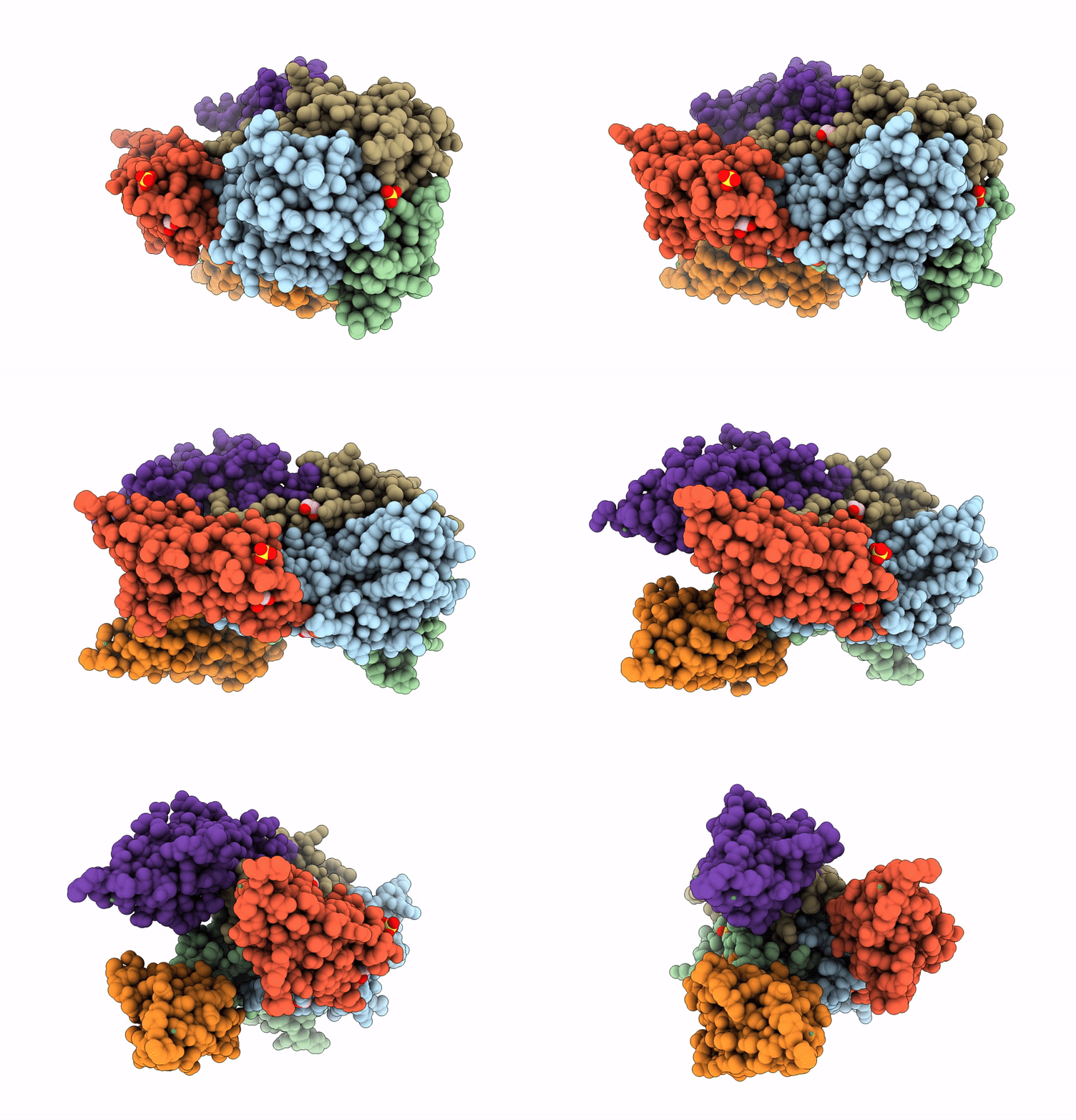
9BN7 image
Deposition Date 2024-05-02
Release Date 2025-11-05
Last Version Date 2026-05-20
Entry Detail
PDB ID:
9BN7
Title:
X-ray crystal structure of TNFa-VNAR C4 complex
Biological Source:
Source Organism(s):
Homo sapiens (Taxon ID: 9606)
Squalus acanthias (Taxon ID: 7797)
Expression System(s):
Method Details:
Experimental Method:
Resolution:
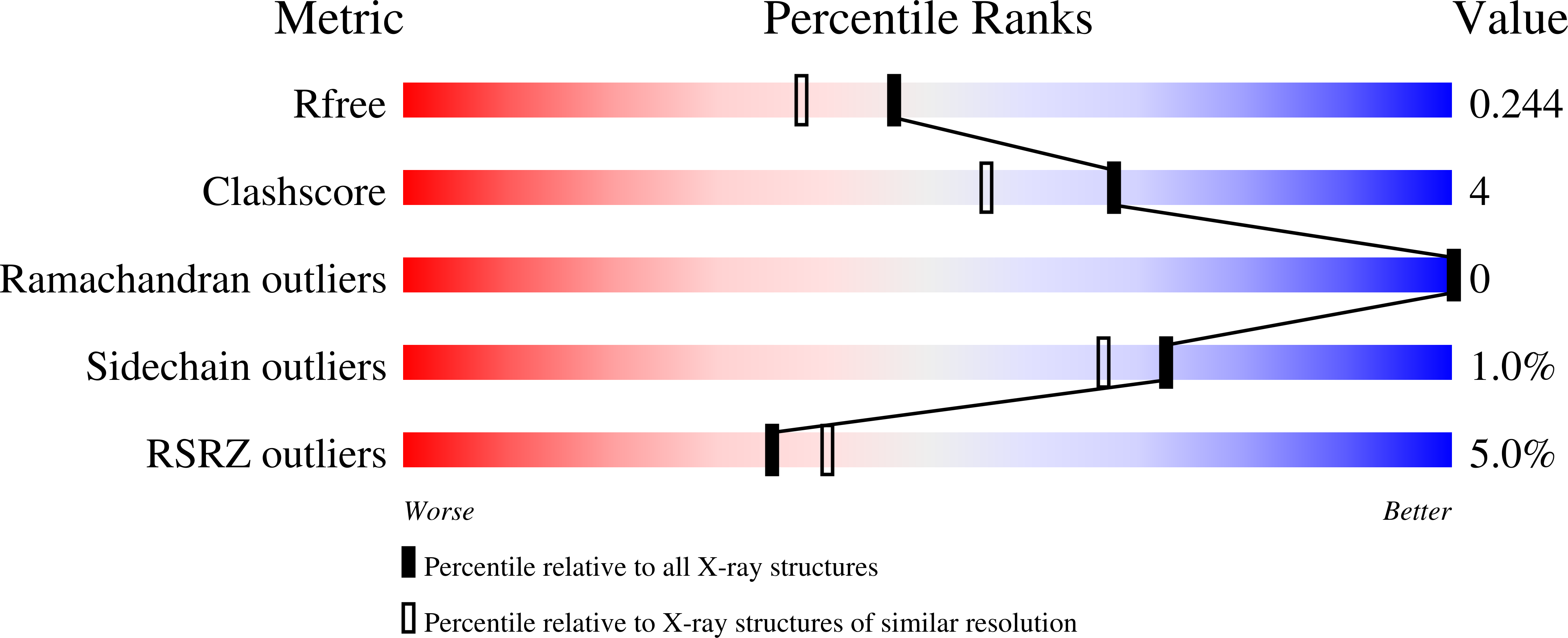
1.92 Å
R-Value Free:
0.24
R-Value Work:
0.19
R-Value Observed:
0.20
Space Group:
C 2 2 21
Macromolecular Entities
Structures with similar UniProt ID
Protein Blast
Polymer Type:polypeptide(L)
Molecule:Tumor necrosis factor
Gene (Uniprot):TNF
Chain IDs:A, B, C
Chain Length:157
Number of Molecules:3
Biological Source:Homo sapiens
Protein Blast
Polymer Type:polypeptide(L)
Molecule:VNARC4
Chain IDs:D, E, F
Chain Length:115
Number of Molecules:3
Biological Source:Squalus acanthias
Primary Citation
The structural basis for the selective antagonism of soluble TNF-alpha by shark variable new antigen receptors.
Nat Commun 17 256 256 (2025)
PMID: 41318641 DOI: 10.1038/s41467-025-66967-3

Abstact

The pro-inflammatory cytokine tumor necrosis factor-alpha (TNF-alpha) is synthesized as transmembrane TNF-alpha (tmTNF-alpha) where proteolytic processing releases soluble TNF-alpha (sTNF-alpha). tmTNF-alpha can act as either a ligand by activating TNF receptors, or a receptor that transmits reverse (outside-to-inside) signalling after binding to native receptors. All TNF-alpha therapies bind tmTNF-alpha and induce reverse signalling which can result in immunosuppression leading to infection. We present crystal structures of two anti-TNF-alpha Variable New Antigen Receptors (VNARs) in complex with sTNF-alpha via two distinct epitopes. The VNAR-D1 recognizes an epitope that selectively engages sTNF-alpha while VNAR-C4 binds an epitope that partially overlaps with other biologic therapies. In activated CD4(+) T cells, our VNARs do not induce reverse signalling in contrast to currently available therapies. Our findings suggest that neutralization through a unique mechanism may lead to anti-TNF-alpha agents with an improved safety profile that will benefit high-risk patients.

Legend

Protein

Chemical

Disease

Primary Citation of related structures
Feedback Form
Name
Email
Institute
Feedback