

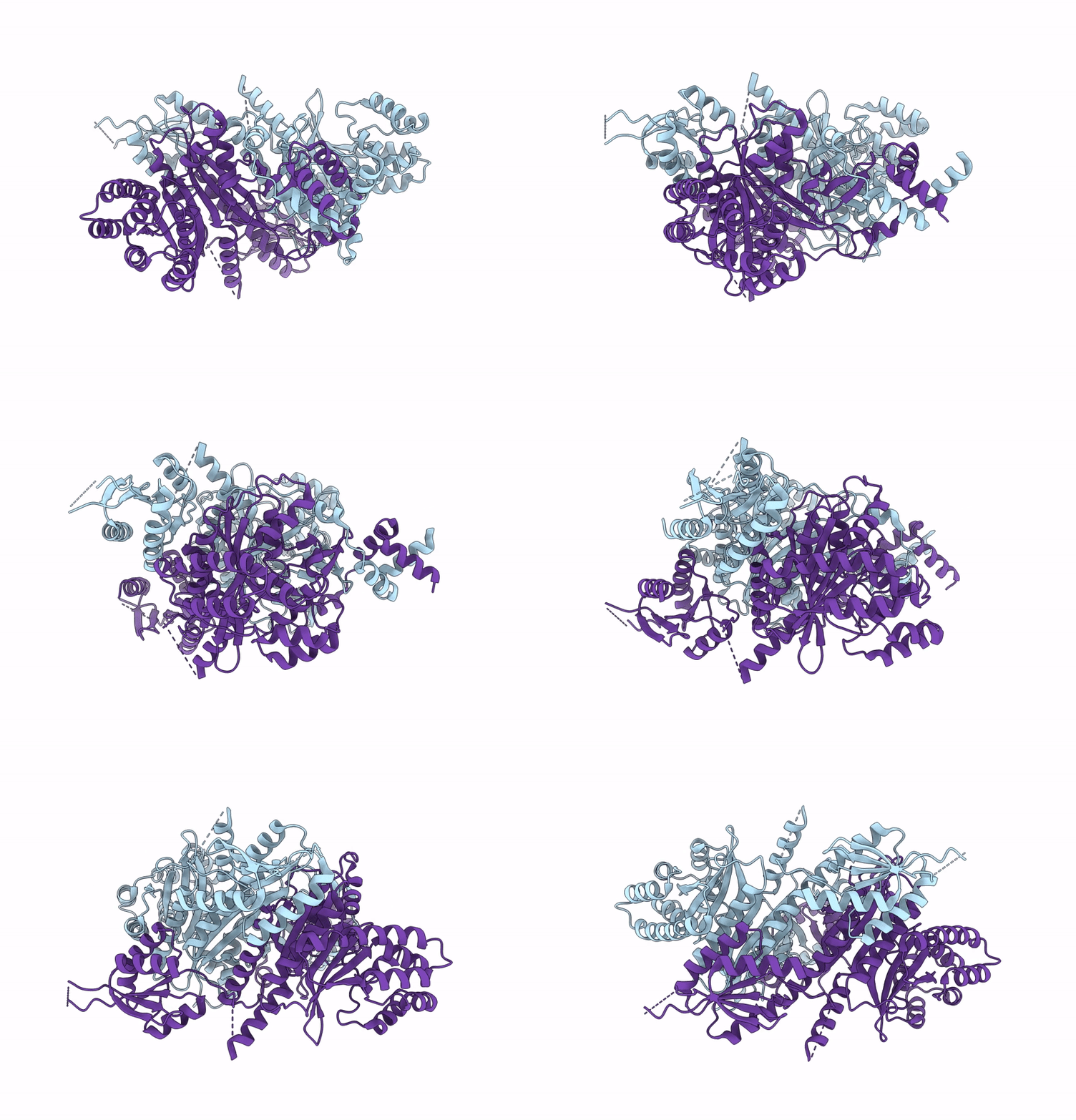
9BF3 image
Deposition Date 2024-04-16
Release Date 2024-12-18
Last Version Date 2026-07-01
Entry Detail
PDB ID:
9BF3
Title:
Cryo-EM Structure of GCN2 HRSL Domain
Biological Source:
Source Organism(s):
Method Details:
Experimental Method:
Resolution:
3.18 Å
Aggregation State:
PARTICLE
Reconstruction Method:
SINGLE PARTICLE
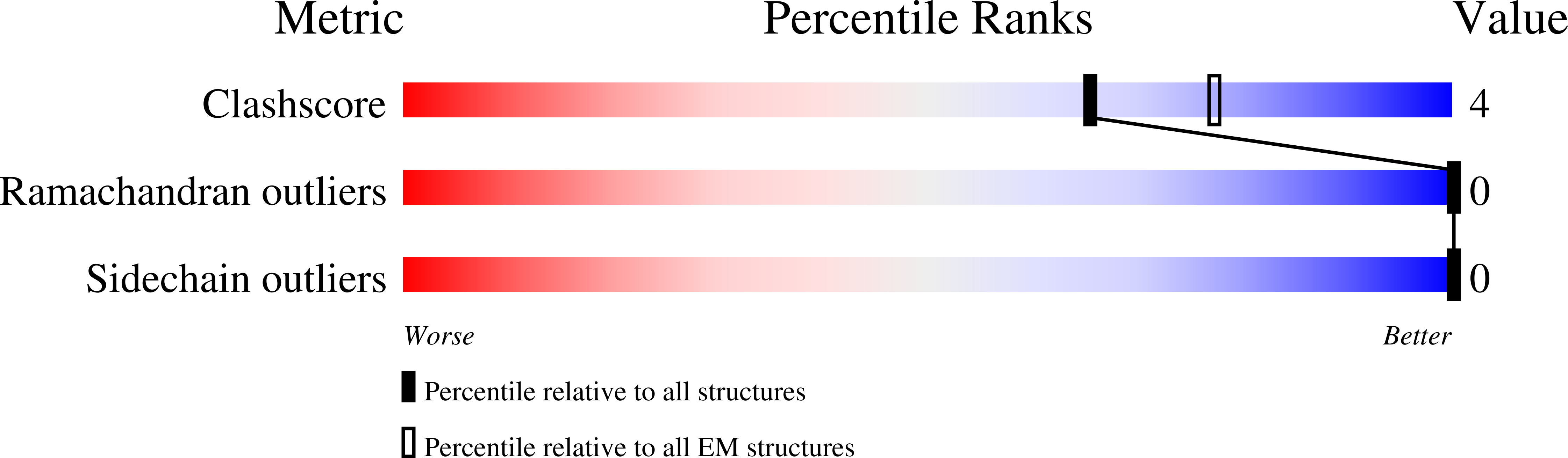
Macromolecular Entities
Polymer Type:polypeptide(L)
Molecule:non-specific serine/threonine
Gene (Uniprot):GCN2
Chain IDs:A, B
Chain Length:1673
Number of Molecules:2
Biological Source:Kluyveromyces marxianus
Ligand Molecules
Primary Citation
Cryo-EM structure of histidyl-tRNA synthetase-like domain reveals activating crossed helices at the core of GCN2.
Pnas Nexus 3 pgae528 pgae528 (2024)
PMID: 39618511 DOI: 10.1093/pnasnexus/pgae528

Abstact

GCN2 is a conserved receptor kinase activating the integrated stress response (ISR) in eukaryotic cells. The ISR kinases detect accumulation of stress molecules and reprogram translation from basal tasks to preferred production of cytoprotective proteins. GCN2 stands out evolutionarily among all protein kinases due to the presence of a histidyl-tRNA synthetase-like (HRSL) domain, which arises only in GCN2 and is located next to the kinase domain (KD). How HRSL contributes to GCN2 signaling remains unknown. Here, we report a 3.2 A cryo-EM structure of HRSL from thermotolerant yeast Kluyveromyces marxianus. This structure shows a constitutive symmetrical homodimer featuring a compact helical-bundle structure at the junction between HRSL and KDs, in the core of the receptor. Mutagenesis demonstrates that this junction structure activates GCN2 and indicates that our cryo-EM structure captures the active signaling state of HRSL. Based on these results, we put forward a GCN2 regulation mechanism, where HRSL drives the formation of activated kinase dimers. The remaining domains of GCN2 have the opposite role and in the absence of stress they help keep GCN2 basally inactive. This auto-inhibitory activity is relieved upon stress ligand binding. We propose that the opposing action of HRSL and additional GCN2 domains thus yields a regulated ISR receptor.

Legend

Protein

Chemical

Disease

Primary Citation of related structures
Feedback Form
Name
Email
Institute
Feedback