

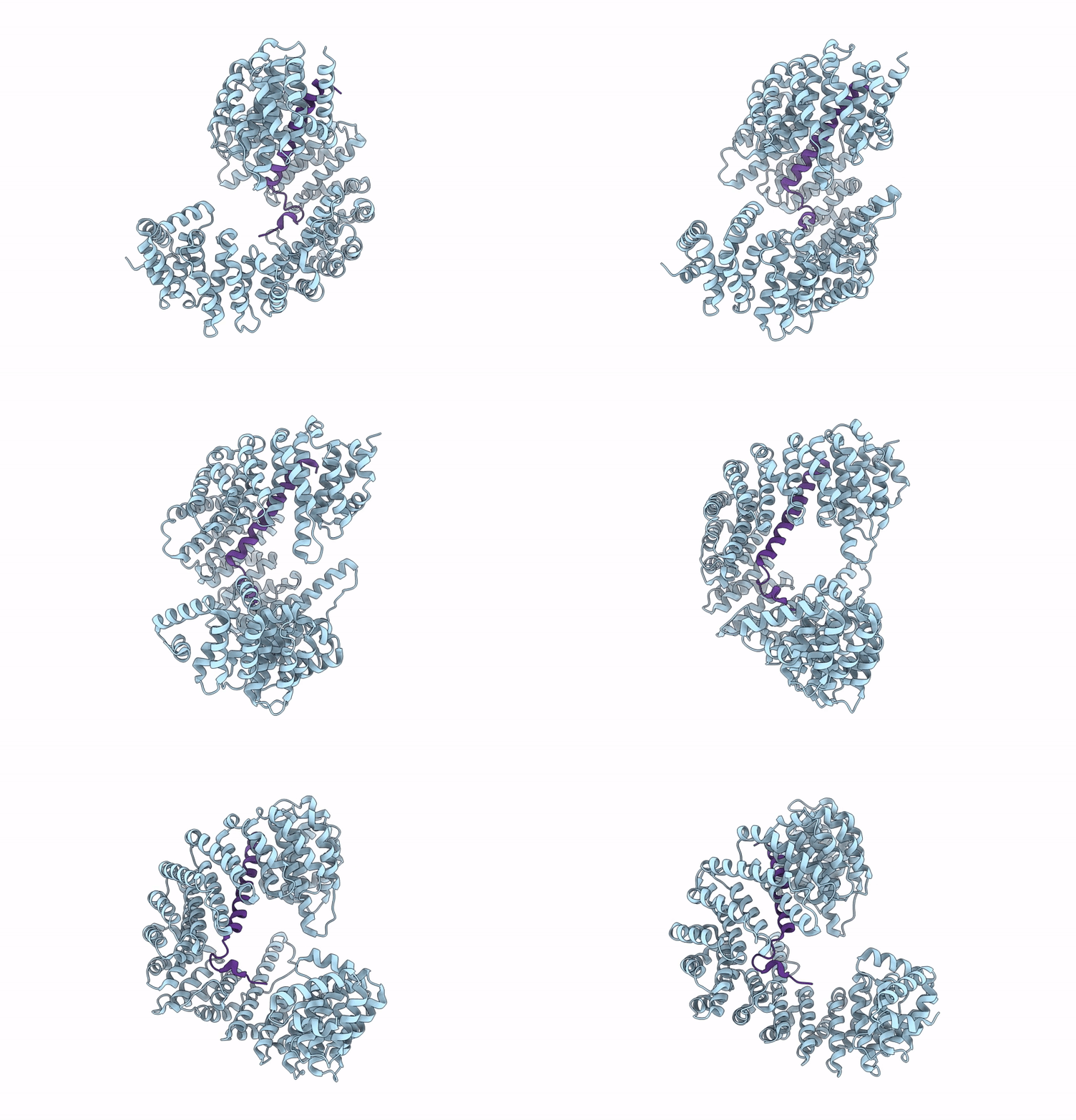
9B4Y image
Deposition Date 2024-03-21
Release Date 2025-03-26
Last Version Date 2026-04-08
Entry Detail
PDB ID:
9B4Y
Title:
Cryo-EM structure of importin alpha-1/beta bound to TDP-43
Biological Source:
Source Organism(s):
Homo sapiens (Taxon ID: 9606)
Expression System(s):
Method Details:
Experimental Method:
Resolution:
3.74 Å
Aggregation State:
PARTICLE
Reconstruction Method:
SINGLE PARTICLE
Macromolecular Entities
Structures with similar UniProt ID
Protein Blast
Polymer Type:polypeptide(L)
Molecule:Importin subunit beta-1
Gene (Uniprot):KPNB1
Chain IDs:A
Chain Length:876
Number of Molecules:1
Biological Source:Homo sapiens
Structures with similar UniProt ID
Protein Blast
Polymer Type:polypeptide(L)
Molecule:Importin subunit alpha-1
Gene (Uniprot):KPNA2
Chain IDs:B
Chain Length:43
Number of Molecules:1
Biological Source:Homo sapiens
Ligand Molecules
Primary Citation
Single Acetylation-mimetic Mutation in TDP-43 Nuclear Localization Signal Disrupts Importin alpha 1/ beta Signaling.
J. Mol. Biol. 436 168751 168751 (2024)
PMID: 39181183 DOI: 10.1016/j.jmb.2024.168751

Abstact

Cytoplasmic aggregation of the TAR-DNA binding protein of 43 kDa (TDP-43) is the hallmark of sporadic amyotrophic lateral sclerosis (ALS). Most ALS patients with TDP-43 aggregates in neurons and glia do not have mutations in the TDP-43 gene but contain aberrantly post-translationally modified TDP-43. Here, we found that a single acetylation-mimetic mutation (K82Q) near the TDP-43 minor Nuclear Localization Signal (NLS) box, which mimics a post-translational modification identified in an ALS patient, can lead to TDP-43 mislocalization to the cytoplasm and irreversible aggregation. We demonstrate that the acetylation mimetic disrupts binding to importins, halting nuclear import and preventing importin alpha1/beta anti-aggregation activity. We propose that perturbations near the NLS are an additional mechanism by which a cellular insult other than a genetically inherited mutation leads to TDP-43 aggregation and loss of function. Our findings are relevant to deciphering the molecular etiology of sporadic ALS.

Legend

Protein

Chemical

Disease

Primary Citation of related structures
Feedback Form
Name
Email
Institute
Feedback