

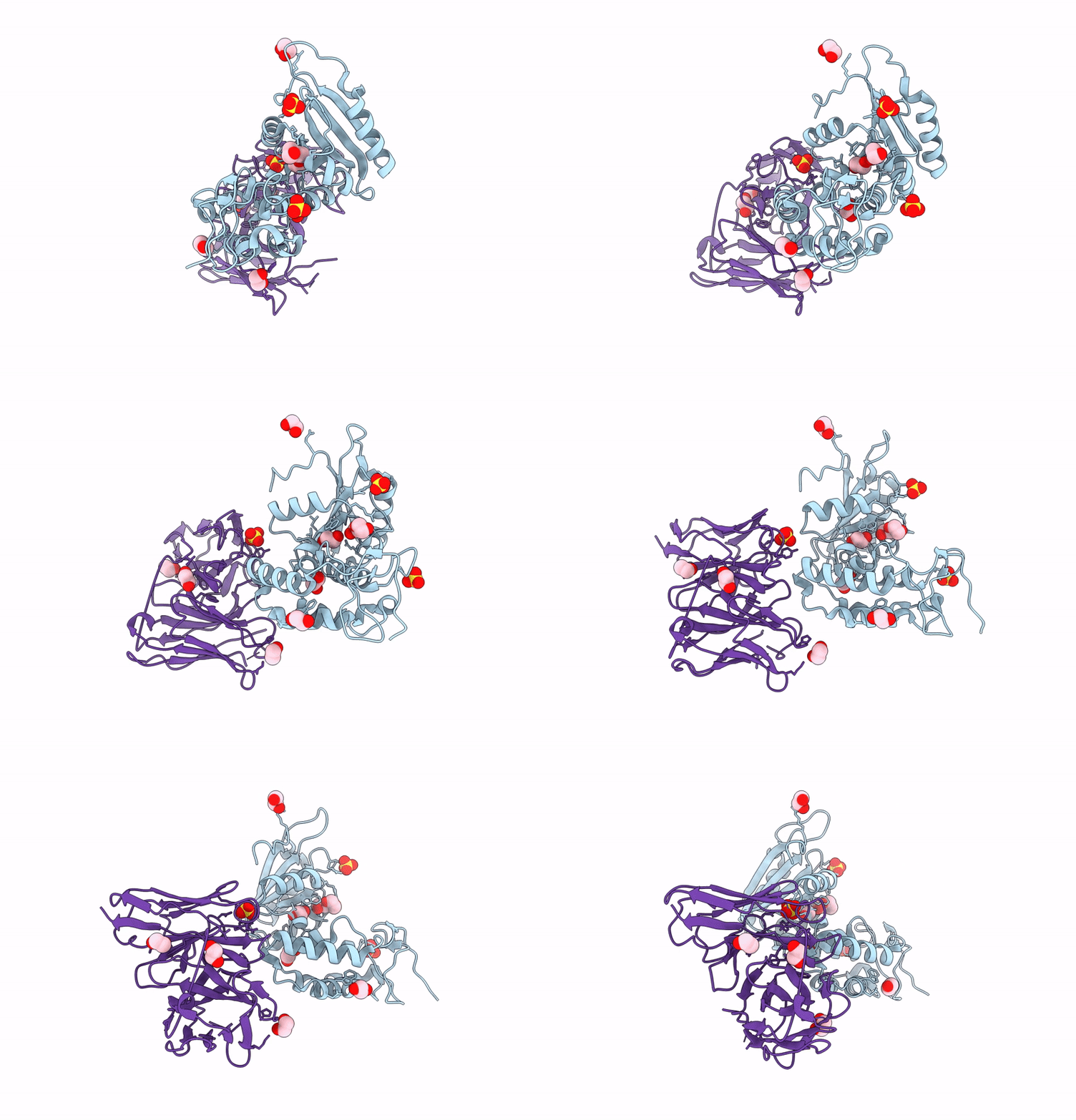
8ZYE image
Deposition Date 2024-06-17
Release Date 2025-09-17
Last Version Date 2026-06-24
Entry Detail
PDB ID:
8ZYE
Title:
Crystal structure of CD38 in complex with RP02 antibody
Biological Source:
Source Organism(s):
Homo sapiens (Taxon ID: 9606)
Expression System(s):
Method Details:
Experimental Method:
Resolution:
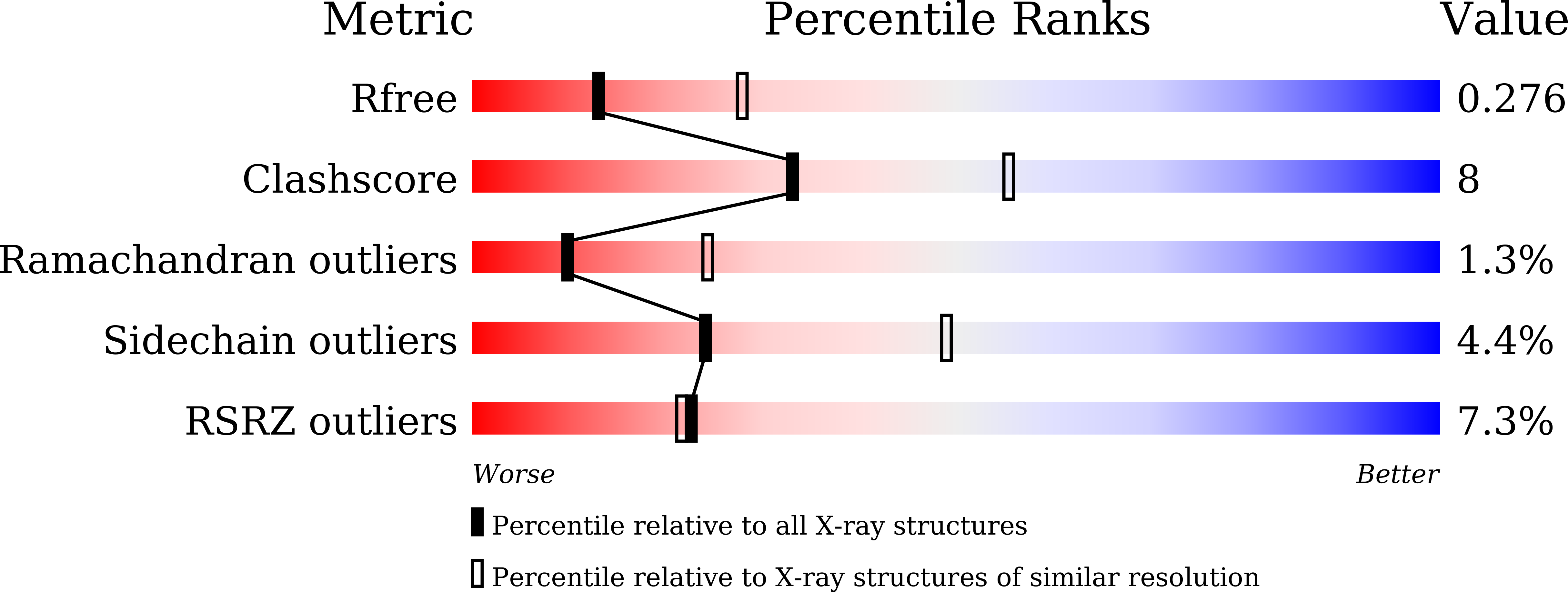
2.72 Å
R-Value Free:
0.27
R-Value Work:
0.21
R-Value Observed:
0.21
Space Group:
I 2 2 2
Macromolecular Entities
Structures with similar UniProt ID
Protein Blast
Polymer Type:polypeptide(L)
Molecule:ADP-ribosyl cyclase/cyclic AD
Gene (Uniprot):CD38
Chain IDs:A
Chain Length:242
Number of Molecules:1
Biological Source:Homo sapiens
Protein Blast
Polymer Type:polypeptide(L)
Molecule:RP02 scFv
Chain IDs:B
Chain Length:226
Number of Molecules:1
Biological Source:Homo sapiens
Primary Citation
Structural dissection of CD38 antigen engagement by CAR binders and rational affinity tuning.
Iscience 29 115937 115937 (2026)
PMID: 42256285 DOI: 10.1016/j.isci.2026.115937

Abstact

Chimeric antigen receptor (CAR) T cell therapy uses synthetic receptors to direct T cells to target and lyse cancer cells. CD38 is a multifunctional ectoenzyme involved in immunomodulation and a therapeutic target in hematological malignancies. Here, we report structural and functional characterization of two CD38-targeting binders, RP02 and 028, revealing distinct mechanisms of epitope engagement and enzymatic inhibition. Crystal structures demonstrate that RP02 binds the N-lobe of CD38 via VH-mediated interactions, while 028 spans both N- and C-lobes, inducing allosteric inhibition. Alanine scanning identified critical residues for affinity tuning. Functional assays showed 028 potently inhibits CD38's cyclase activity, whereas RP02 has minimal effect, correlating with 028's occlusion of the catalytic pocket via eta6 loop-mediated dimerization. Further, CAR-T cells engineered with affinity-attenuated 028(R103G) exhibited reduced fratricide while retaining cytotoxicity against CD38(+) tumors. Our work delineates structure-guided strategies to optimize CD38-targeted therapeutics by balancing affinity, inhibition, and cellular selectivity.

Legend

Protein

Chemical

Disease

Primary Citation of related structures
Feedback Form
Name
Email
Institute
Feedback