

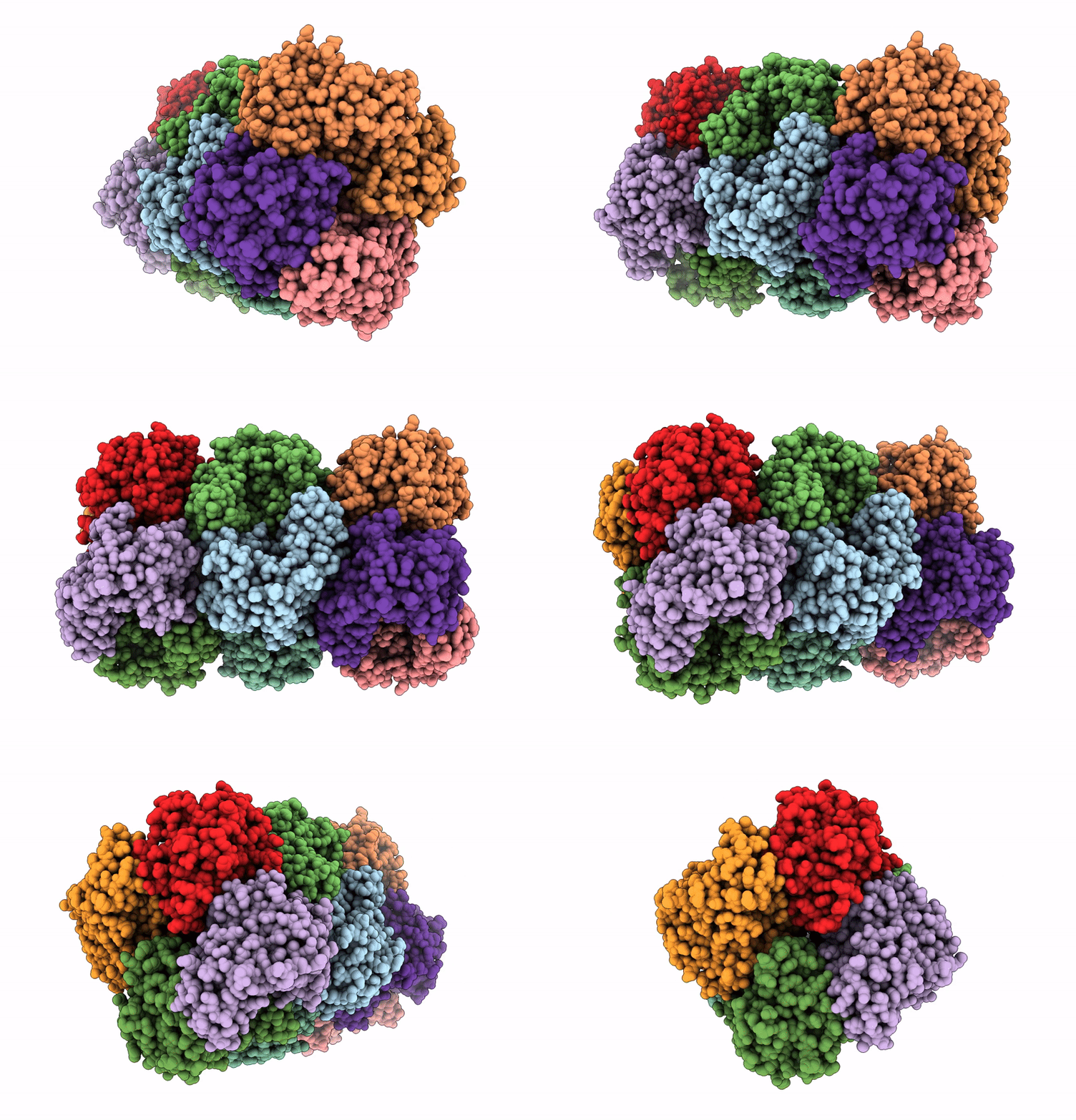
8ZSF image
Deposition Date 2024-06-05
Release Date 2025-12-10
Last Version Date 2026-06-24
Entry Detail
PDB ID:
8ZSF
Keywords:
Title:
CryoEM Helical Structure of KomC
Biological Source:
Source Organism(s):
Escherichia coli (Taxon ID: 562)
Expression System(s):
Method Details:
Experimental Method:
Resolution:
3.24 Å
Aggregation State:
HELICAL ARRAY
Reconstruction Method:
HELICAL
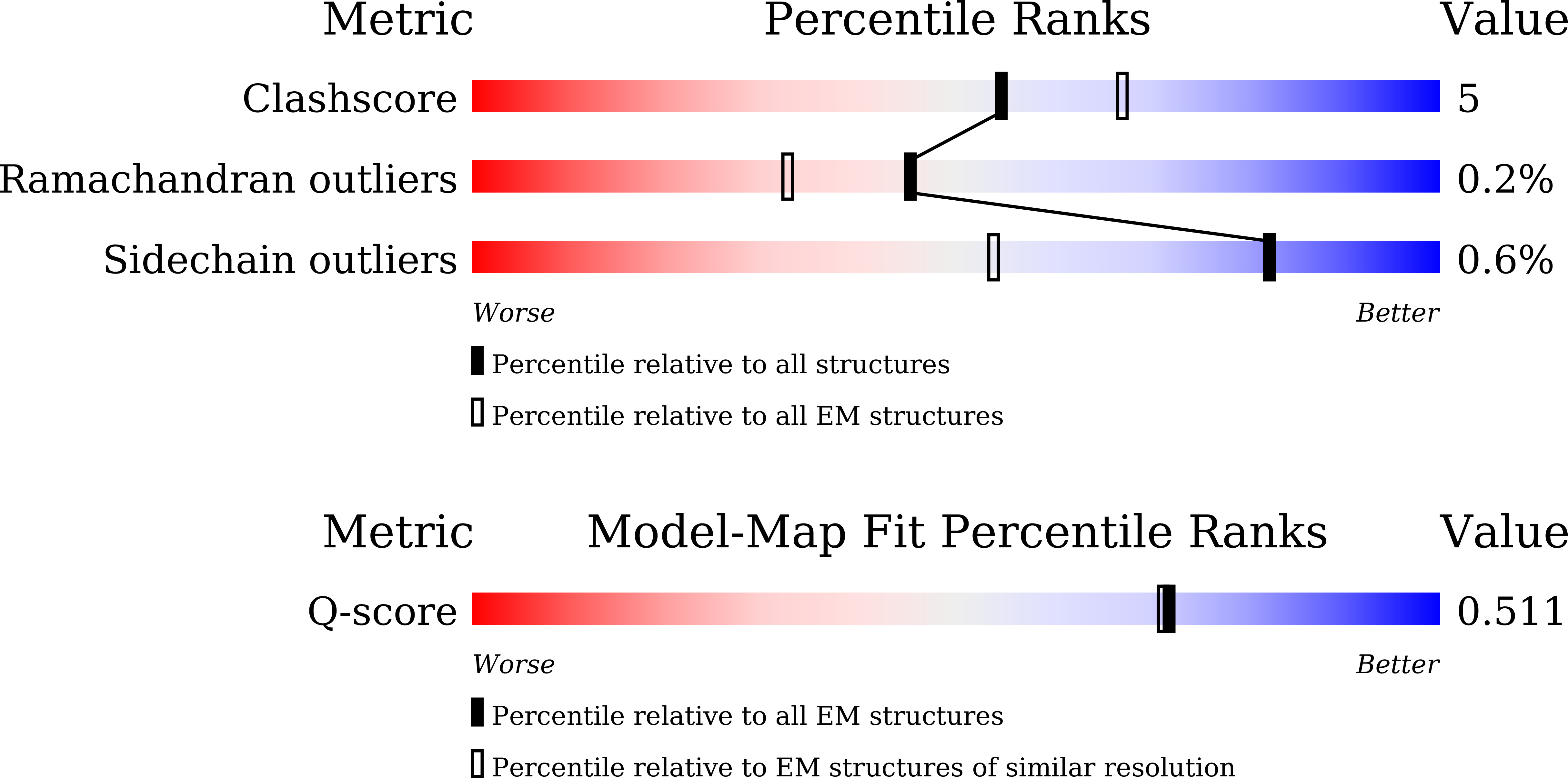
Macromolecular Entities
Structures with similar UniProt ID
Protein Blast
Polymer Type:polypeptide(L)
Molecule:Sir2 family NAD-dependent pro
Chain IDs:A (auth: D), B (auth: A), C, D (auth: B), E (auth: K), F (auth: E), G (auth: I), H (auth: G), I (auth: L), J (auth: F), K (auth: J), L (auth: H)
Chain Length:264
Number of Molecules:12
Biological Source:Escherichia coli
Ligand Molecules
Primary Citation
Filament-mediated repurposing of toxic dITP for immunity in the Kongming system.
Mol.Cell 86 1148 1163.e5 (2026)
PMID: 41638214 DOI: 10.1016/j.molcel.2026.01.027

Abstact

Abortive infection systems protect bacteria by triggering self-destruction in response to phage attack. Most known systems rely on stable cyclic nucleotides that accumulate to stoichiometric levels to activate effectors; the Kongming (Kom) system employs the toxic metabolite deoxyinosine triphosphate (dITP) as its signaling molecule. Here, we show that the Escherichia coli KomB-KomC (KomBC) complex forms a preassembled filament that remains inactive until dITP binding induces cooperative allosteric activation. KomB, a homolog of the nucleotide-hydrolyzing enzyme HAM1, has lost catalytic activity but evolved a high-affinity, hydrolysis-resistant binding pocket for dITP. Interestingly, substoichiometric dITP binding is sufficient to activate adjacent KomC NADase domains, which propagate activation cooperatively along the filament. This filament-based architecture enables ultrasensitive, long-range allosteric signaling in response to a low-abundance and short-lived metabolite. Our findings reveal an ultrasensitive immune strategy that transforms a toxic byproduct into a robust antiviral trigger, expanding the known repertoire of bacterial defense strategies.

Legend

Protein

Chemical

Disease

Primary Citation of related structures
Feedback Form
Name
Email
Institute
Feedback