

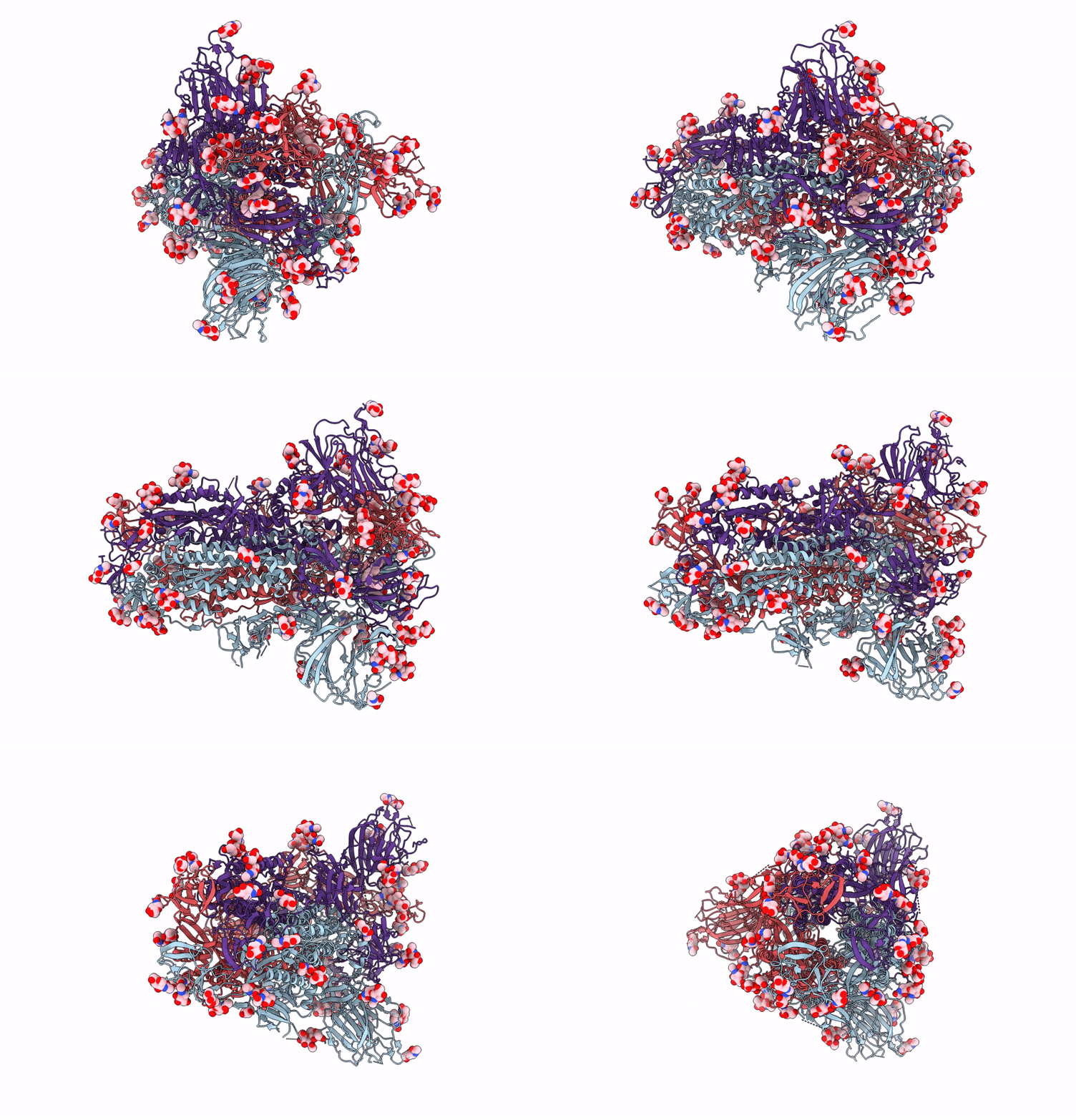
8ZMP image
Deposition Date 2024-05-23
Release Date 2025-05-28
Last Version Date 2026-06-10
Entry Detail
PDB ID:
8ZMP
Keywords:
Title:
Cryo-EM structure of the spike glycoprotein from Bat SARS-like coronavirus (Bat SL-CoV) WIV1 in locked state
Biological Source:
Source Organism(s):
Expression System(s):
Method Details:
Experimental Method:
Resolution:
3.38 Å
Aggregation State:
PARTICLE
Reconstruction Method:
SINGLE PARTICLE

Macromolecular Entities
Structures with similar UniProt ID
Protein Blast
Polymer Type:polypeptide(L)
Molecule:Spike glycoprotein
Chain IDs:A, B, C
Chain Length:1213
Number of Molecules:3
Biological Source:Bat SARS-like coronavirus WIV1
Primary Citation
Cryo-EM structure of locked spike glycoprotein from bat SARS-like coronavirus WIV1, molecular dynamics and biophysics across host range.
Proc.Natl.Acad.Sci.USA 123 e2516874123 e2516874123 (2026)
PMID: 41706884 DOI: 10.1073/pnas.2516874123

Abstact

As made evident by severe acute respiratory syndrome coronavirus 1 (SARS-CoV-1) and SARS-CoV-2 pandemics, the possibility of a SARS-like coronavirus (SL-CoV) emerging again in humankind after zoonotic spillover represents a significant global health threat. Given the role of spike (S) glycoprotein in mediating SL-CoV cell entry and cross-species transmission, there remains urgent need of structural information on SL-CoV S to guide therapeutic countermeasure development. Among SL-CoVs, bat-derived WIV1 is capable of using as receptor the angiotensin converting enzyme 2 (ACE2) from a variety of mammals, thereby representing a prototype model for studying SL-CoV precursors to future pandemics. We present a WIV1 S cryo-EM structure in prefusion state which reveals molecular signatures reminiscent of the tightly-packed locked-1 conformation described for SARS-CoV-1 and SARS-CoV-2. To decipher the molecular basis for bat SL-CoV WIV1 host range tropism, we performed molecular dynamics (MD) simulations of WIV1 S-ACE2 interaction across reservoir bat, potentially intermediate hosts civet, raccoon dog and pangolin, and accidental human hosts. We found that, in all interactions, upon complex formation with ACE2, the linoleic acid responsible for locking the S receptor binding domain (RBD) dynamically persists in its binding pocket, however repositioning to potentially unlock the system. Complex formation between WIV1 S-RBD and ACE2 from different hosts was characterized in vitro by mass photometry and microscale thermophoresis, revealing that interaction is stronger with ACE2 from bat and human than other hosts, within the latter stronger for the Thr92Ile polymorphism correlated to higher SARS-CoV-2 infection susceptibility. These findings provide critical insights with crucial implications for pandemic preparedness.

Legend

Protein

Chemical

Disease

Primary Citation of related structures
Feedback Form
Name
Email
Institute
Feedback