

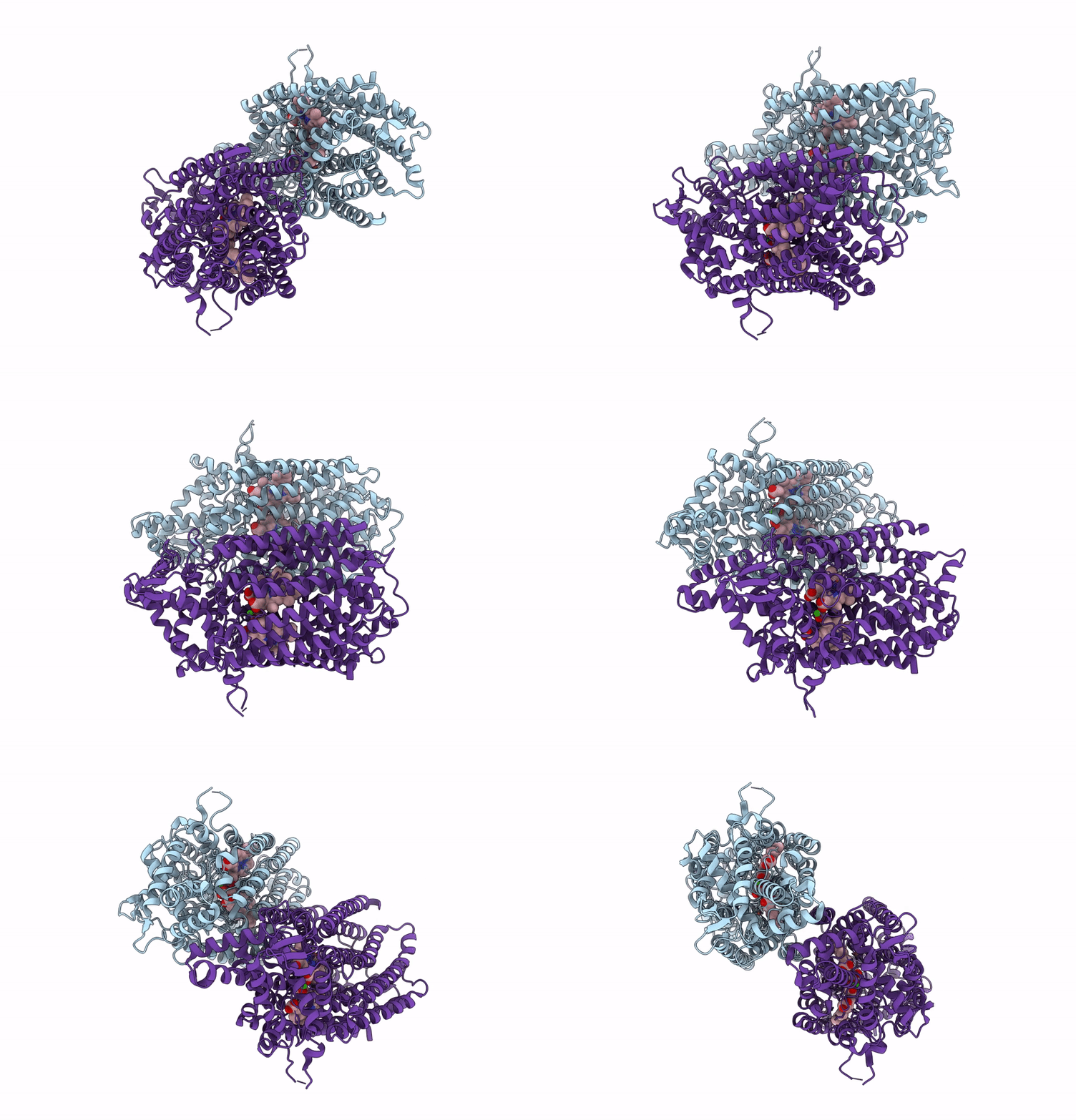
8ZGP image
Deposition Date 2024-05-09
Release Date 2025-05-14
Last Version Date 2026-04-08
Entry Detail
PDB ID:
8ZGP
Keywords:
Title:
CryoEM structure of dimeric quinol dependent nitric oxide reductase from Neisseria meningitidis
Biological Source:
Source Organism(s):
Expression System(s):
Method Details:
Experimental Method:
Resolution:
1.89 Å
Aggregation State:
PARTICLE
Reconstruction Method:
SINGLE PARTICLE
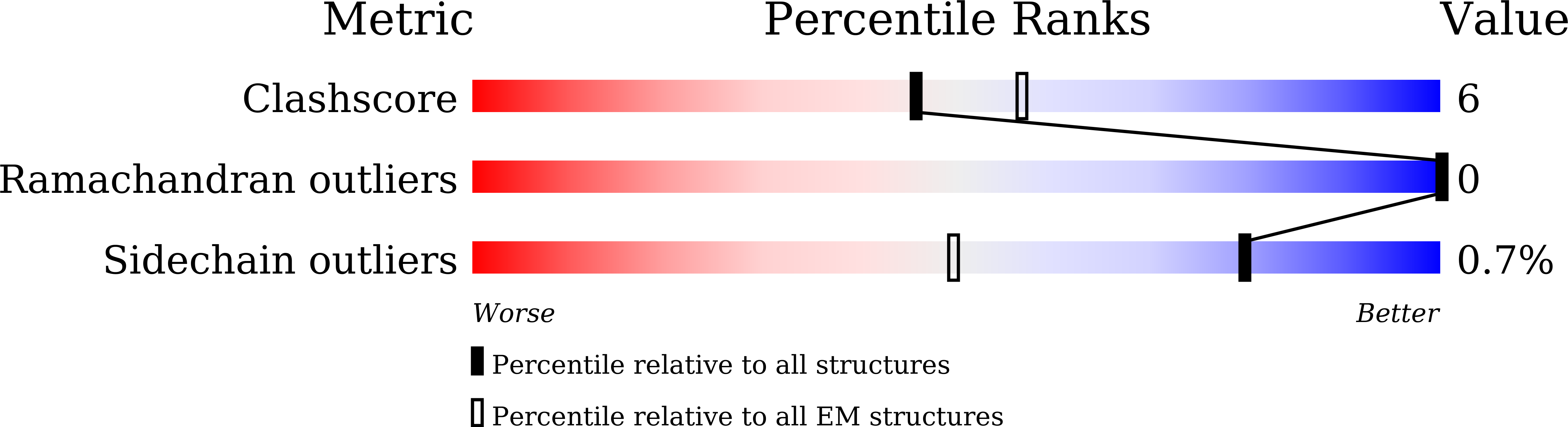
Macromolecular Entities
Structures with similar UniProt ID
Protein Blast
Polymer Type:polypeptide(L)
Molecule:Nitric-oxide reductase
Gene (Uniprot):norB
Chain IDs:A, B
Chain Length:751
Number of Molecules:2
Biological Source:Neisseria meningitidis alpha14
Primary Citation
Structural basis of Neisseria meningitidis quinol dependent nitric oxide reductase activation by dimerization.
Commun Biol 9 ? ? (2026)
PMID: 41896389 DOI: 10.1038/s42003-026-09754-0

Abstact

In all kingdoms of life, the regulation of membrane-bound enzyme function via oligomerization is a fundamental aspect of cell physiology. Often, the mechanistic role of oligomerization is unclear, due to a lack of structure-function comparisons between constituent forms of the enzyme. Here, we elucidate the structural underpinnings of enzyme regulation and oligomerization in the quinol-dependent nitric oxide reductase (qNOR) from Neisseria meningitidis, by high-resolution structural analyses of the less active monomeric form (2.25 A) and the highly active dimeric form (1.89 A). The comparison revealed that broad helical flexibility near the dimer interface of the monomer causes a conformational change in a critical amino acid near the active site, located apart from the dimer interface. We demonstrate that the crosstalk between the dimer interface and catalytic site in qNOR allows enhanced activation of the enzyme via dimerization. Given Neisseria meningitidis' dependence on qNOR to detoxify the host's immune response of nitric oxide, our results pave a way for new strategies to combat bacterial infections, via the inactivation of qNOR by monomerization. More broadly, this provides new insights into the role of membrane protein oligomerization and its influence on regulating activity.

Legend

Protein

Chemical

Disease

Primary Citation of related structures
Feedback Form
Name
Email
Institute
Feedback