

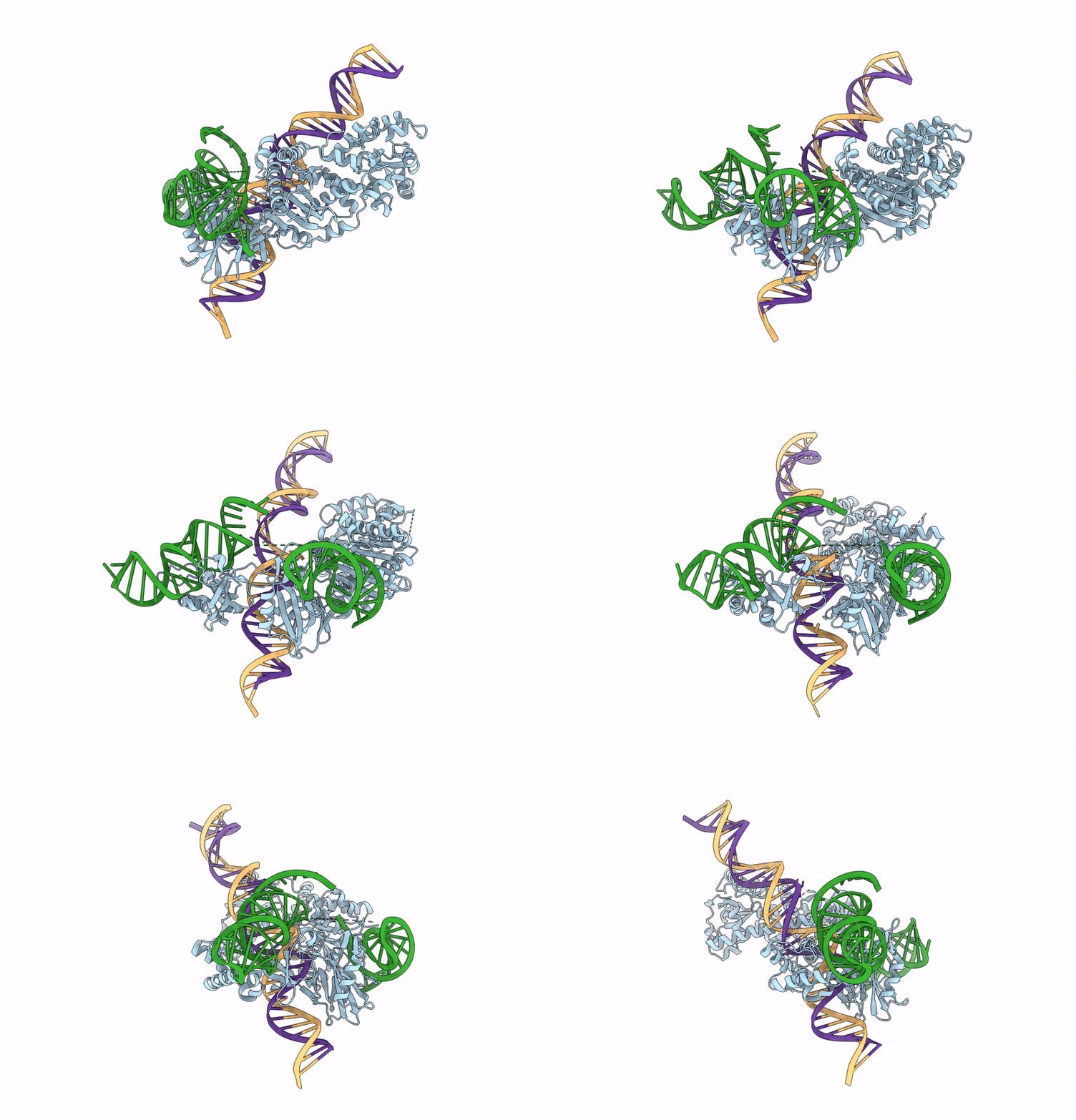
8ZCY image
Deposition Date 2024-04-30
Release Date 2025-11-05
Last Version Date 2026-04-29
Entry Detail
PDB ID:
8ZCY
Title:
Cryo-EM structure of eSaCas9_NNG-guide RNA-target DNA complex in an interrogation state
Biological Source:
Source Organism(s):
Expression System(s):
Method Details:
Experimental Method:
Resolution:
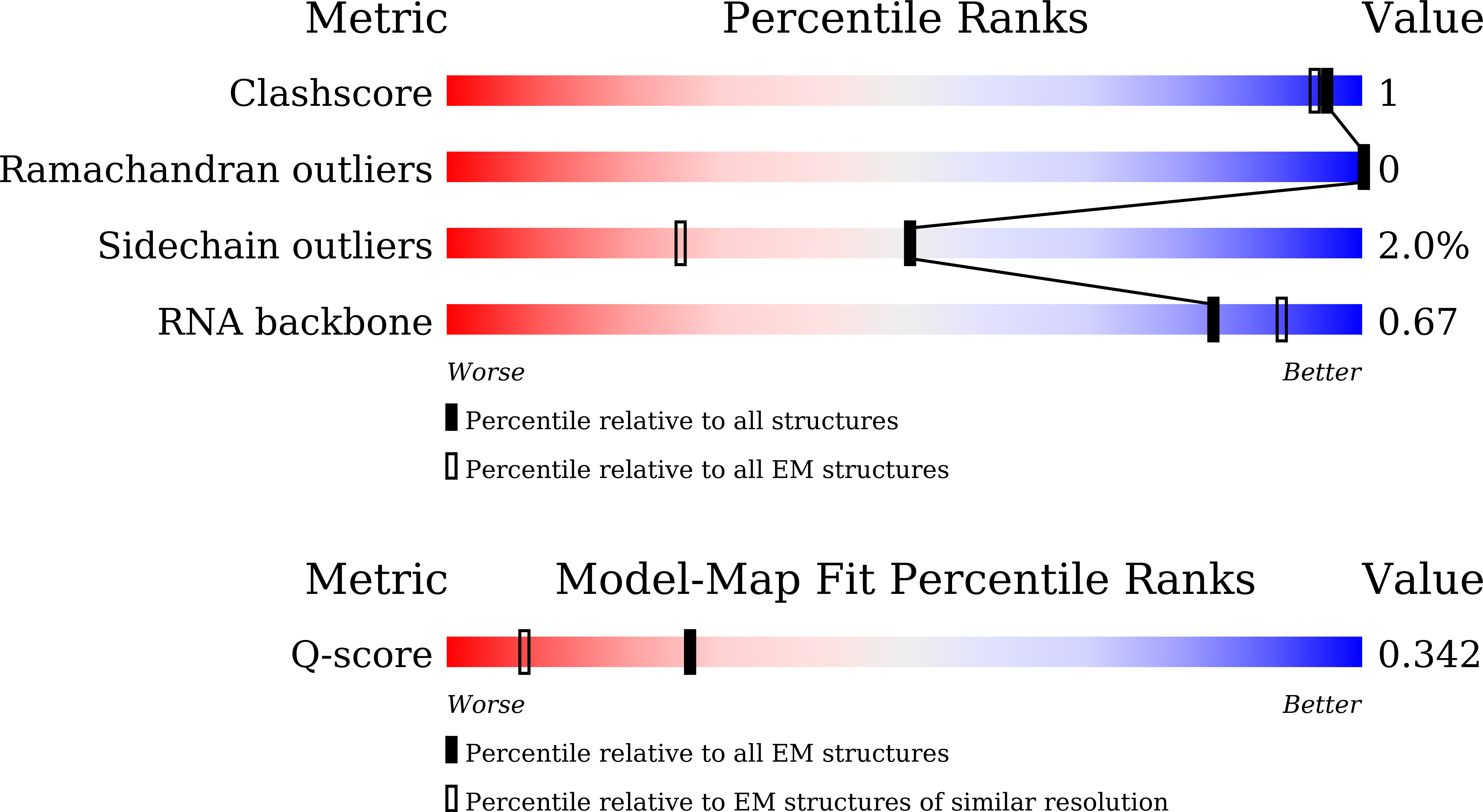
3.17 Å
Aggregation State:
PARTICLE
Reconstruction Method:
SINGLE PARTICLE
Macromolecular Entities
Structures with similar UniProt ID
Protein Blast
Polymer Type:polypeptide(L)
Molecule:CRISPR-associated endonucleas
Gene (Uniprot):cas9
Chain IDs:A
Chain Length:1056
Number of Molecules:1
Biological Source:Staphylococcus aureus
Polymer Type:polyribonucleotide
Molecule:sgRNA
Chain IDs:B
Chain Length:99
Number of Molecules:1
Biological Source:Staphylococcus aureus
Polymer Type:polydeoxyribonucleotide
Molecule:Non-target DNA strand
Chain IDs:C
Chain Length:43
Number of Molecules:1
Biological Source:Staphylococcus aureus
Polymer Type:polydeoxyribonucleotide
Molecule:Target DNA strand
Chain IDs:D
Chain Length:43
Number of Molecules:1
Biological Source:Staphylococcus aureus
Ligand Molecules
Primary Citation
Engineering a compact high-fidelity Staphylococcus aureus Cas9 variant with broader targeting range and mechanistic insights into its activation.
Nat Commun 17 ? ? (2026)
PMID: 41991526 DOI: 10.1038/s41467-026-71626-2

Abstact

Staphylococcus aureus Cas9 (SaCas9) is smaller than the widely used Streptococcus pyogenes Cas9 (SpCas9) and has been harnessed for gene therapy using an adeno-associated virus vector. However, SaCas9 requires a longer NNGRRT (where N is any nucleotide and R is A or G) protospacer adjacent motif (PAM) for target DNA recognition, thereby restricting the targeting range. Although PAM-relaxed Cas9 variants have been developed, expanded targeting is often accompanied by compromised target specificity. Here, we report the rational engineering of eSaCas9-NNG, a SaCas9 variant that recognizes relaxed NNG PAMs while maintaining high target fidelity, thereby overcoming a fundamental trade-off in Cas9-based genome editing. eSaCas9-NNG efficiently induces indels and base conversions at endogenous sites bearing NNG PAMs in human cells and mice, with editing efficiencies comparable to those of other PAM-relaxed nucleases, including SpRY, SpG, and iGeoCas9, but with reduced off-target activity. We further determine the cryo-electron microscopy structures of eSaCas9-NNG in five distinct functional states, revealing the structural basis for its relaxed PAM recognition, improved target specificity, and nuclease activation. Overall, our findings demonstrate that eSaCas9-NNG could be used as a versatile genome editing tool for in vivo gene therapy, and improve our mechanistic understanding of the diverse CRISPR-Cas9 nucleases.

Legend

Protein

Chemical

Disease

Primary Citation of related structures
Feedback Form
Name
Email
Institute
Feedback