

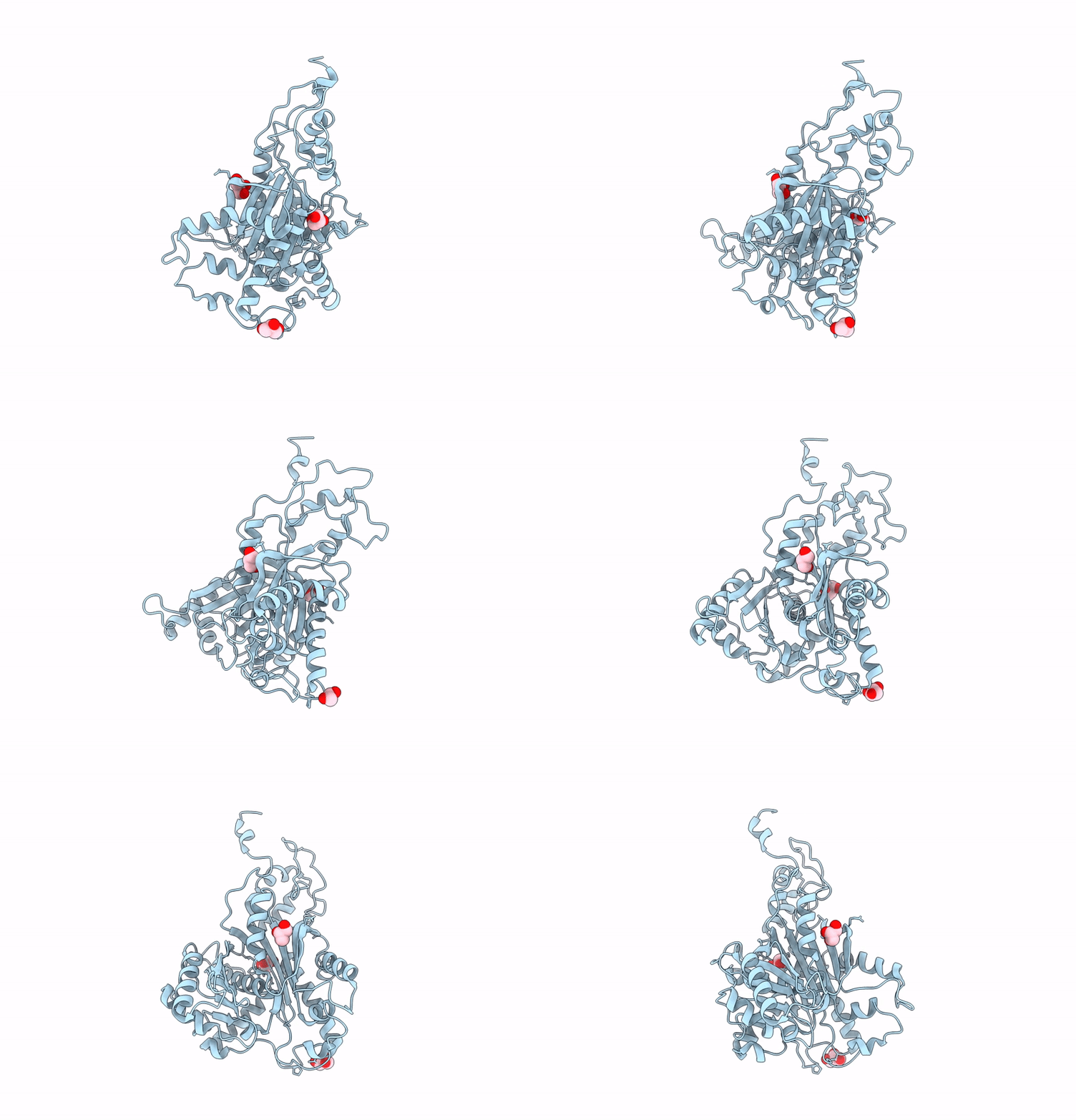
8YZ3 image
Deposition Date 2024-04-05
Release Date 2025-04-09
Last Version Date 2026-07-15
Entry Detail
PDB ID:
8YZ3
Title:
Crystal structure of Type Six Secretion System adaptor protein Tla3 from Pseudomonas aeruginosa.
Biological Source:
Source Organism(s):
Expression System(s):
Method Details:
Experimental Method:
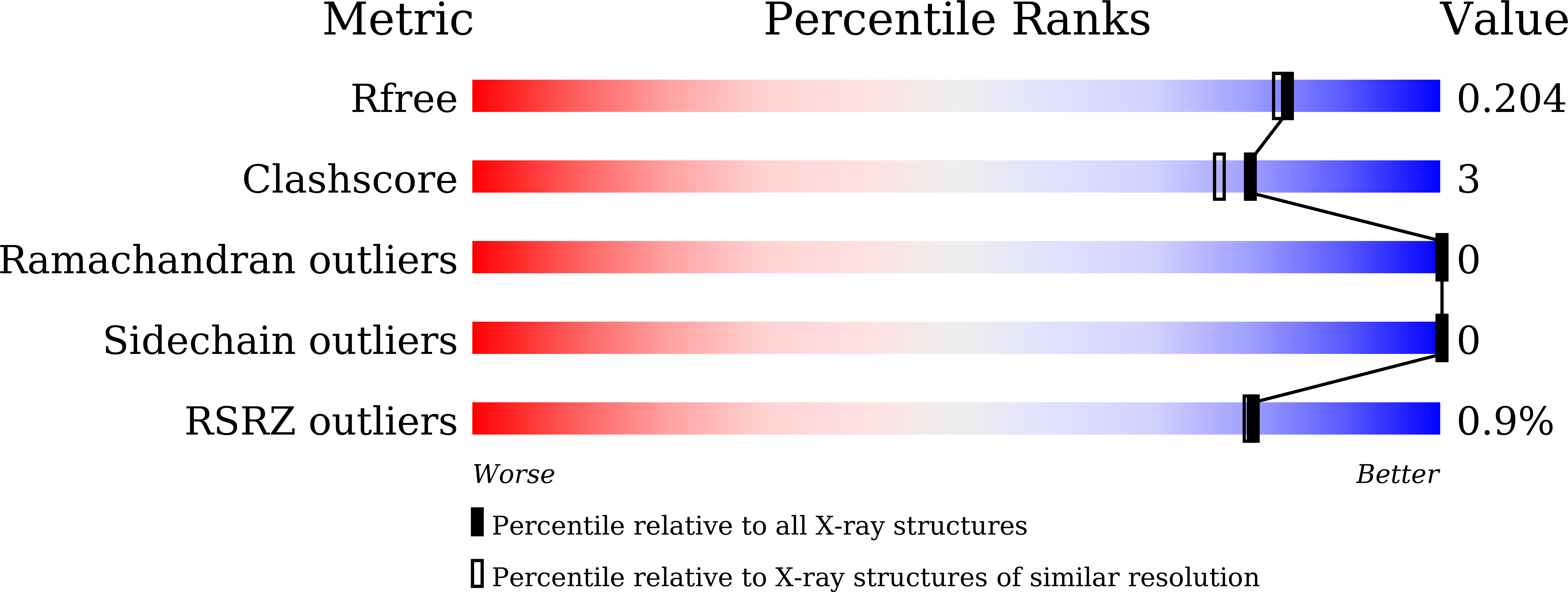
Resolution:
1.80 Å
R-Value Free:
0.20
R-Value Work:
0.17
R-Value Observed:
0.17
Space Group:
C 2 2 21
Macromolecular Entities
Polymer Type:polypeptide(L)
Molecule:DUF2875 domain-containing pro
Chain IDs:A
Chain Length:0
Number of Molecules:1
Biological Source:Pseudomonas aeruginosa UCBPP-PA14
Ligand Molecules
Primary Citation
Crystal structure of the type VI secretion system adaptor protein Tla3 from Pseudomonas aeruginosa.
Acta Crystallogr.,Sect.F 82 237 244 (2026)
PMID: 42287188 DOI: 10.1107/S2053230X26005765

Abstact

The type VI secretion system (T6SS) is a dynamic protein nanomachine employed by Gram-negative bacteria to secrete toxic effector proteins directly into microbial competitors, eukaryotic host cells, or the environment. The T6SS is primarily involved in interbacterial antagonism, along with host-cell manipulation and resource scavenging, underscoring its central role in microbial community structuring and establishment of infection. Pseudomonas aeruginosa employs the 52 kDa adaptor protein Tla3 for the successful loading of the antibacterial phospholipase effector Tle3 onto the H2-T6SS machinery. Tla3 is reported to contain two DUF2875 domains. To date, no structural information is present for DUF2875 domain-containing adaptor proteins of the T6SS. Here, we report the 1.8 A resolution crystal structure of the T6SS adaptor protein Tla3 from P. aeruginosa strain UCBPP-PA14. The structure shows a thiolase-like fold, with a conserved five-layered alpha-beta-alpha-beta-alpha core topology. Detailed atomic insight into the structure is significant, as it adds to the hitherto limited structural knowledge of adaptor-mediated effector-loading mechanisms in the T6SS, thereby contributing to a broader understanding of T6SS functionality.

Legend

Protein

Chemical

Disease

Primary Citation of related structures
Feedback Form
Name
Email
Institute
Feedback