

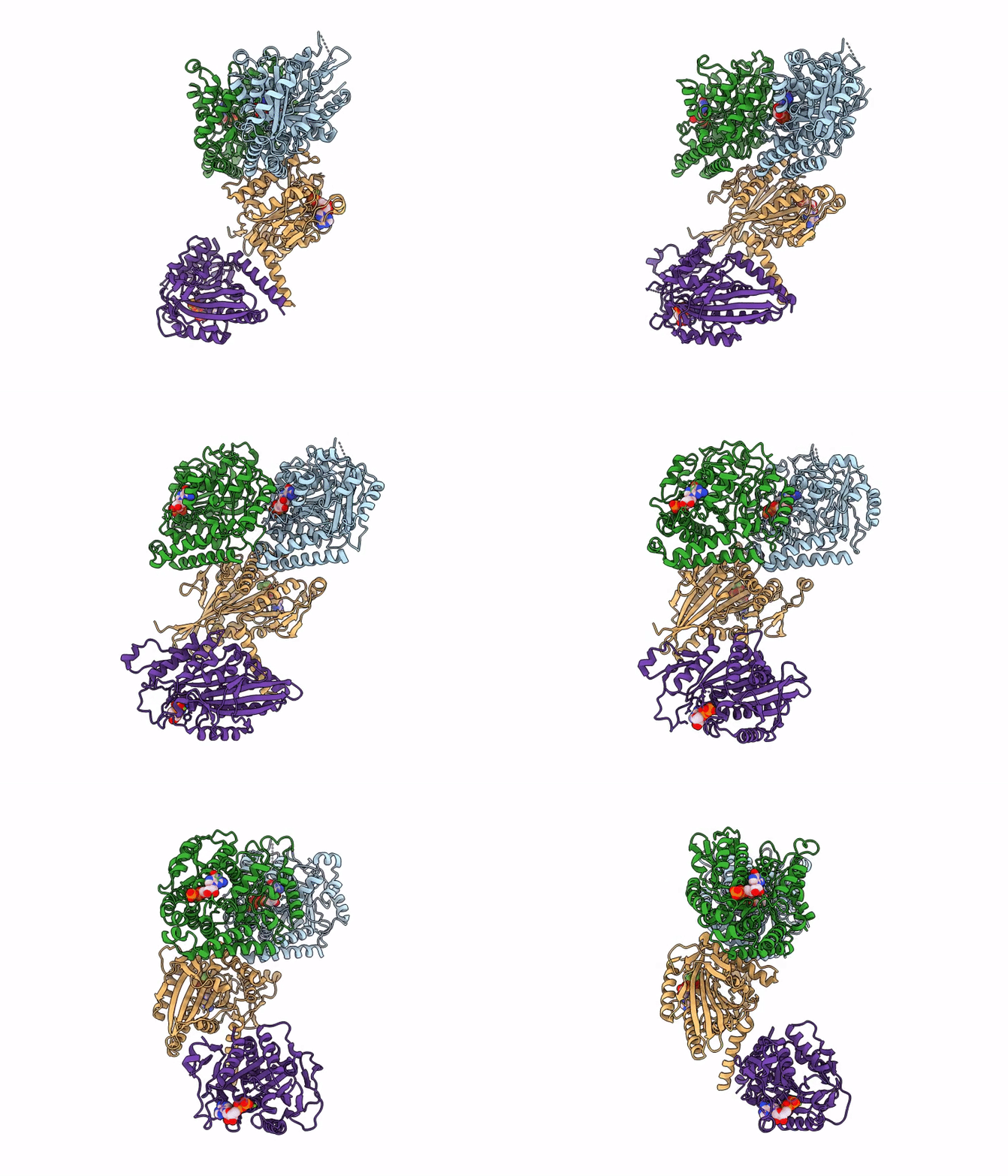
8YY5 image
Deposition Date 2024-04-03
Release Date 2025-10-08
Last Version Date 2026-04-22
Entry Detail
PDB ID:
8YY5
Keywords:
Title:
Kinesin-14 with AlF3 bound to 14 PF Microtubule
Biological Source:
Source Organism(s):
Expression System(s):
Method Details:
Experimental Method:
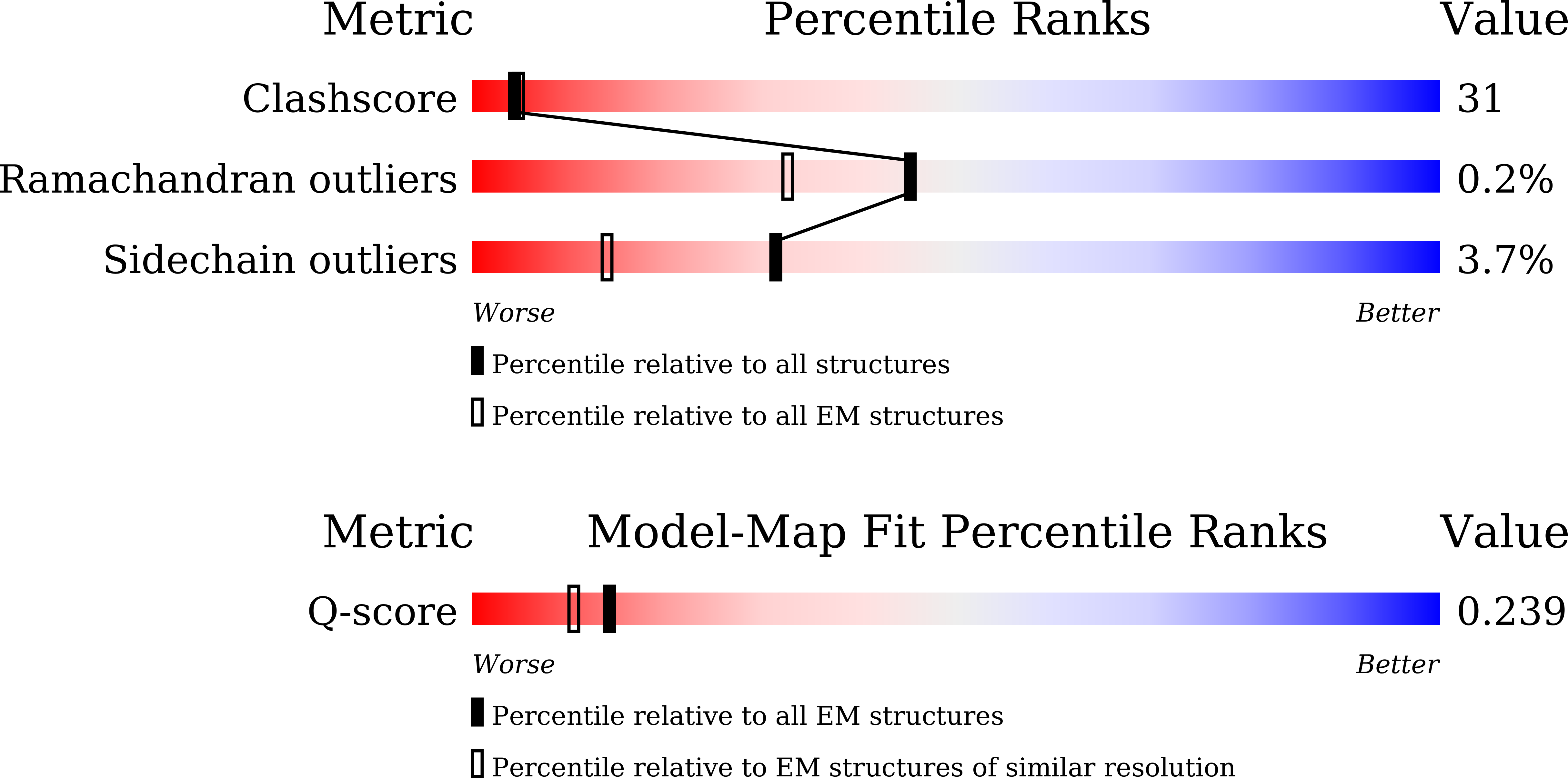
Resolution:
3.99 Å
Aggregation State:
FILAMENT
Reconstruction Method:
HELICAL
Macromolecular Entities
Structures with similar UniProt ID
Protein Blast
Polymer Type:polypeptide(L)
Molecule:Tubulin alpha-1B chain
Gene (Uniprot):TUBA1B
Chain IDs:A
Chain Length:451
Number of Molecules:1
Biological Source:Sus scrofa
Structures with similar UniProt ID
Protein Blast
Polymer Type:polypeptide(L)
Molecule:Tubulin beta chain
Gene (Uniprot):TUBB
Chain IDs:B
Chain Length:444
Number of Molecules:1
Biological Source:Sus scrofa
Structures with similar UniProt ID
Protein Blast
Polymer Type:polypeptide(L)
Molecule:Protein claret segregational
Gene (Uniprot):ncd
Mutagens:E292M, Y485K, N697S
Chain IDs:C, D
Chain Length:409
Number of Molecules:2
Biological Source:Drosophila melanogaster
Primary Citation
Structural analysis of a motor with increased mechanical output reveals new transitions in kinesin microtubule motility.
Sci Rep 16 487 487 (2026)
PMID: 41491787 DOI: 10.1038/s41598-025-28573-7

Abstact

Kinesin motors use ATP to produce force in cells, yet the conformational changes that generate force remain uncertain. Here, we report structural and mechanistic insights into a minus-end-directed kinesin-14 that exhibits increased mechanical output - the variant motor binds microtubules more tightly and moves with faster velocity than wild type. High-resolution structures, together with molecular dynamics simulations, reveal previously unobserved transitions in the nucleotide hydrolysis cycle. ADP release, triggered by microtubule binding, is coupled to twisting of the central beta-sheet and stabilization of the stalk prior to the power stroke. ATP binding induces stalk fluctuations and a swing of the neck mimic, an element analogous to the kinesin-1 neck linker, resembling neck linker docking in plus-end-directed kinesins. The power stroke, characterized by a large stalk rotation, is followed by motor detachment from microtubules. The subsequent recovery stroke occurs while the motor is bound to ADP and free Pi, accompanied by beta-strand-to-loop transitions, or beta-sheet melting, implying that beta-sheet refolding facilitates Pi release. The observed twisting and melting identify the central beta-sheet as the long-sought elastic element or spring required for motor force production. The transitions we observe in kinesin-14 may also apply to other kinesins - this remains to be tested. SUPPLEMENTARY INFORMATION: The online version contains supplementary material available at 10.1038/s41598-025-28573-7.

Legend

Protein

Chemical

Disease

Primary Citation of related structures
Feedback Form
Name
Email
Institute
Feedback