

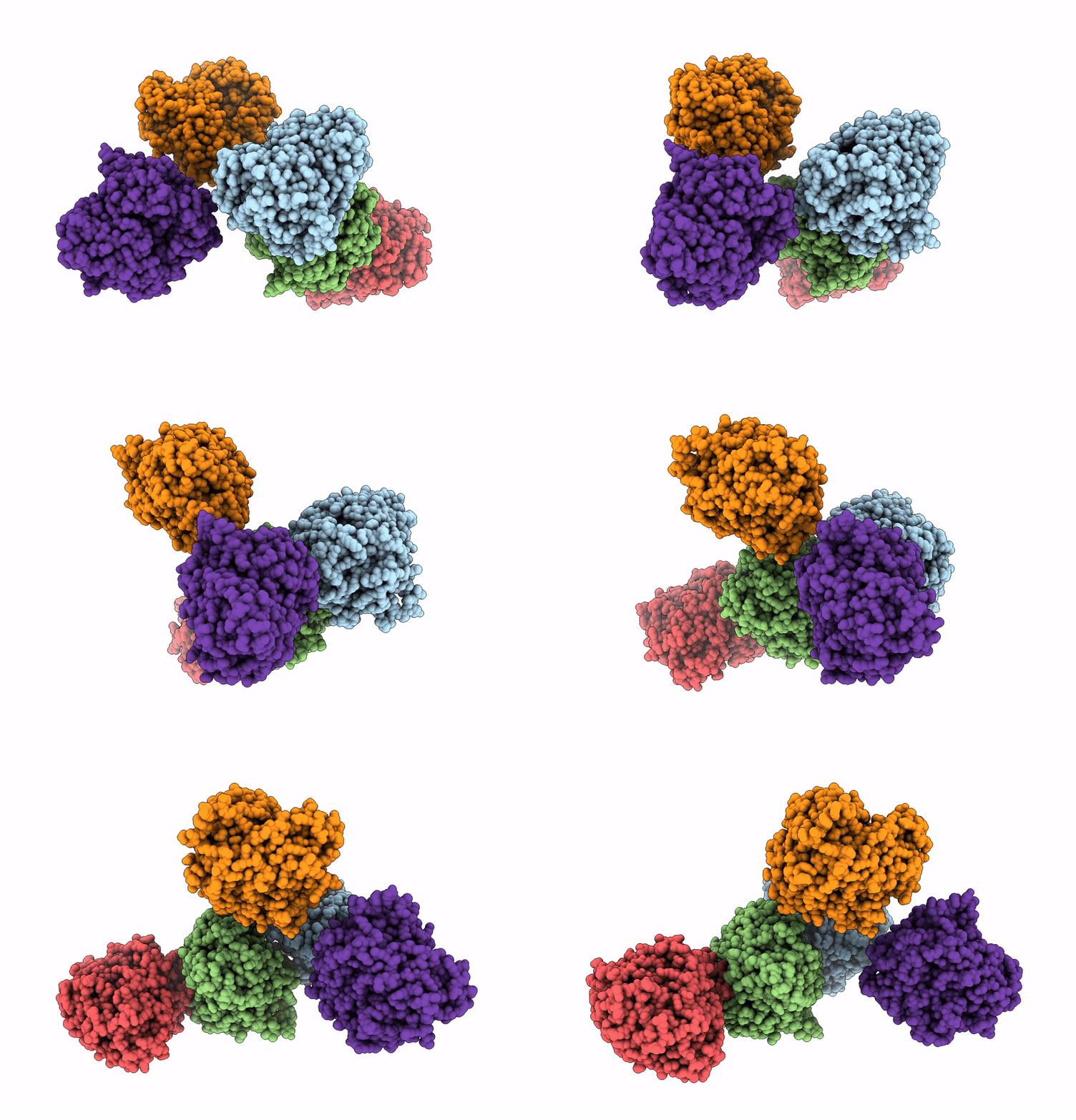
8YXS image
Deposition Date 2024-04-02
Release Date 2025-04-09
Last Version Date 2026-04-22
Entry Detail
PDB ID:
8YXS
Keywords:
Title:
X-ray structure of non-heme iron dioxygenase from Aspergillus brunneoviolaceus
Biological Source:
Source Organism(s):
Expression System(s):
Method Details:
Experimental Method:
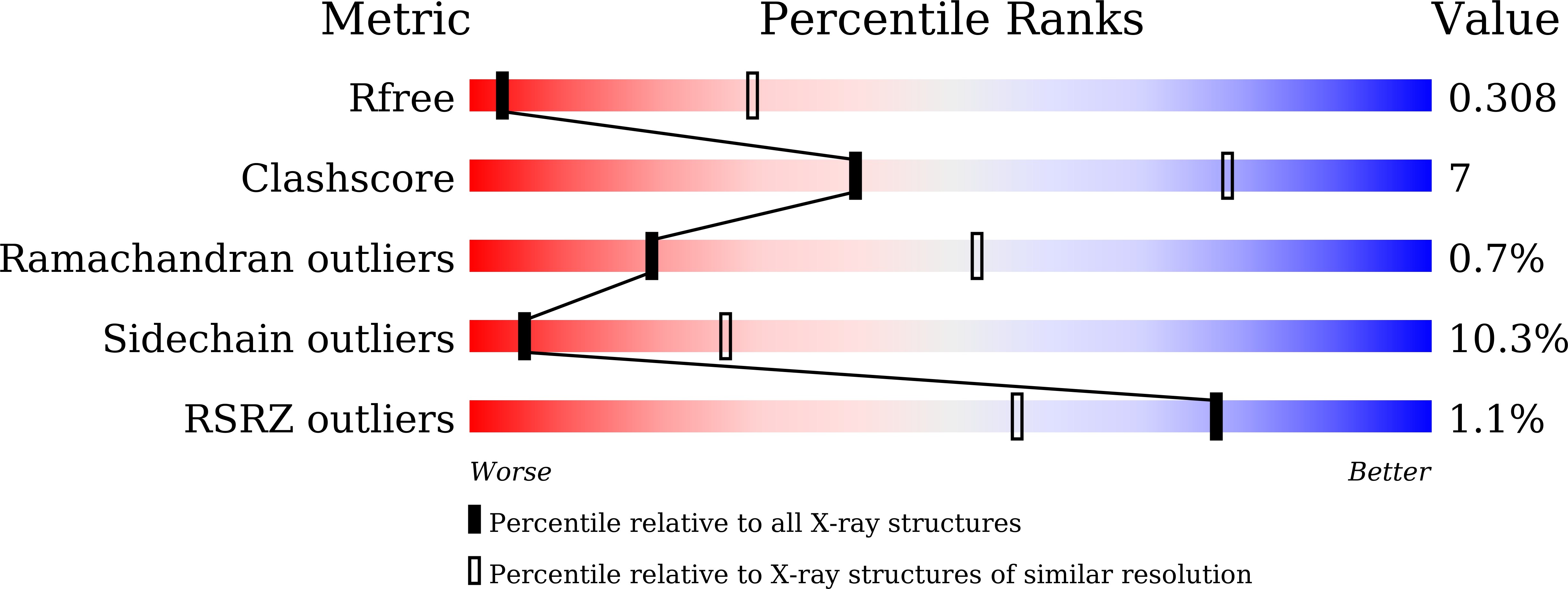
Resolution:
3.62 Å
R-Value Free:
0.31
R-Value Work:
0.27
R-Value Observed:
0.27
Space Group:
C 1 2 1
Macromolecular Entities
Structures with similar UniProt ID
Protein Blast
Polymer Type:polypeptide(L)
Molecule:Oxidoreductase AflY
Mutagens:N441M
Chain IDs:A, B, C, D, E
Chain Length:456
Number of Molecules:5
Biological Source:Aspergillus brunneoviolaceus
Modified Residue
Compound ID Chain ID Parent Comp ID Details 2D Image
KCX A LYS modified residue
Ligand Molecules
Primary Citation
Regioselectivity switches between anthraquinone precursor fissions involved in bioactive xanthone biosynthesis.
Chem Sci 15 19534 19545 (2024)
PMID: 39568878 DOI: 10.1039/d4sc06369d

Abstact

Xanthone-based polyketides with complex molecular frameworks and potent bioactivities distribute and function in different biological kingdoms, yet their biosynthesis remains under-investigated. In particular, nothing is known regarding how to switch between the C(4a)-C(10) (C(4a)-selective) and C(10a)-C(10) bond (C(10a)-selective) cleavages of anthraquinone intermediates involved in biosynthesizing strikingly different frameworks of xanthones and their siblings. Enabled by our characterization of antiosteoporotic brunneoxanthones, a subfamily of polyketides from Aspergillus brunneoviolaceus FB-2, we present herein the brunneoxanthone biosynthetic gene cluster and the C(10a)-selective cleavage of anthraquinone (chrysophanol) hydroquinone leading ultimately to the bioactive brunneoxanthones under the catalysis of BruN (an undescribed atypical non-heme iron dioxygenase) in collaboration with BruM as a new oxidoreductase that reduces the anthraquinone into its hydroquinone using NADPH as a cofactor. The insights into the driving force that determines whether the C(10a)- or C(4a)-selective cleavages of anthraquinone hydroquinones take place were achieved by a combination of multiprotein sequence alignment, directed protein evolution, theoretical simulation, chemical capture of hydroquinone tautomer, (18)O chasing, and X-ray crystal structure of the BruN(N441M) mutant, eventually allowing for the protocol establishment for the on-demand switch between the two ways of anthraquinone openings. Collectively, the work paves the way for the synthetic biology-based regeneration of uniquely structured high-value xanthones present in low abundance in complex mixtures, and helps to deepen the understanding on why and how such xanthones and their congeners are biosynthesized by different (micro)organisms in nature.

Legend

Protein

Chemical

Disease

Primary Citation of related structures
Feedback Form
Name
Email
Institute
Feedback