

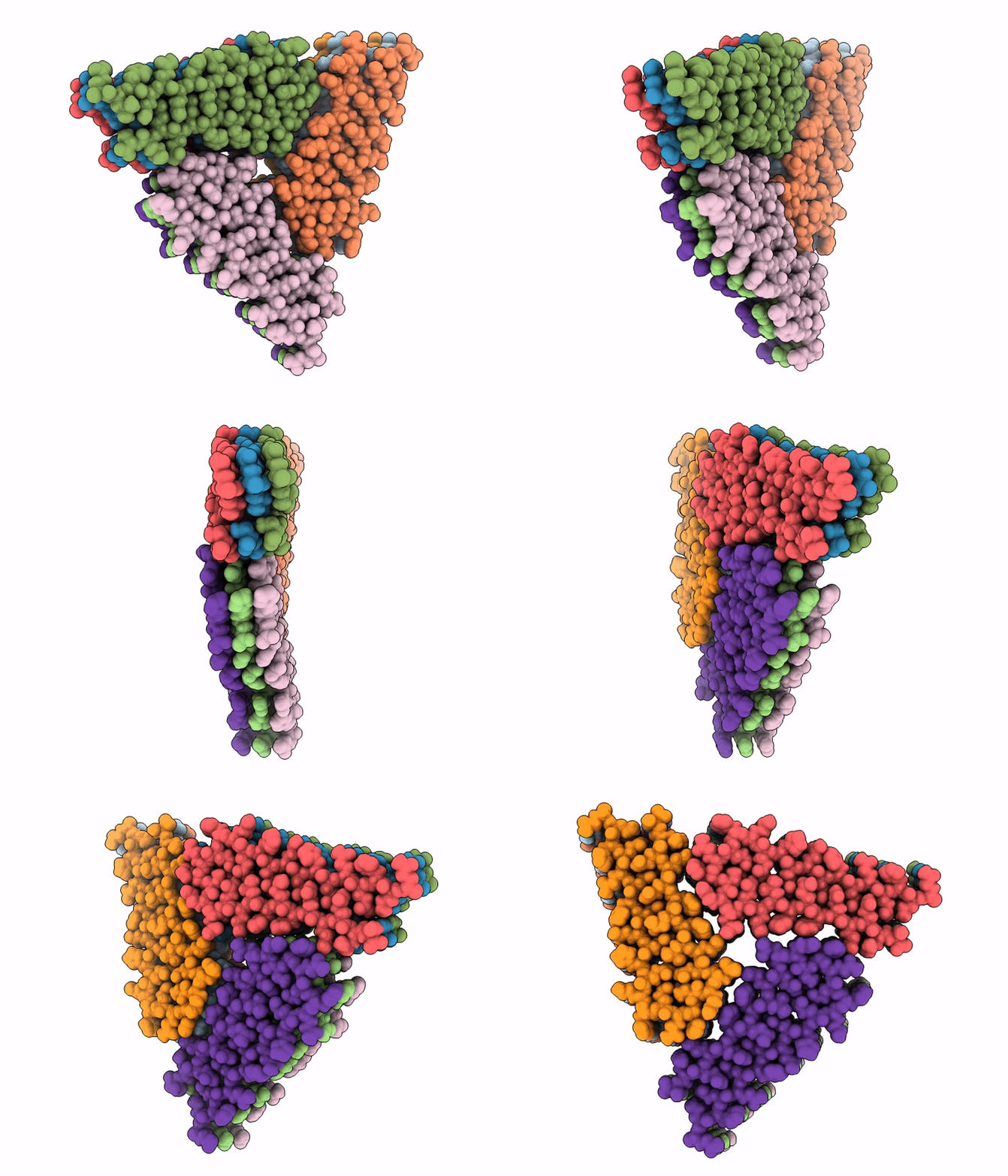
8YAC image
Deposition Date 2024-02-08
Release Date 2025-09-03
Last Version Date 2026-03-18
Entry Detail
PDB ID:
8YAC
Keywords:
Title:
Funes-induced Orb2 amyloid like endogenous Orb2 amyloid
Biological Source:
Source Organism(s):
Method Details:
Experimental Method:
Resolution:
3.10 Å
Aggregation State:
FILAMENT
Reconstruction Method:
HELICAL
Macromolecular Entities
Structures with similar UniProt ID
Protein Blast
Polymer Type:polypeptide(L)
Molecule:Translational regulator orb2
Gene (Uniprot):orb2
Chain IDs:A, B, C, D, E, F, G, H, I
Chain Length:31
Number of Molecules:9
Biological Source:Drosophila melanogaster
Ligand Molecules
Primary Citation
A J-domain protein enhances memory by promoting physiological amyloid formation in Drosophila.
Proc. Natl. Acad. Sci. U.S.A. 123 e2516310123 e2516310123 (2026)
PMID: 41615743 DOI: 10.1073/pnas.2516310123

Abstact

Memory requires experience-dependent alterations in the synaptic proteome. Chaperones interface between the environment and the proteome. Manipulating J-domain protein (JDP) chaperones, the most diverse family of chaperones, in a Drosophila neuronal circuit that encodes associative long-term memories, we identified yet uncharacterized JDPs that transduce sensory cues. One of these JDPs, CG10375, which we named Funes, enhances memory when overexpressed and impairs memory when functionally impaired. Funes overexpression enhances memory formation even when sensory stimuli are suboptimal. At the circuit level, Funes acts on neurons where conditioned and unconditioned stimuli converge to form associative memories. From a proteomic-based screen, we found that overexpression of Funes changes the solubility of a small subset of proteins, one of which is the mRNA-binding protein Orb2. Combining in vitro and in vivo biophysical, biochemical, and cryo-EM structural analyses, we found that Funes associates with oligomeric Orb2 and promotes the formation of translationally active amyloids. Perturbation of the conserved J domain eliminates the ability of Funes to facilitate amyloid assembly and promote memory. We posit that the brain harbors chaperones that influence memory by regulating physiological amyloid formation.

Legend

Protein

Chemical

Disease

Primary Citation of related structures
Feedback Form
Name
Email
Institute
Feedback