

8X4N image
Deposition Date 2023-11-15
Release Date 2025-02-19
Last Version Date 2026-04-08
Entry Detail
PDB ID:
8X4N
Keywords:
Title:
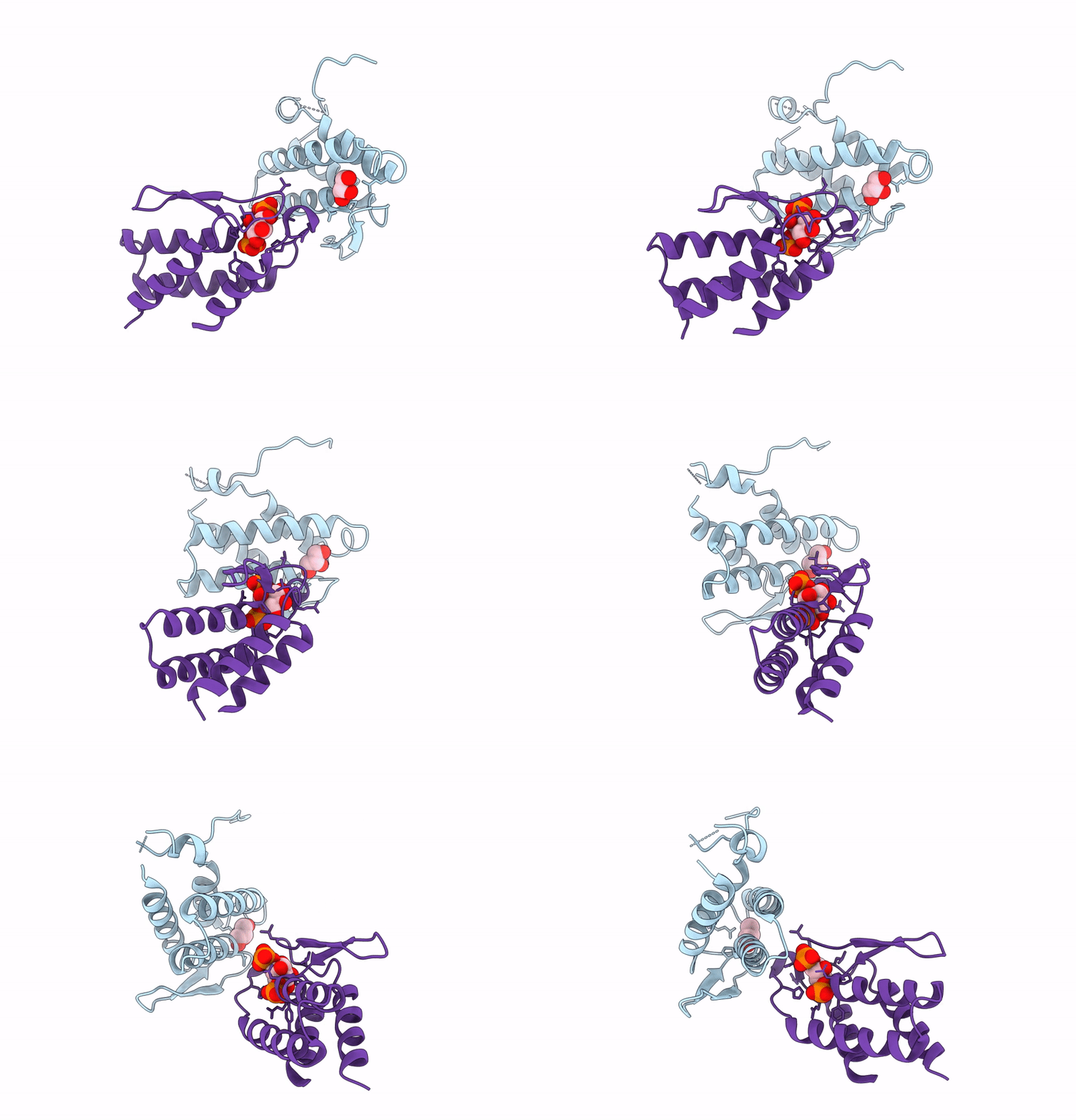
Crystal structure of the PI3P-binding domain of Legionella SetA in complex with inositol 1,3-bisphosphate
Biological Source:
Source Organism(s):
Expression System(s):
Method Details:
Experimental Method:
Resolution:
2.46 Å
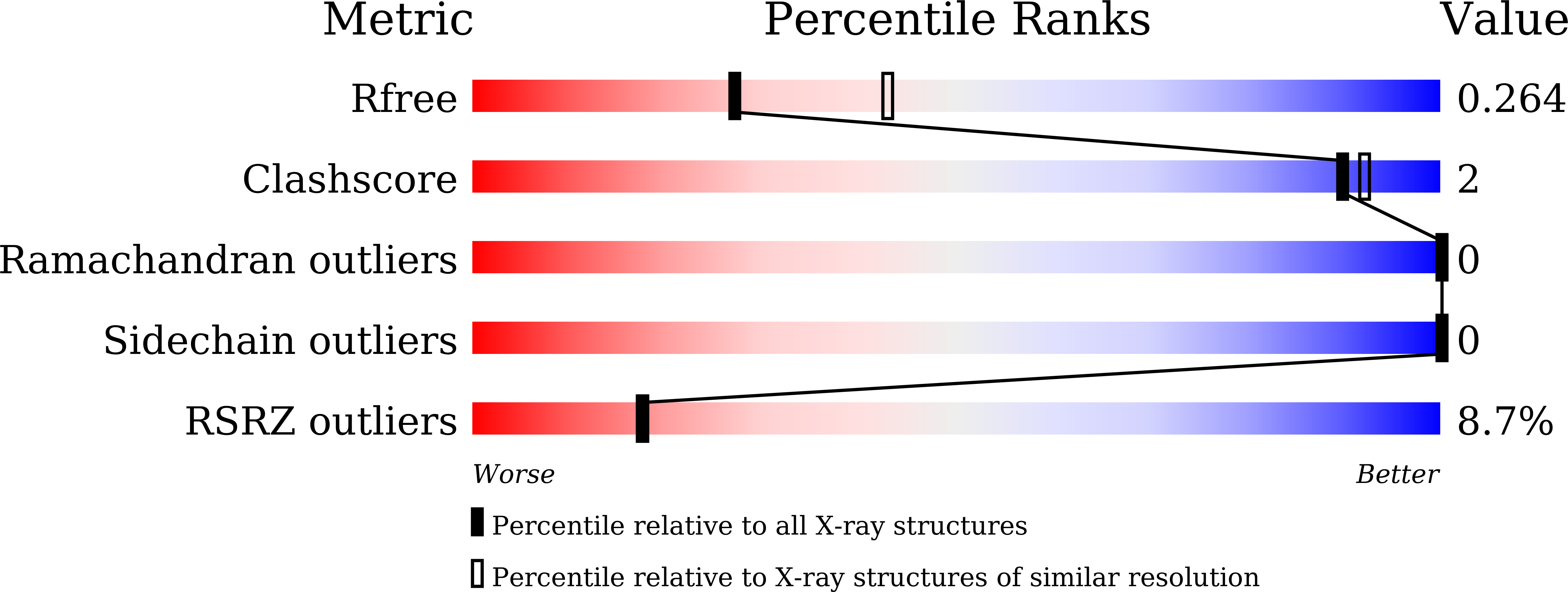
R-Value Free:
0.25
R-Value Work:
0.20
R-Value Observed:
0.20
Space Group:
C 1 2 1
Macromolecular Entities
Structures with similar UniProt ID
Protein Blast
Polymer Type:polypeptide(L)
Molecule:Subversion of eukaryotic traf
Gene (Uniprot):setA
Chain IDs:A, B
Chain Length:126
Number of Molecules:2
Biological Source:Legionella pneumophila
Primary Citation
Structural insights into SetA-mediated Rab1 glucosylation and PI3P-guided localization during early Legionella infection.
Proc. Natl. Acad. Sci. U.S.A. 123 e2535016123 e2535016123 (2026)
PMID: 41894332 DOI: 10.1073/pnas.2535016123

Abstact

The bacterial pathogen Legionella pneumophila secretes effector proteins that remodel host endomembranes to establish a replication-permissive niche known as the Legionella-containing vacuole (LCV). Among these, SetA disrupts vesicle trafficking by glucosylating the small GTPase Rab1, essential for ER-to-Golgi transport. Here, we report comprehensive structural and mechanistic insights into SetA-mediated Rab1 glucosylation and its PI3P-dependent membrane targeting. Crystal structures of its N-terminal glycosyltransferase and C-terminal lipid-binding domains, captured in multiple ligand-bound states, reveal how SetA specifically recognizes GDP-bound Rab1 and the head group of phosphatidylinositol 3-phosphate (PI3P), which is enriched on early LCV membranes. SAXS-based full-length modeling, biochemical assays, and cellular imaging analyses demonstrate that SetA integrates Rab1 modification with membrane localization, thereby perturbing Golgi integrity and ER morphology. Together, these findings define the dual structural mechanisms underlying SetA's coordination of substrate glucosylation and membrane association, providing a spatiotemporal framework for understanding Legionella's early infection strategy.

Legend

Protein

Chemical

Disease

Primary Citation of related structures
Feedback Form
Name
Email
Institute
Feedback