

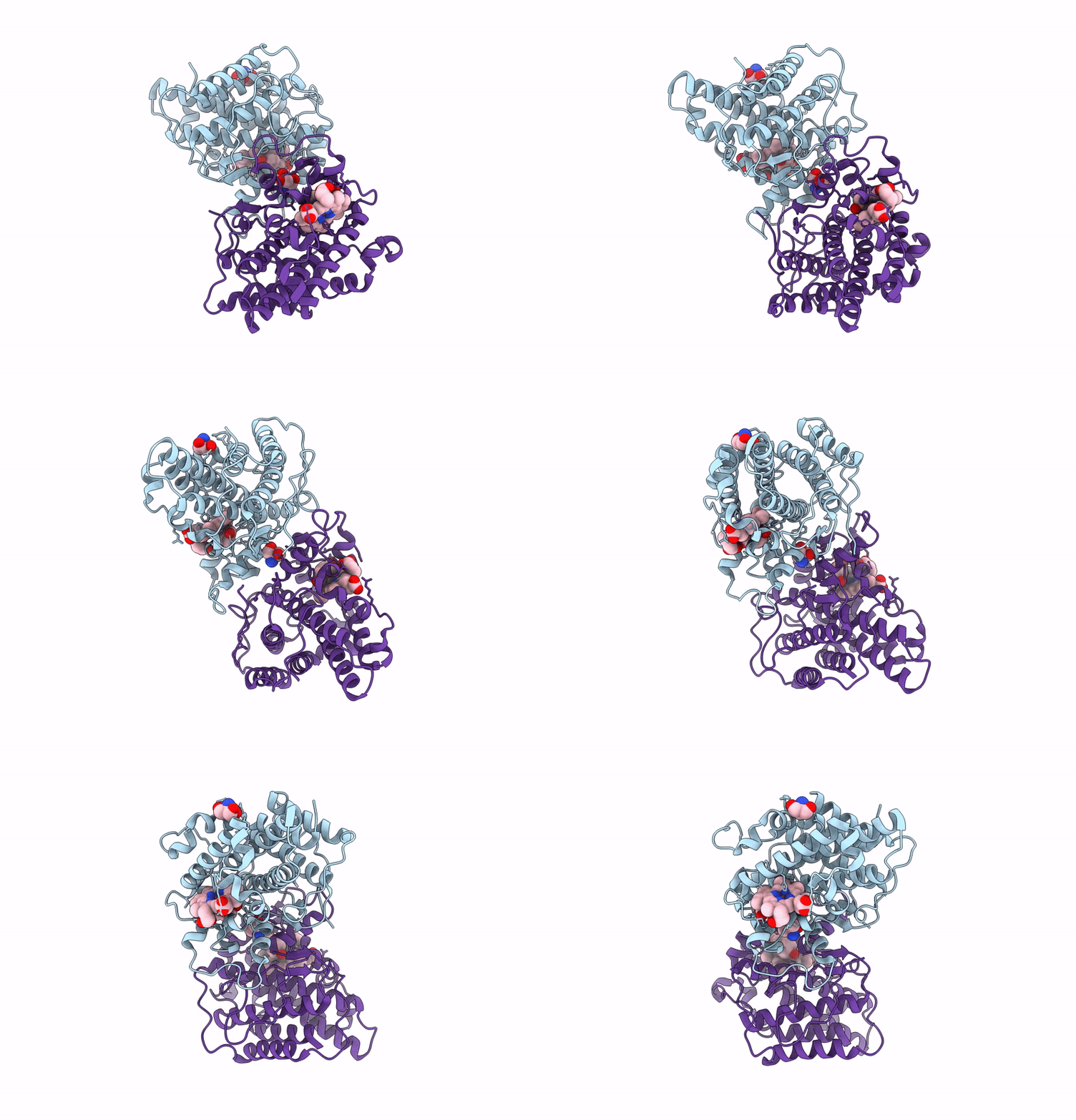
8VMK image
Deposition Date 2024-01-13
Release Date 2025-08-27
Last Version Date 2026-03-25
Entry Detail
PDB ID:
8VMK
Title:
A crystal structure of heme-dependent tyrosine hydroxylase complexed with a substrate analog, 3-(4-hydroxyphenyl)propionic acid
Biological Source:
Source Organism(s):
Expression System(s):
Method Details:
Experimental Method:
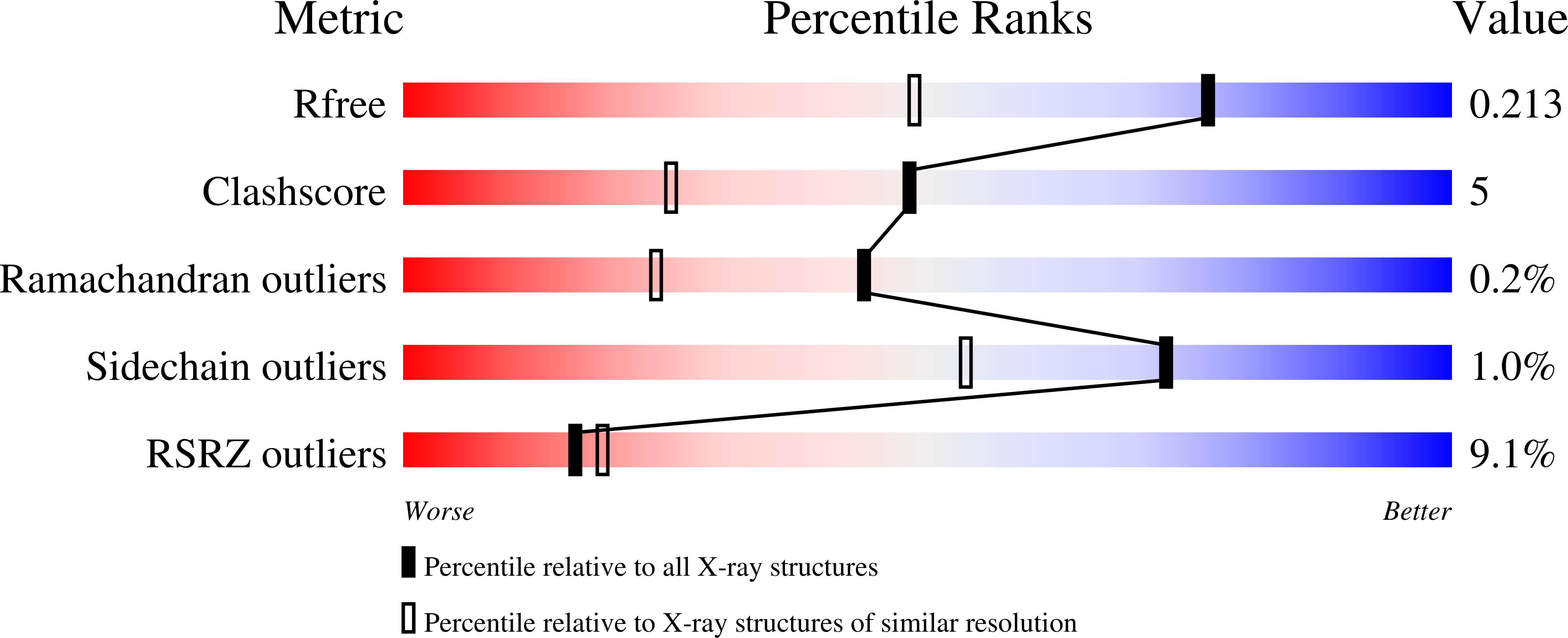
Resolution:
1.56 Å
R-Value Free:
0.21
R-Value Work:
0.18
R-Value Observed:
0.18
Space Group:
P 1 21 1
Macromolecular Entities
Protein Blast
Polymer Type:polypeptide(L)
Molecule:Heme-dependent L-tyrosine hyd
Chain IDs:A, B
Chain Length:316
Number of Molecules:2
Biological Source:Streptomyces sclerotialus
Primary Citation
Substrate Analogs Implicate a Free Radical Pathway in Tyrosine Hydroxylase Catalysis.
Acs Catalysis 15 18270 18281 (2025)
PMID: 41737883 DOI: 10.1021/acscatal.5c05776

Abstact

Heme-dependent tyrosine hydroxylases (TyrH) are critical enzymes in catecholamine biosynthesis, yet the role of the substrate's alpha-amino group in their monooxygenation mechanism has been unclear. Using 3-(4-hydroxyphenyl)propionic acid (HPPA), an l-tyrosine analog lacking the alpha-amino group, we observed a distinct dimerization pathway that competes with the expected hydroxylation reaction. Several lines of evidence confirm that this process originates from a radical intermediate. First, the formation of this (HPPA)(2) dimer is selectively inhibited by a free radical scavenger. Second, (18)O-labeling experiments show phenolic oxygen scrambling, indicating a disruption of substrate aromaticity during catalysis. Finally, EPR spectroscopy using nitrosobenzene as a substrate analog revealed a substrate-based free radical. This mechanistic divergence clarifies the role of the alpha-amino group. Its absence in HPPA creates a kinetic bottleneck for the final O atom transfer step, allowing a fraction of the substrate radical to form the off-pathway dimer. Thus, the native substrate's alpha-amino group acts as a crucial kinetic modulator, ensuring the rapid and efficient commitment of the substrate radical to productive hydroxylation. These results collectively establish a peroxidase-like free radical pathway for TyrH and reveal the nonessential yet significant role the amino group plays in controlling reaction outcomes.

Legend

Protein

Chemical

Disease

Primary Citation of related structures
Feedback Form
Name
Email
Institute
Feedback