

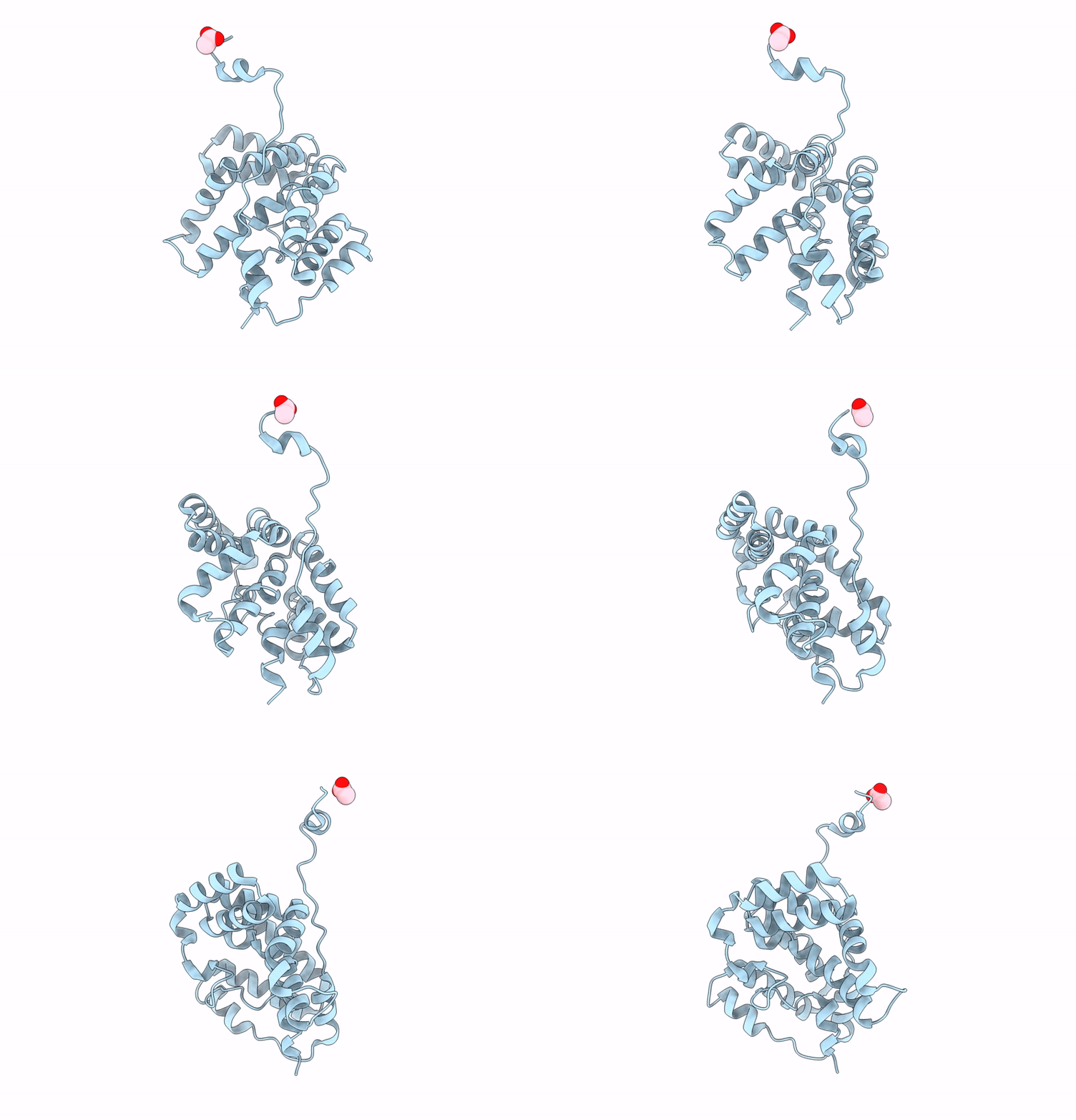
8V4W image
Deposition Date 2023-11-29
Release Date 2025-01-08
Last Version Date 2026-07-15
Entry Detail
PDB ID:
8V4W
Title:
Crystal structure of Campylobacter concisus Csep1
Biological Source:
Source Organism(s):
Expression System(s):
Method Details:
Experimental Method:
Resolution:
1.40 Å
R-Value Free:
0.16
R-Value Work:
0.12
R-Value Observed:
0.12
Space Group:
P 64
Macromolecular Entities
Polymer Type:polypeptide(L)
Molecule:Secreted protein 1
Gene (Uniprot):CCS77_2074
Chain IDs:A
Chain Length:207
Number of Molecules:1
Biological Source:Campylobacter concisus
Ligand Molecules
Primary Citation
Csep1P protein from Campylobacter concisus induces a chemokine-dominant inflammatory state in macrophages and enhances proinflammatory response to gut bacteria.
Plos Pathog. 22 e1013951 e1013951 (2026)
PMID: 41686872 DOI: 10.1371/journal.ppat.1013951

Abstact

Translocation of Campylobacter concisus from the oral cavity to the intestinal tract is increasingly recognised as a contributor to inflammatory bowel disease (IBD). The C. concisus secreted protein Csep1 has emerged as a molecular marker of C. concisus strains associated with Crohn's disease, a form of IBD. However, its structure and role in inflammation remain unknown. Here, we report the X-ray crystal structure of plasmid-encoded Csep1P that reveals a unique alpha-helical fold with structural similarity to Helicobacter pylori cysteine-rich proteins HcpB and HcpC. Because HcpA, another Hcp family member, is known to affect monocyte differentiation, this structural similarity led us to hypothesise that Csep1P may modulate monocyte differentiation and macrophage function. Transcriptomic analysis revealed that Csep1P induced a chemokine-dominant inflammatory state in macrophages, M1-chem. Protein-level validation in both THP-1-derived and primary human macrophages confirmed this selective chemokine response. While Csep1P alone did not upregulate proinflammatory cytokines, THP-1-derived macrophages pre-incubated with Csep1P produced a higher level of proinflammatory cytokines in response to commensal Escherichia coli, which was validated on primary human macrophages. Furthermore, silencing the delta like canonical notch ligand 4 (DLL4) gene decreased the proinflammatory response of Csep1P-mediated macrophages to E. coli. Collectively, our data demonstrate that the structurally unique Csep1P reprograms macrophage response, which provides a mechanistic link between C. concisus infection and Crohn's disease pathogenesis, and identifies Csep1P as a potential target for therapeutic intervention.

Legend

Protein

Chemical

Disease

Primary Citation of related structures
Feedback Form
Name
Email
Institute
Feedback