

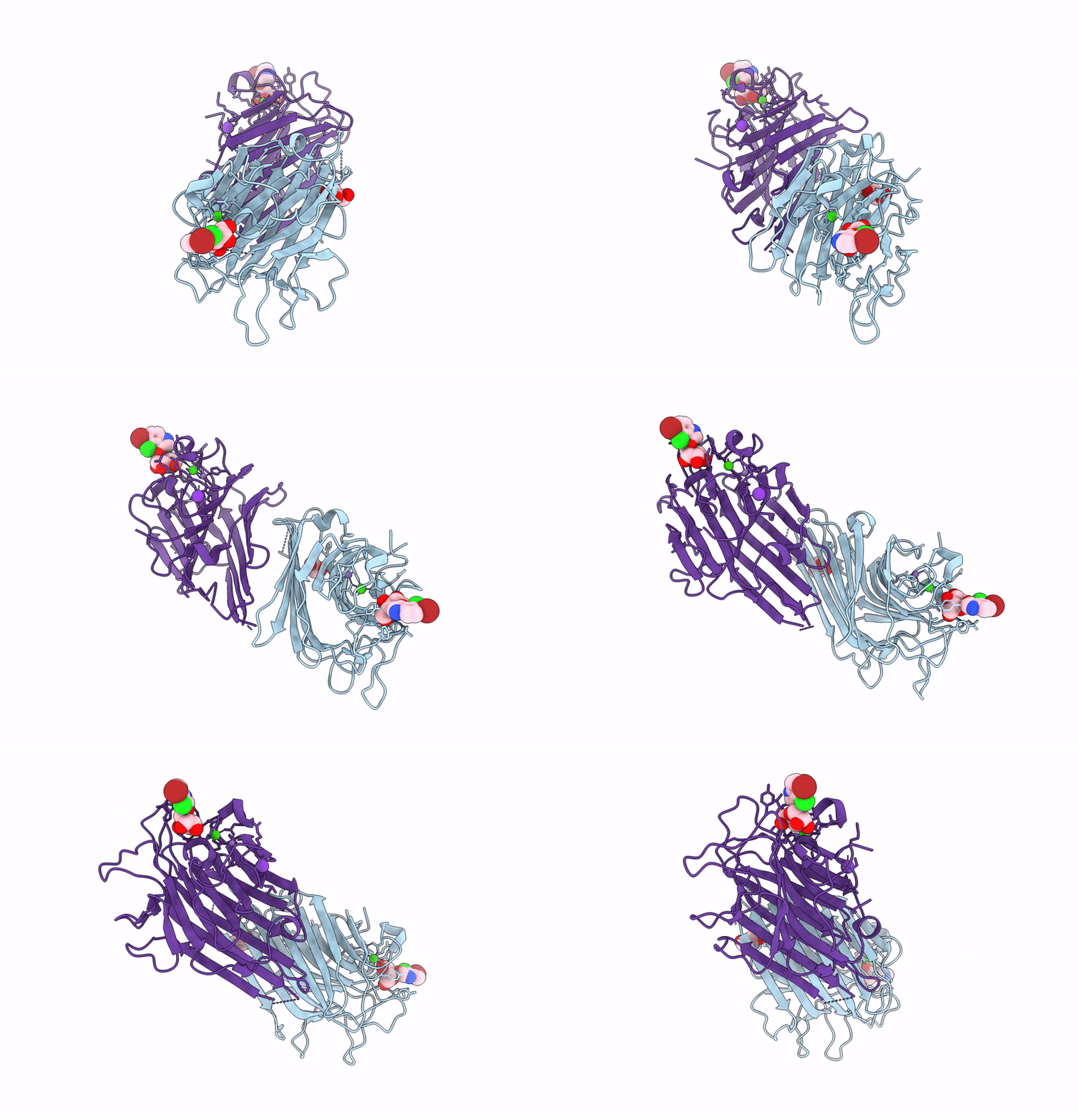
8UX7 image
Deposition Date 2023-11-09
Release Date 2023-11-29
Last Version Date 2026-04-15
Entry Detail
PDB ID:
8UX7
Title:
Dioclea megacarpa lectin (DmegA) complexed with X-Man
Biological Source:
Source Organism(s):
Method Details:
Experimental Method:
Resolution:
2.20 Å
R-Value Free:
0.24
R-Value Work:
0.20
Space Group:
I 2 2 2

Macromolecular Entities
Structures with similar UniProt ID
Protein Blast
Polymer Type:polypeptide(L)
Molecule:Dioclea megacarpa lectin
Chain IDs:A, B
Chain Length:237
Number of Molecules:2
Biological Source:Macropsychanthus megacarpus
Primary Citation
Crystal structure, glycan specificity, and induction of cellular stress by the legume lectin DmegA.
Int. J. Biol. Macromol. 358 151795 151795 (2026)
PMID: 41932485 DOI: 10.1016/j.ijbiomac.2026.151795

Abstact

The precise molecular mechanisms translating glycan recognition by plant lectins into cancer cell death remain incompletely understood. To address this gap, this study examines the cytotoxic response elicited by the mannose-specific legume lectin DmegA by integrating structural biology, glycan profiling, and cellular assays to map events from cell surface binding to apoptosis. The 2.4 A crystal structure reveals a canonical ConA-like fold with conserved carbohydrate-recognition and Ca(2+)/Mn(2+) coordination sites. Glycan microarray and molecular docking analyses indicate preferential recognition of mannose-rich N-glycan motifs, including the core trimannoside of N-glycans, consistent with the interaction of the lectin with a broad range of glycoproteins. Glycan-dependent internalization of DmegA in PANC-1 cells was associated with increased EDEM transcript levels, whereas no statistically significant change in CHOP transcript levels was detected, alongside elevated ROS levels and caspase activation. The pro-apoptotic gene PUMA was upregulated, suggesting a potential connection between cellular stress responses and mitochondrial apoptosis. While the observation of EDEM induction in the absence of statistically significant CHOP upregulation represents a low-power preliminary finding, the combined data support a cellular phenotype characterized by oxidative stress, caspase activation, and ER-associated transcriptional changes. Given its broad glycan recognition and lack of tumor selectivity, DmegA is not directly suitable for therapeutic applications, but the structural and mechanistic insights provided here inform future engineering or targeting strategies aimed at improving lectin selectivity.

Legend

Protein

Chemical

Disease

Primary Citation of related structures
Feedback Form
Name
Email
Institute
Feedback