

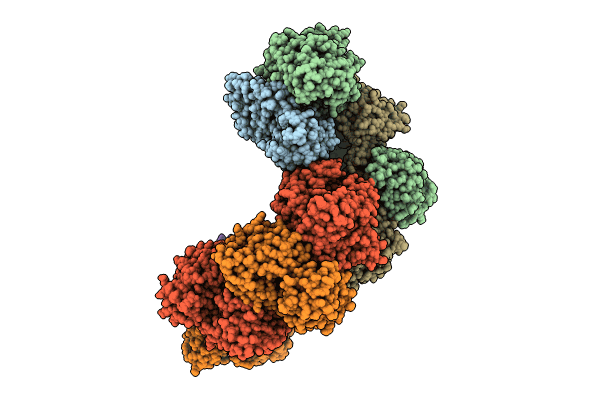
8UHW image
Deposition Date 2023-10-09
Release Date 2024-08-21
Last Version Date 2025-07-09
Entry Detail
PDB ID:
8UHW
Keywords:
Title:
The structure of the Clostridium thermocellum AdhE spirosome
Biological Source:
Source Organism(s):
Expression System(s):
Method Details:
Experimental Method:
Resolution:
3.28 Å
Aggregation State:
PARTICLE
Reconstruction Method:
SINGLE PARTICLE

Macromolecular Entities
Polymer Type:polypeptide(L)
Molecule:Aldehyde-alcohol dehydrogenas
Chain IDs:A, B, C, D, E, F
Chain Length:887
Number of Molecules:6
Biological Source:Acetivibrio thermocellus DSM 1313
Ligand Molecules
Primary Citation
Structural characterization and dynamics of AdhE ultrastructures from Clostridium thermocellum show a containment strategy for toxic intermediates.
Elife 13 ? ? (2025)
PMID: 40577193 DOI: 10.7554/eLife.96966

Abstact

Clostridium thermocellum, a cellulolytic thermophilic anaerobe, is considered by many to be a prime candidate for the realization of consolidated bioprocessing (CBP) and is known as an industry standard for biofuel production. C. thermocellum is among the best biomass degraders identified to date in nature and produces ethanol as one of its main products. Many studies have helped increase ethanol titers in this microbe; however, ethanol production using C. thermocellum is still not economically viable. Therefore, a better understanding of its ethanol synthesis pathway is required. The main pathway for ethanol production in C. thermocellum involves the bifunctional aldehyde-alcohol dehydrogenase (AdhE). To better understand the function of the C. thermocellum AdhE, we used cryo-electron microscopy (cryo-EM) to obtain a 3.28 A structure of the AdhE complex. This high-resolution structure, in combination with molecular dynamics simulations, provides insight into the substrate channeling of the toxic intermediate acetaldehyde, indicates the potential role of C. thermocellum AdhE to regulate activity and cofactor pools, and establishes a basis for future engineering studies. The containment strategy found in this enzyme offers a template that could be replicated in other systems where toxic intermediates need to be sequestered to increase the production of valuable biochemicals.

Legend

Protein

Chemical

Disease

Primary Citation of related structures
Feedback Form
Name
Email
Institute
Feedback