

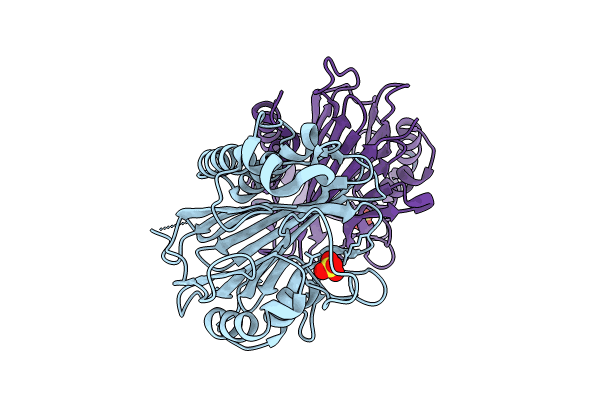
8SV7 image
Deposition Date 2023-05-15
Release Date 2024-06-26
Last Version Date 2026-04-15
Entry Detail
PDB ID:
8SV7
Title:
The 1.53 Angstrom structure of human Tango2
Biological Source:
Source Organism(s):
Homo sapiens (Taxon ID: 9606)
Expression System(s):
Method Details:
Experimental Method:
Resolution:
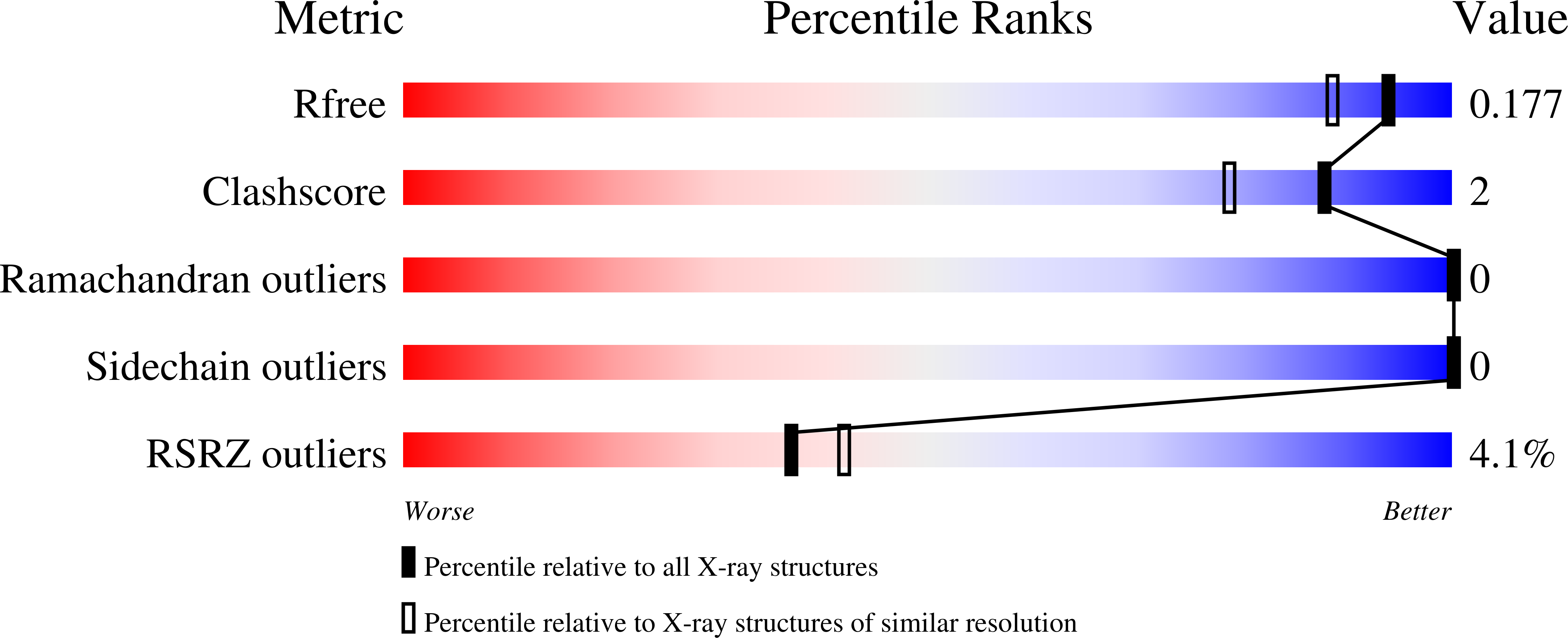
1.53 Å
R-Value Free:
0.19
R-Value Work:
0.16
Space Group:
P 21 21 21
Macromolecular Entities
Polymer Type:polypeptide(L)
Molecule:Transport and Golgi organizat
Gene (Uniprot):TANGO2
Chain IDs:A, B
Chain Length:276
Number of Molecules:2
Biological Source:Homo sapiens
Ligand Molecules
Primary Citation
The crystal structure of human transport and Golgi organization 2 homolog (TANGO2) suggests a cysteine N-terminal nucleophile (Ntn) hydrolase.
Acta Crystallogr D Struct Biol 82 383 396 (2026)
PMID: 41924852 DOI: 10.1107/S2059798326001968

Abstact

Recently, there has been growing interest in the function and physiological importance of human TANGO2 (transport and Golgi organization 2 homolog), particularly whether it acts as a heme-trafficking protein. To address this question, we experimentally determined the three-dimensional structure of TANGO2. Our crystallographic analysis indicates that interactions between heme and TANGO2 are nonspecific. Structural comparison of the TANGO2 crystal structure with known cysteine Ntn-hydrolases allowed us to identify a putative active site, catalytic residues and a substrate-binding cavity that correspond to residues that are mutated in pathogenic TANGO2 variants. Based on these features, we propose that TANGO2 may utilize fatty-acid derivatives as substrates, suggesting a potential role in lipid metabolism. Mutations in the human TANGO2 gene cause TANGO2 deficiency disorder, a multisystem, life-threatening disease with onset in early childhood. Together, our results provide new insights into the molecular function of TANGO2 and help to resolve the ongoing debate regarding whether it functions as a heme-trafficking protein.

Legend

Protein

Chemical

Disease

Primary Citation of related structures
Feedback Form
Name
Email
Institute
Feedback