

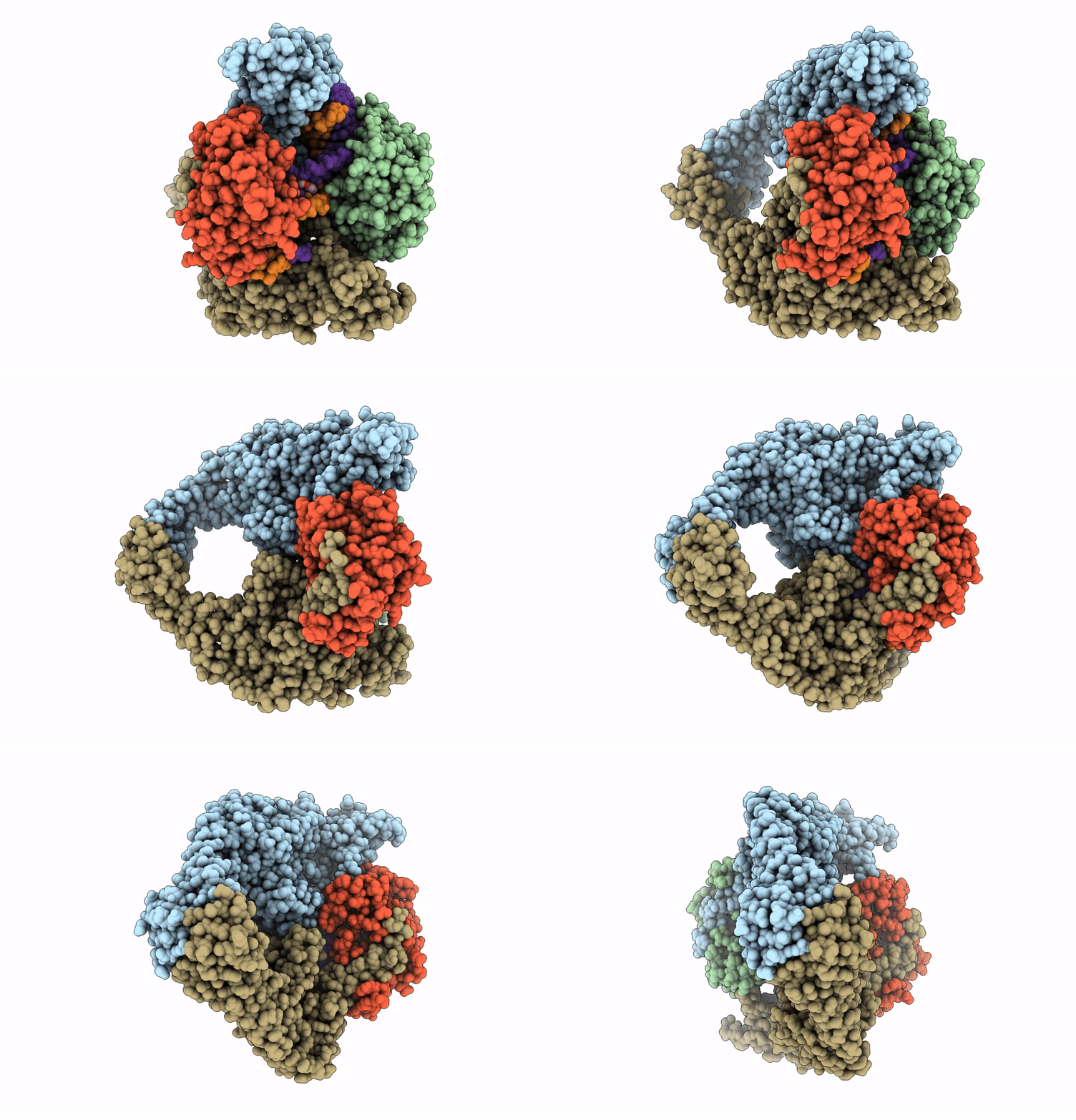
8S7O image
Deposition Date 2024-03-04
Release Date 2025-03-19
Last Version Date 2026-05-13
Entry Detail
PDB ID:
8S7O
Title:
M. tuberculosis gyrase holocomplex with 150 bp DNA and BDM71403
Biological Source:
Source Organism(s):
Expression System(s):
Method Details:
Experimental Method:
Resolution:
2.80 Å
Aggregation State:
PARTICLE
Reconstruction Method:
SINGLE PARTICLE

Macromolecular Entities
Structures with similar UniProt ID
Protein Blast
Polymer Type:polypeptide(L)
Molecule:DNA gyrase subunit A
Gene (Uniprot):gyrA
Chain IDs:A, C
Chain Length:837
Number of Molecules:2
Biological Source:Mycobacterium tuberculosis
Structures with similar UniProt ID
Protein Blast
Polymer Type:polypeptide(L)
Molecule:DNA gyrase subunit B
Gene (Uniprot):gyrB
Chain IDs:B, D
Chain Length:678
Number of Molecules:2
Biological Source:Mycobacterium tuberculosis
Polymer Type:polydeoxyribonucleotide
Molecule:DNA (5'-D(*CP*CP*GP*GP*AP*AP*
Chain IDs:E
Chain Length:150
Number of Molecules:1
Biological Source:synthetic construct
Polymer Type:polydeoxyribonucleotide
Molecule:DNA (5'-D(*CP*CP*GP*GP*AP*AP*
Chain IDs:F
Chain Length:150
Number of Molecules:1
Biological Source:synthetic construct
Ligand Molecules
Primary Citation
Molecular mechanism of a triazole-containing inhibitor of Mycobacterium tuberculosis DNA gyrase.
Iscience 27 110967 110967 (2024)
PMID: 39429773 DOI: 10.1016/j.isci.2024.110967

Abstact

Antimicrobial resistance remains a persistent and pressing public health concern. Here, we describe the synthesis of original triazole-containing inhibitors targeting the DNA gyrase, a well-validated drug target for developing new antibiotics. Our compounds demonstrate potent antibacterial activity against various pathogenic bacteria, with notable potency against Mycobacterium tuberculosis (Mtb). Moreover, one hit, compound 10a, named BDM71403, was shown to be more potent in Mtb than the NBTI of reference, gepotidacin. Mechanistic enzymology assays reveal a competitive interaction of BDM71403 with fluoroquinolones within the Mtb gyrase cleavage core. High-resolution cryo-electron microscopy structural analysis provides detailed insights into the ternary complex formed by the Mtb gyrase, double-stranded DNA, and either BDM71403 or gepotidacin, providing a rational framework to understand the superior in vitro efficacy on Mtb. This study highlights the potential of triazole-based scaffolds as promising gyrase inhibitors, offering new avenues for drug development in the fight against antimicrobial resistance.

Legend

Protein

Chemical

Disease

Primary Citation of related structures
Feedback Form
Name
Email
Institute
Feedback