

8RTZ image
Deposition Date 2024-01-29
Release Date 2024-04-03
Last Version Date 2024-10-23
Entry Detail
PDB ID:
8RTZ
Keywords:
Title:
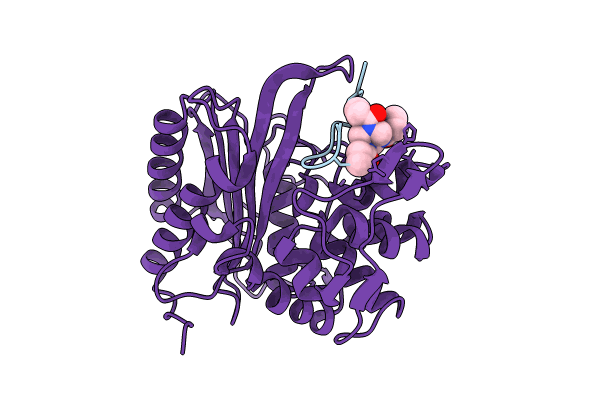
The structure of E. coli penicillin binding protein 3 (PBP3) in complex with a bicyclic peptide inhibitor
Biological Source:
Source Organism(s):
Expression System(s):
Method Details:
Experimental Method:
Resolution:
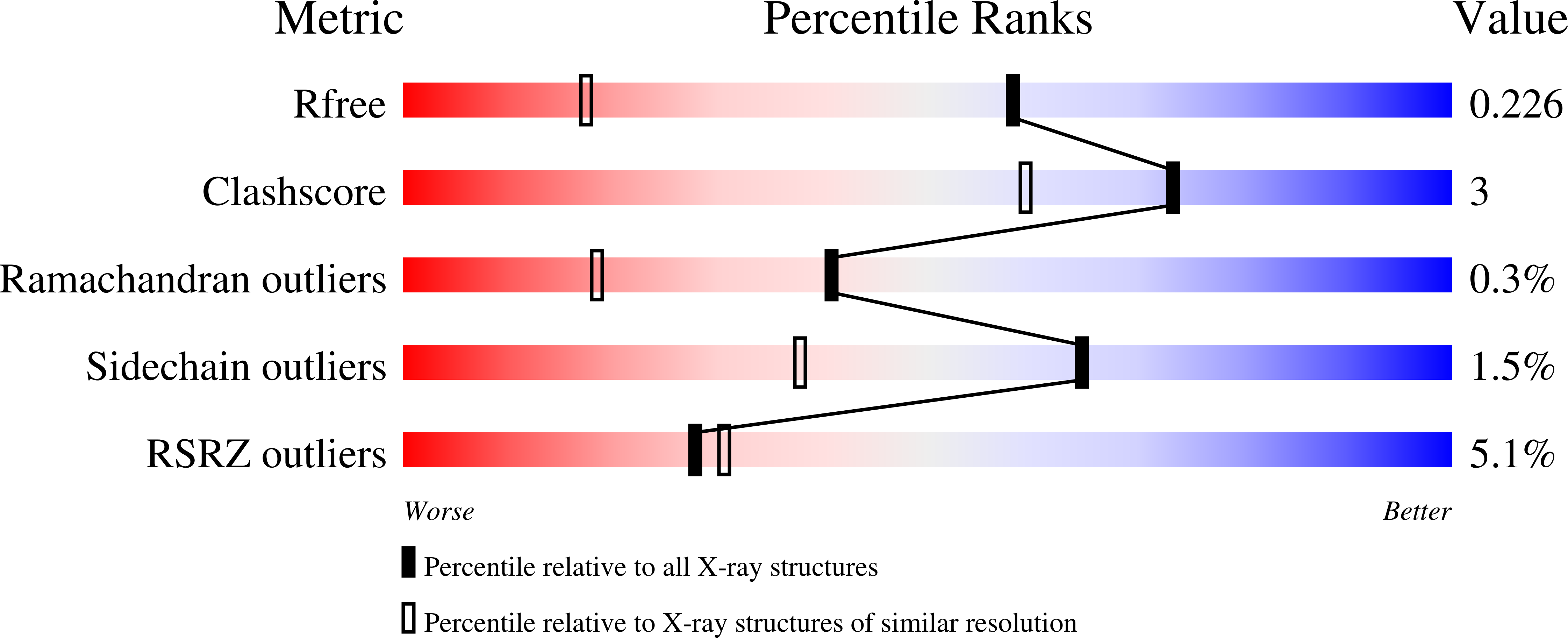
1.52 Å
R-Value Free:
0.21
R-Value Work:
0.18
Space Group:
C 2 2 21
Macromolecular Entities
Protein Blast
Polymer Type:polypeptide(L)
Molecule:Bicyclic peptide inhibitor
Chain IDs:B (auth: A)
Chain Length:15
Number of Molecules:1
Biological Source:synthetic construct
Structures with similar UniProt ID
Protein Blast
Polymer Type:polypeptide(L)
Molecule:Peptidoglycan D,D-transpeptid
Gene (Uniprot):ftsI
Chain IDs:A (auth: AAA)
Chain Length:348
Number of Molecules:1
Biological Source:Escherichia coli
Ligand Molecules
Primary Citation
Discovery and chemical optimisation of a potent, Bi-cyclic antimicrobial inhibitor of Escherichia coli PBP3.
Commun Biol 8 819 819 (2025)
PMID: 40437113 DOI: 10.1038/s42003-025-08246-x

Abstact

Penicillin binding proteins (PBPs) are well validated antimicrobial targets, but the prevalence of β-lactamase driven resistance and, more rarely, target-based mutations, necessitates new classes of PBP-targeting drugs. Here we describe the discovery and optimisation of bicyclic peptide (Bicycle®) inhibitors of E. coli PBP3 (EcPBP3) using a proprietary phage display platform, and their conjugation to linear antimicrobial peptides to confer outer membrane permeation. These molecules exhibited high-affinity binding to E. coli PBP3 and a viable spectrum of killing activity against clinically relevant species of the Enterobacterales. X-ray crystallography was used to explore the mode of binding to PBP3, enabling increased target affinity and improvement of in vitro stability. These compounds bind to the transpeptidase active site cleft of PBP3 and represent, to our knowledge, a novel non-β-lactam chemical class of high affinity, non-covalent penicillin binding protein inhibitors. This work demonstrates an approach to rapidly find binders to antimicrobial targets, combined with an entry mechanism to provide access to the Gram negative cell.

Legend

Protein

Chemical

Disease

Primary Citation of related structures
Feedback Form
Name
Email
Institute
Feedback