

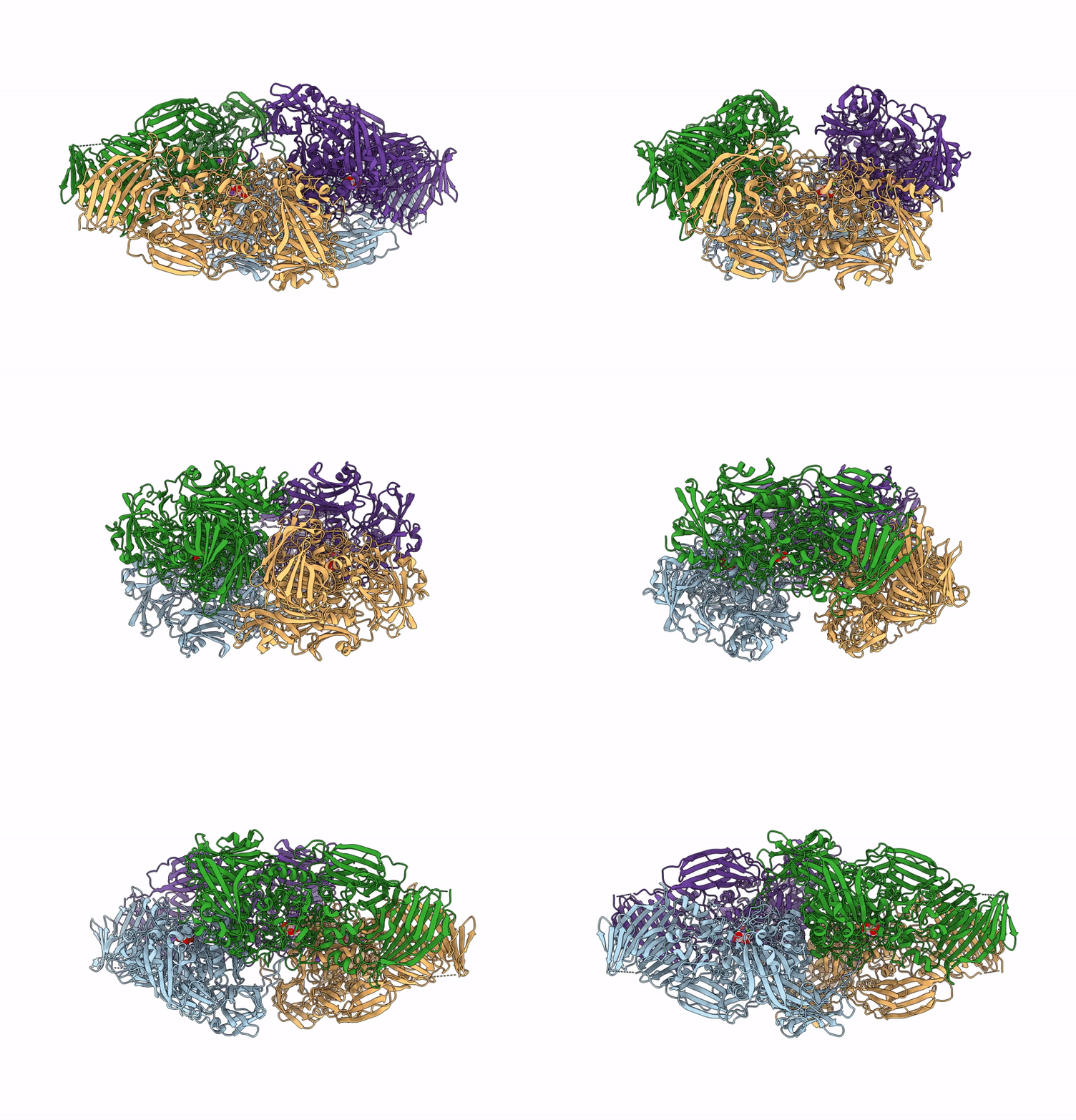
8RI8 image
Deposition Date 2023-12-18
Release Date 2025-01-01
Last Version Date 2026-04-01
Entry Detail
PDB ID:
8RI8
Keywords:
Title:
Beta-galactosidase (LacZ) in complex with synthetic glycosyrin.
Biological Source:
Source Organism(s):
Escherichia coli (Taxon ID: 562)
Expression System(s):
Method Details:
Experimental Method:
Resolution:
1.42 Å
Aggregation State:
PARTICLE
Reconstruction Method:
SINGLE PARTICLE
Macromolecular Entities
Structures with similar UniProt ID
Protein Blast
Polymer Type:polypeptide(L)
Molecule:Beta-galactosidase
Gene (Uniprot):lacZ
Chain IDs:A, B, C, D
Chain Length:1030
Number of Molecules:4
Biological Source:Escherichia coli
Primary Citation

Abstact

The extracellular space (apoplast) in plants is a key battleground during microbial infections. To avoid recognition, the bacterial model phytopathogen Pseudomonas syringae pv. tomato DC3000 produces glycosyrin. Glycosyrin inhibits the plant-secreted beta-galactosidase BGAL1, which would otherwise initiate the release of immunogenic peptides from bacterial flagellin. Here, we report the structure, biosynthesis, and multifunctional roles of glycosyrin. High-resolution cryo-electron microscopy and chemical synthesis revealed that glycosyrin is an iminosugar with a five-membered pyrrolidine ring and a hydrated aldehyde that mimics monosaccharides. Glycosyrin biosynthesis was controlled by virulence regulators, and its production is common in bacteria and prevents flagellin recognition and alters the extracellular glycoproteome and metabolome of infected plants. These findings highlight a potentially wider role for glycobiology manipulation by plant pathogens across the plant kingdom.

Legend

Protein

Chemical

Disease

Primary Citation of related structures
Feedback Form
Name
Email
Institute
Feedback