

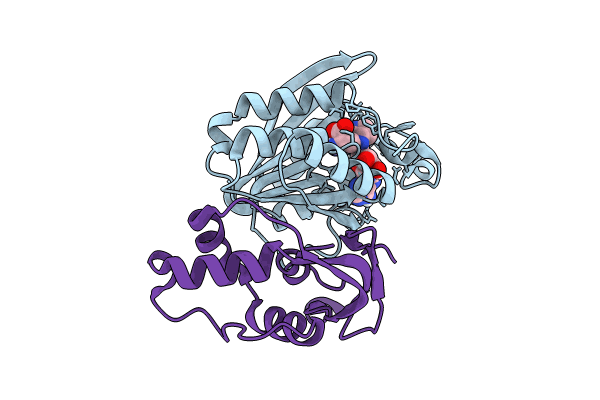
8QDG image
Deposition Date 2023-08-29
Release Date 2024-09-11
Last Version Date 2026-03-25
Entry Detail
PDB ID:
8QDG
Keywords:
Title:
compound 1a bound KMT9 crystal structure
Biological Source:
Source Organism(s):
Homo sapiens (Taxon ID: 9606)
Expression System(s):
Method Details:
Experimental Method:
Resolution:
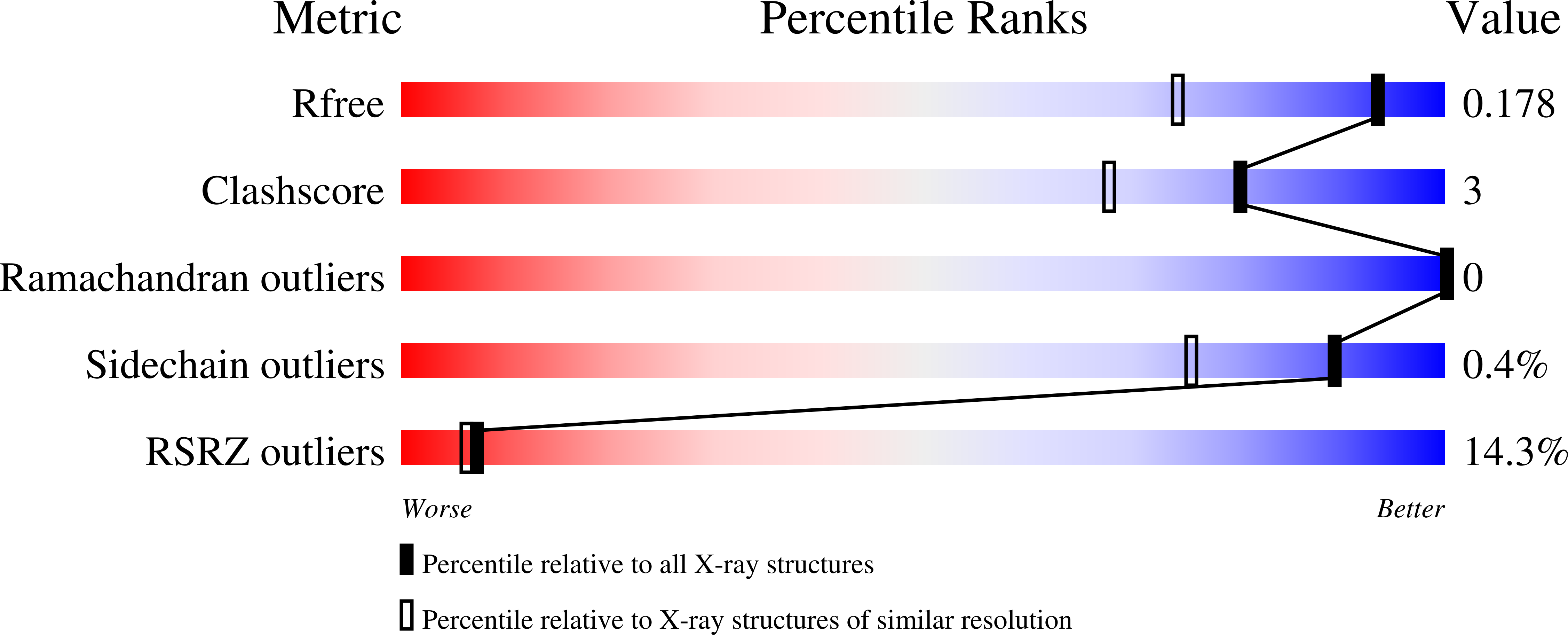
1.39 Å
R-Value Free:
0.17
R-Value Work:
0.15
Space Group:
P 61 2 2
Macromolecular Entities
Structures with similar UniProt ID
Protein Blast
Polymer Type:polypeptide(L)
Molecule:Methyltransferase N6AMT1
Gene (Uniprot):HEMK2
Chain IDs:A
Chain Length:203
Number of Molecules:1
Biological Source:Homo sapiens
Structures with similar UniProt ID
Protein Blast
Polymer Type:polypeptide(L)
Molecule:Multifunctional methyltransfe
Gene (Uniprot):TRMT112
Chain IDs:B
Chain Length:126
Number of Molecules:1
Biological Source:Homo sapiens
Ligand Molecules
Primary Citation
Structure-guided design of a selective inhibitor of the methyltransferase KMT9 with cellular activity.
Nat Commun 15 43 43 (2024)
PMID: 38167811 DOI: 10.1038/s41467-023-44243-6

Abstact

Inhibition of epigenetic regulators by small molecules is an attractive strategy for cancer treatment. Recently, we characterised the role of lysine methyltransferase 9 (KMT9) in prostate, lung, and colon cancer. Our observation that the enzymatic activity was required for tumour cell proliferation identified KMT9 as a potential therapeutic target. Here, we report the development of a potent and selective KMT9 inhibitor (compound 4, KMI169) with cellular activity through structure-based drug design. KMI169 functions as a bi-substrate inhibitor targeting the SAM and substrate binding pockets of KMT9 and exhibits high potency, selectivity, and cellular target engagement. KMT9 inhibition selectively downregulates target genes involved in cell cycle regulation and impairs proliferation of tumours cells including castration- and enzalutamide-resistant prostate cancer cells. KMI169 represents a valuable tool to probe cellular KMT9 functions and paves the way for the development of clinical candidate inhibitors as therapeutic options to treat malignancies such as therapy-resistant prostate cancer.

Legend

Protein

Chemical

Disease

Primary Citation of related structures
Feedback Form
Name
Email
Institute
Feedback