

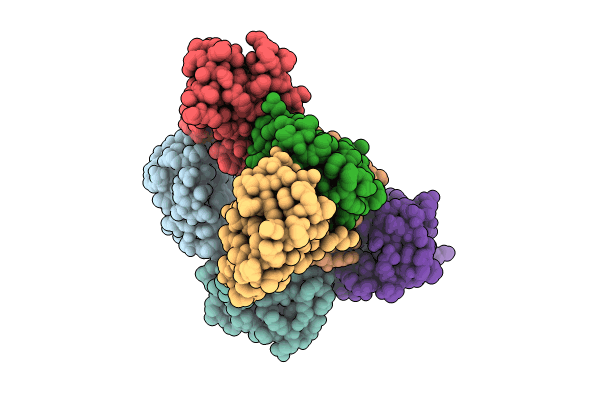
8P8H image
Deposition Date 2023-06-01
Release Date 2024-06-12
Last Version Date 2026-06-10
Entry Detail
PDB ID:
8P8H
Title:
Crystal structure of HHD2 domain of hRTEL1
Biological Source:
Source Organism(s):
Homo sapiens (Taxon ID: 9606)
Expression System(s):
Method Details:
Experimental Method:
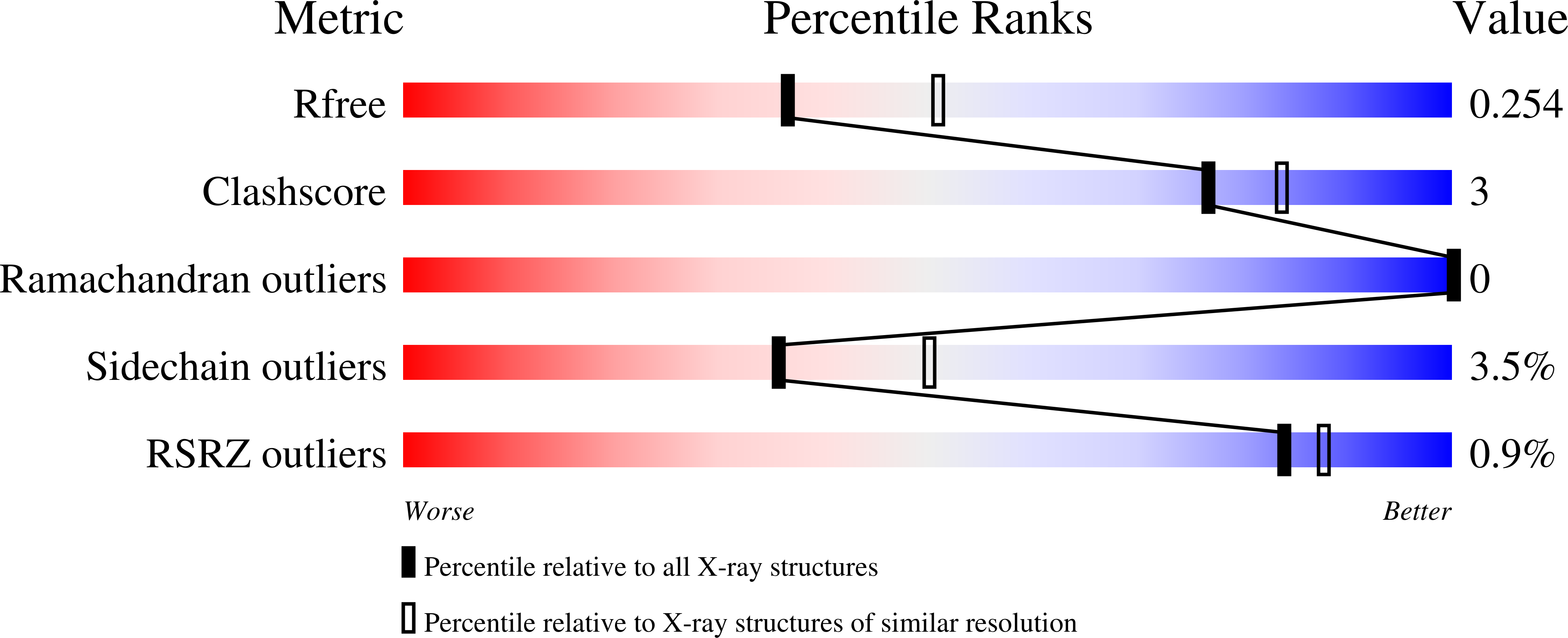
Resolution:
2.30 Å
R-Value Free:
0.25
R-Value Work:
0.21
Space Group:
P 1 21 1
Macromolecular Entities
Structures with similar UniProt ID
Protein Blast
Polymer Type:polypeptide(L)
Molecule:Regulator of telomere elongat
Gene (Uniprot):RTEL1
Chain IDs:A, B, C, D, E, F, G
Chain Length:97
Number of Molecules:7
Biological Source:Homo sapiens
Primary Citation
Structural and biochemical characterization of the C-terminal region of the human RTEL1 helicase.
Protein Sci. 33 e5093 e5093 (2024)
PMID: 39180489 DOI: 10.1002/pro.5093

Abstact

RTEL1 is an essential DNA helicase which plays an important role in various aspects of genome stability, from telomere metabolism to DNA replication, repair and recombination. RTEL1 has been implicated in a number of genetic diseases and cancer development, including glioma, breast, lung and gastrointestinal tumors. RTEL1 is a FeS helicase but, in addition to the helicase core, it comprises a long C-terminal region which includes a number of folded domains connected by intrinsically disordered loops and mediates RTEL1 interaction with factors involved in pivotal cellular pathways. However, information on the architecture and the function of this region is still limited. We expressed and purified a variety of fragments encompassing the folded domains and the unstructured regions. We determined the crystal structure of the second repeat, confirming that it has a fold similar to the harmonin homology domains. SAXS data provide low-resolution information on all the fragments and suggest that the presence of the RING domain affects the overall architecture of the C-terminal region, making the structure significantly more compact. NMR data provide experimental information on the interaction between PCNA and the RTEL1 C-terminal region, revealing a putative low-affinity additional site of interaction. A biochemical analysis shows that the C-terminal region, in addition to a preference for telomeric RNA and DNA G-quadruplexes, has a high affinity for R-loops and D-loops, consistent with the role played by the RTEL1 helicase in homologous recombination, telomere maintenance and preventing replication-transcription conflicts. We further dissected the contribution of each domain in binding different substrates.

Legend

Protein

Chemical

Disease

Primary Citation of related structures
Feedback Form
Name
Email
Institute
Feedback