

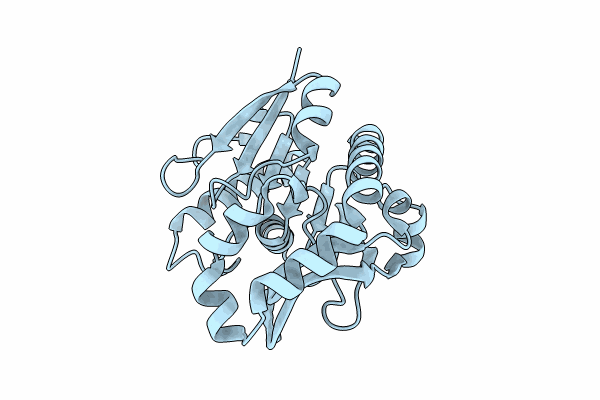
8KHS image
Deposition Date 2023-08-22
Release Date 2024-09-04
Last Version Date 2026-04-22
Entry Detail
PDB ID:
8KHS
Keywords:
Title:
the structure of a glutamine amidotransferase DnfC from Alcaligenes sp.
Biological Source:
Source Organism(s):
Expression System(s):
Method Details:
Experimental Method:
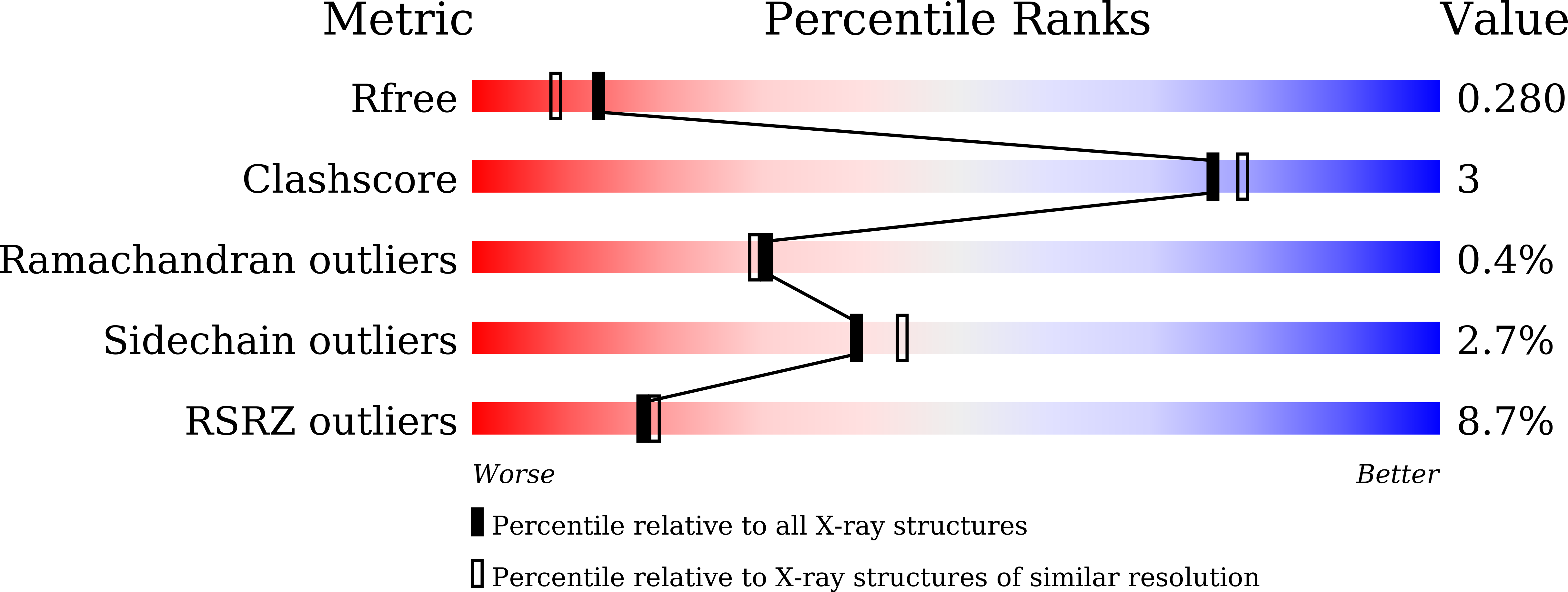
Resolution:
2.10 Å
R-Value Free:
0.28
R-Value Work:
0.24
R-Value Observed:
0.24
Space Group:
I 2 2 2
Macromolecular Entities
Structures with similar UniProt ID
Protein Blast
Polymer Type:polypeptide(L)
Molecule:Glutamine amidotransferase
Chain IDs:A
Chain Length:241
Number of Molecules:1
Biological Source:Alcaligenes ammonioxydans
Primary Citation
Structural and functional study suggests DnfC is a putative glutamine amidotransferase in the dirammox pathway.
Biochem.Biophys.Res.Commun. 816 153715 153715 (2026)
PMID: 41936240 DOI: 10.1016/j.bbrc.2026.153715

Abstact

Microbial ammonia oxidation is essential for biogeochemical nitrogen cycling and wastewater treatment. Besides the well-studied nitrification and anaerobic ammonia oxidation, a novel ammonia oxidation process referred to as direct ammonia oxidation (dirammox) was recently discovered in heterotrophic nitrifier Alcaligenes members, where ammonia was converted to glutamine and oxidized to hydroxylamine and then to N(2) via a gene cluster, dnfABC. Two possible ammonia oxidation mechanisms were proposed, 1) glutamine is converted to some unknown compounds by potential glutamine amidotransferase DnfC and then oxidized to hydroxylamine by oxidase DnfAB, and 2) glutamine is oxidized to l-glutamic acid gamma-hydroxamate (L-GlngammaHXM) by DnfAB and then hydrolyzed to hydroxylamine by DnfC. Here, we determined the crystal structure of DnfC and identified a conserved catalytic pocket essential for hydroxylamine production and far larger than that required to accommodate a glutamate molecule. We found that the L-GlngammaHXM hydrolysis activity is not necessary for hydroxylamine production in E. coli cells harboring dnfABC. Our structural and functional study of DnfC suggested that glutamine was converted to a so-far unknown compound and sequentially oxidized to hydroxylamine and N(2).

Legend

Protein

Chemical

Disease

Primary Citation of related structures
Feedback Form
Name
Email
Institute
Feedback