

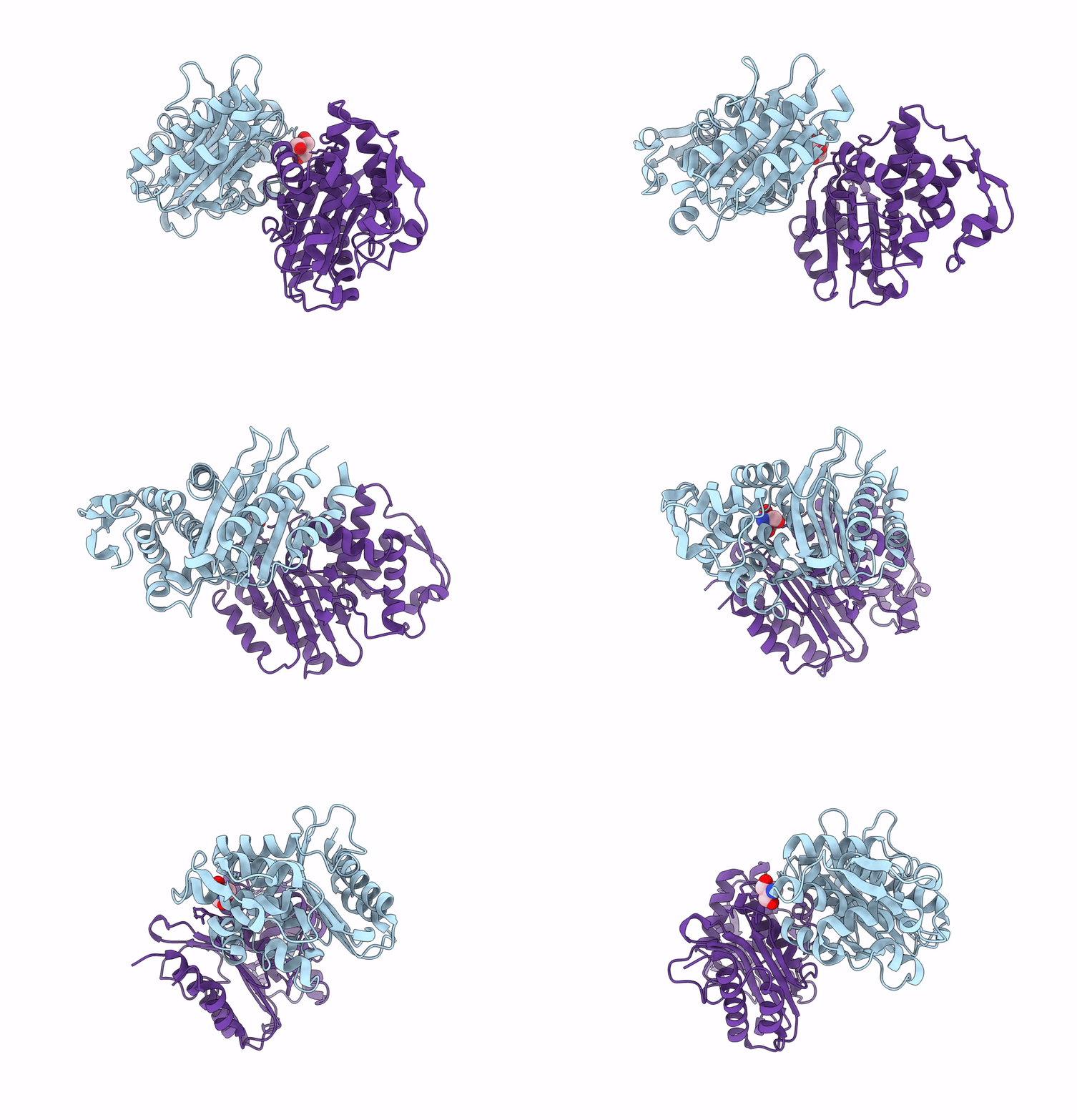
8EO5 image
Deposition Date 2022-10-02
Release Date 2023-09-06
Last Version Date 2026-05-13
Entry Detail
PDB ID:
8EO5
Title:
Crystal structure of the class A beta-lactamase precursor LRA-5 from an Alaskan soil metagenome at 1.8 Angstrom resolution
Biological Source:
Source Organism(s):
Expression System(s):
Method Details:
Experimental Method:
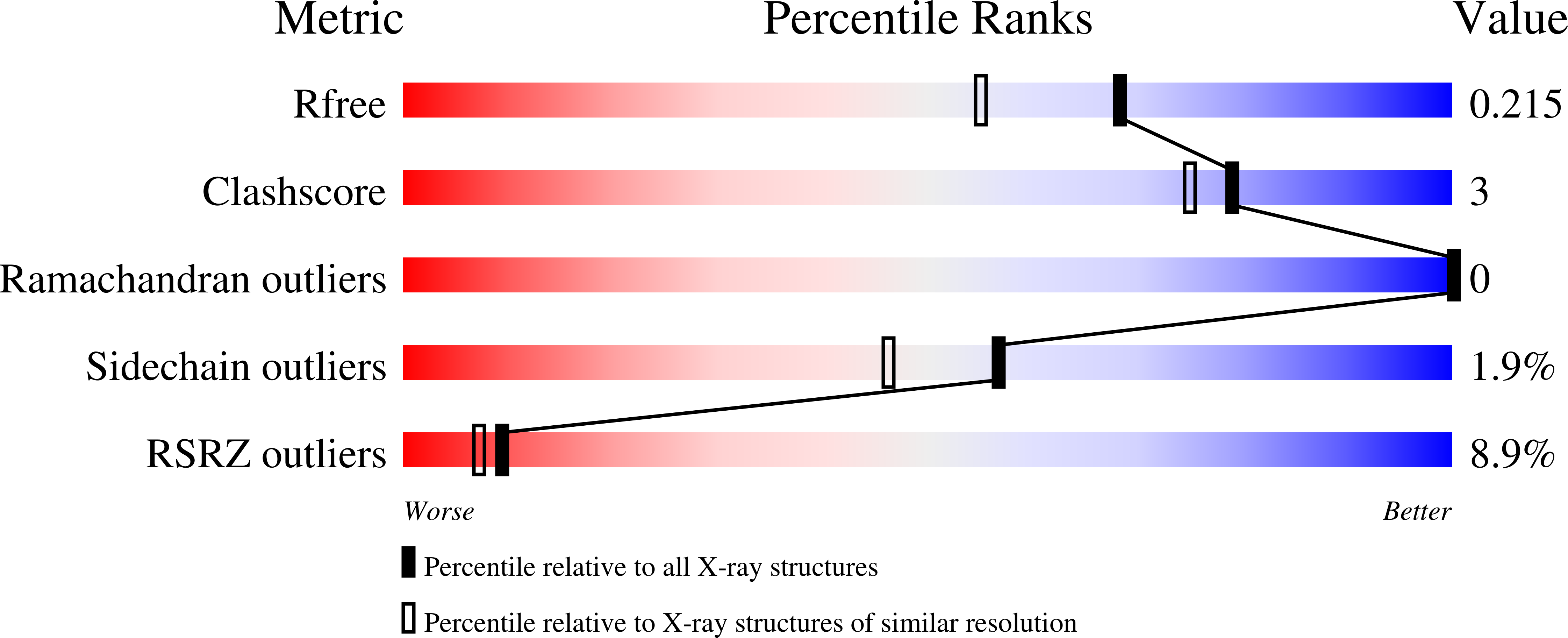
Resolution:
1.80 Å
R-Value Free:
0.21
R-Value Work:
0.18
R-Value Observed:
0.19
Space Group:
P 21 21 2
Macromolecular Entities
Structures with similar UniProt ID
Protein Blast
Polymer Type:polypeptide(L)
Molecule:LRA-5
Gene (Uniprot):blaLRA-5
Chain IDs:A, B
Chain Length:290
Number of Molecules:2
Biological Source:uncultured soil bacterium
Ligand Molecules
Primary Citation
Proposal of metagenomic-origin LRA-5 as a precursor of active beta-lactamases through Tyr69Gln and Val166Glu amino acid substitutions: a functional and structural analysis.
Antimicrob.Agents Chemother. 70 e0067525 e0067525 (2026)
PMID: 41312992 DOI: 10.1128/aac.00675-25

Abstact

Wild-type LRA-5, recovered from Alaskan soil samples, shares no more than 33% amino acid sequence identity with enzymes from pathogens like PER beta-lactamases. Recombinant E. coli expressing wild-type LRA-5 and its engineered variants LRA-5(Y69Q) and LRA-5(V166E) showed MIC values equivalent to control strains. However, LRA-5(Y69Q/V166E) displayed MICs above the resistant breakpoint for some beta-lactams. Kinetic parameters correlated with the MICs, showing that the catalytic efficiency of LRA-5(Y69Q/V166E) was comparable to those from class A beta-lactamases, such as CTX-M-15, PER-2, and KPC-2. LRA-5(Y69Q/V166E) exhibited k(cat)/K(m) values up to 11,000-fold higher compared to wild-type LRA-5, which is associated with the presence of Glu166. The X-ray crystallographic structure of wild-type LRA-5 (1.80 A; PDB 8EO5) shows that the lack of both Glu166 and a deacylation water molecule contributes to a biologically insignificant activity. Interactions observed between LRA-5 and ceftazidime (2.35 A; PDB 8EO6) show structural conservation with other beta-lactamases. In contrast, the crystallographic structure of LRA-5(Y69Q/V166E) (2.15 A; PDB 8EO7) bears a deacylation water molecule that is associated with the increase in catalytic activity compared to the wild-type variant. Circular dichroism results confirm that amino acid substitutions in LRA-5 do not affect the overall content of the secondary/tertiary structures. Evidence suggests that alternative evolutionary paths could have occurred for beta-lactamases like LRA-5, produced by environmental microorganisms: (i) proteins having similar structural features than active beta-lactamases may accumulate a small number of mutations (e.g., Y69Q/V166E) to yield active enzymes and (ii) the beta-lactamase fold may have lost key residues in the absence of antibiotics.

Legend

Protein

Chemical

Disease

Primary Citation of related structures
Feedback Form
Name
Email
Institute
Feedback