

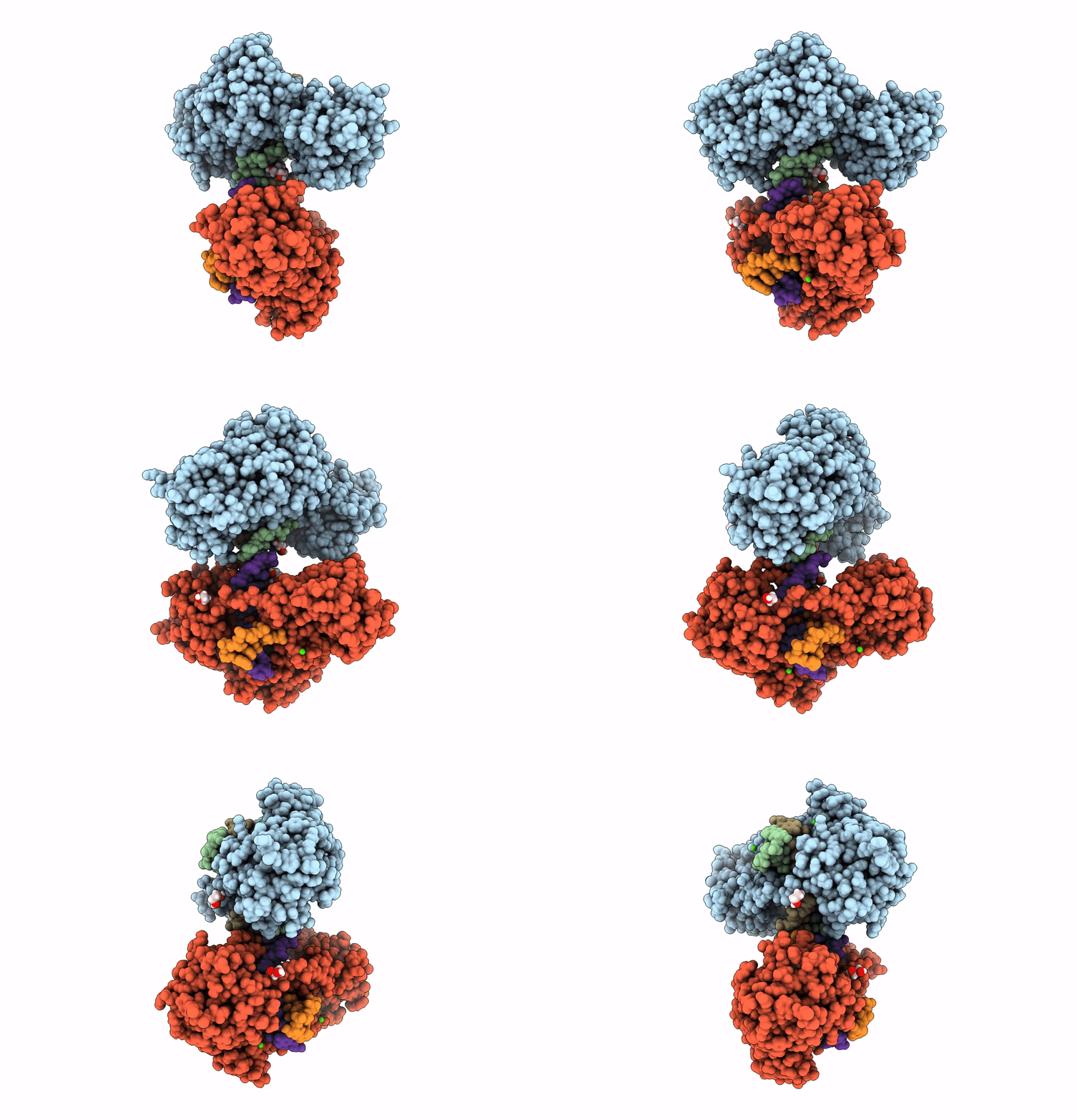
8DWE image
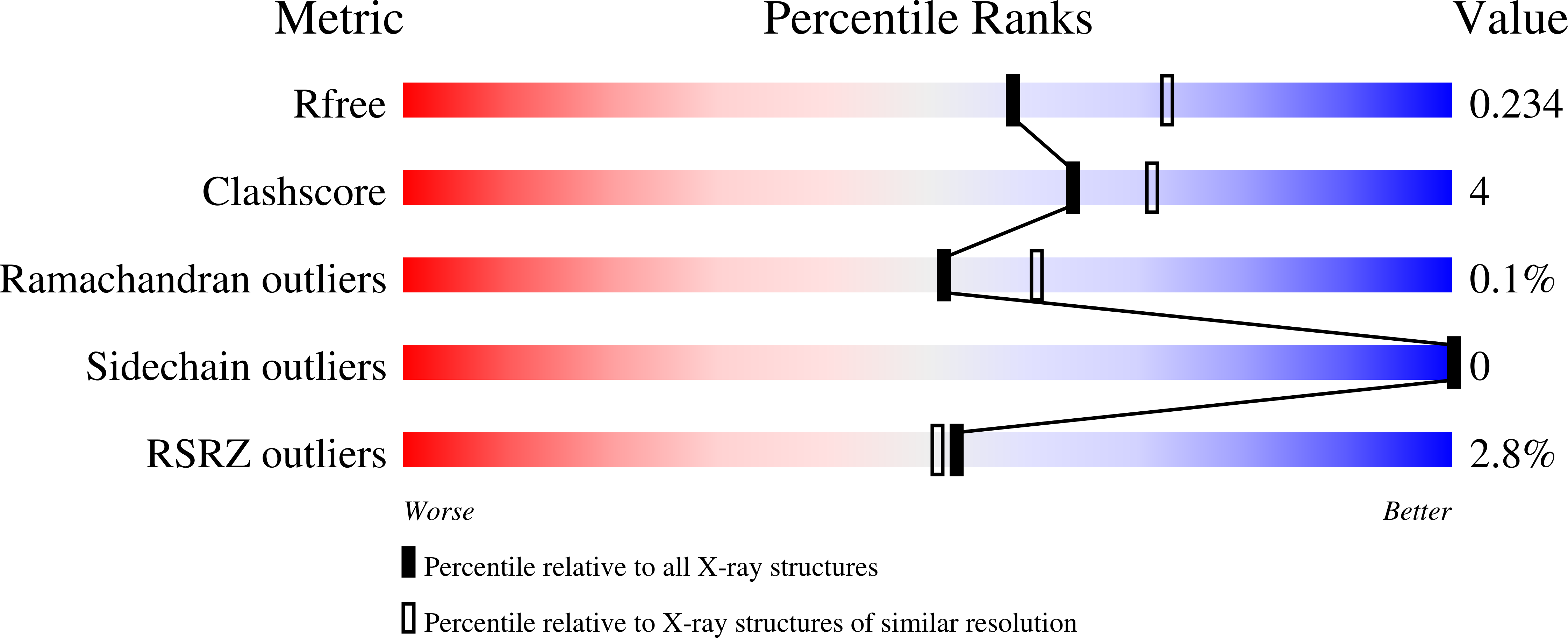
Deposition Date 2022-08-01
Release Date 2023-08-09
Last Version Date 2026-06-03
Entry Detail
PDB ID:
8DWE
Keywords:
Title:
Adenine glycosylase MutY variant E43Q in complex with DNA containing d(8-oxo-G) paired with substrate purine
Biological Source:
Source Organism(s):
Expression System(s):
Method Details:
Experimental Method:
Resolution:
2.20 Å
R-Value Free:
0.23
R-Value Work:
0.19
R-Value Observed:
0.19
Space Group:
P 1 21 1
Macromolecular Entities
Structures with similar UniProt ID
Protein Blast
Polymer Type:polypeptide(L)
Molecule:Adenine DNA glycosylase
Gene (Uniprot):mutY
Mutagens:E43Q
Chain IDs:A, D
Chain Length:365
Number of Molecules:2
Biological Source:Geobacillus stearothermophilus
Polymer Type:polydeoxyribonucleotide
Molecule:DNA (5'-D(*AP*AP*GP*AP*CP*(8O
Chain IDs:B, E
Chain Length:11
Number of Molecules:2
Biological Source:synthetic construct
Polymer Type:polydeoxyribonucleotide
Molecule:DNA (5'-D(*TP*GP*TP*CP*CP*AP*
Chain IDs:C, F
Chain Length:11
Number of Molecules:2
Biological Source:synthetic construct
Primary Citation
Structural Basis for Nucleobase Activation by the Adenine DNA Glycosylase MutY.
Biorxiv ? ? ? (2026)
PMID: 41648512 DOI: 10.64898/2026.01.22.701053

Abstact

MutY excises adenine (A) from 8-oxo-guanine:adenine (OG:A) lesions in DNA to initiate base excision repair (BER) and thereby prevent mutations. A catalytic Glu, found at position 43 in the enzyme from Geobacillus stearothermophilus (Gs MutY), protonates the nucleobase at N(7) to labilize the N-glycosidic bond. The resulting oxocarbenium ion transition state is stabilized by a covalent DNA-enzyme intermediate and resolved by nucleophilic attack to yield the beta-anomer abasic AP site product. The retaining SN1 mechanism for MutY posits deprotonation of the nucleophile by the catalytic Glu. Here we tested kinetic and structural consequences of Glu replacement and found that E43Q and E43S substitution variants were severely impaired, retained measurable activity, but engage the substrate nucleobase in an anti conformation, rotated by 180 degrees from the syn conformation seen in previous substrate complexes. The enzyme-generated AP product is observed in its alpha-anomer configuration for these Glu-replacement variants. Comparison with inverting adenine glycosylases that act on RNA or nucleosides shows that MutY's mechanism is uniquely reliant on one catalytic residue for both leaving group and nucleophile activation, a situation that may serve to ensure only rare adenines paired with OG are excised.

Legend

Protein

Chemical

Disease

Primary Citation of related structures
Feedback Form
Name
Email
Institute
Feedback