

8CUB image
Deposition Date 2022-05-17
Release Date 2022-08-31
Last Version Date 2023-10-18
Entry Detail
PDB ID:
8CUB
Keywords:
Title:
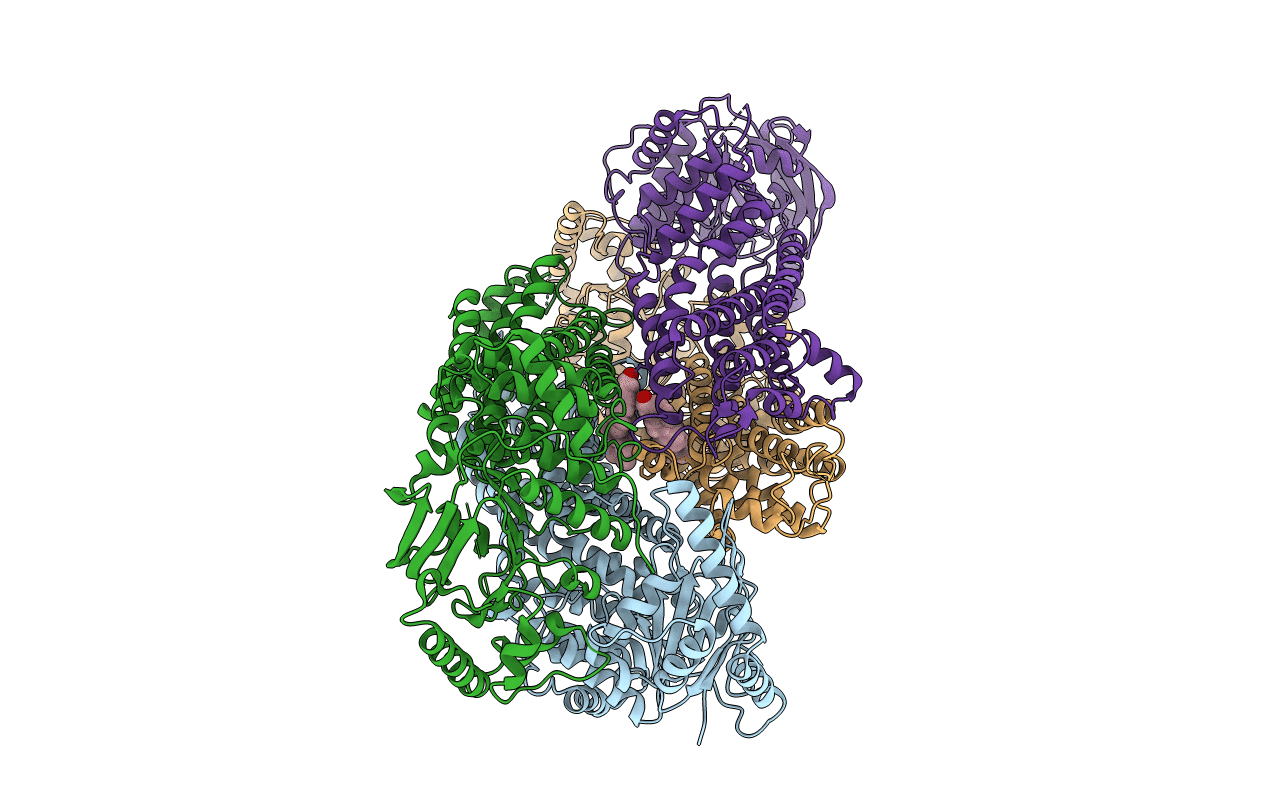
Crystal Structure of ABCG5/G8 in Complex with Cholesterol
Biological Source:
Source Organism(s):
Homo sapiens (Taxon ID: 9606)
Expression System(s):
Method Details:
Experimental Method:
Resolution:
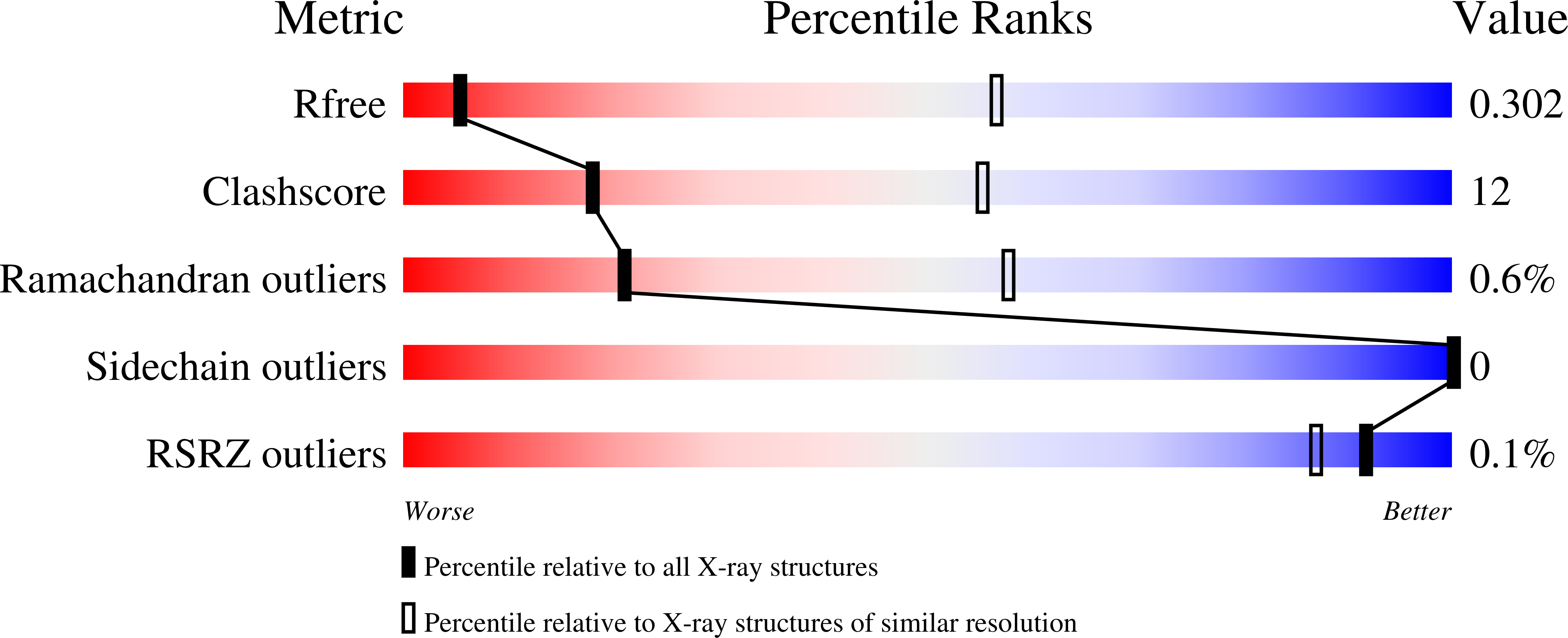
4.05 Å
R-Value Free:
0.30
R-Value Work:
0.24
R-Value Observed:
0.24
Space Group:
I 2 2 2
Macromolecular Entities
Polymer Type:polypeptide(L)
Molecule:ATP-binding cassette sub-fami
Gene (Uniprot):ABCG5
Chain IDs:A (auth: C), C (auth: A)
Chain Length:664
Number of Molecules:2
Biological Source:Homo sapiens
Polymer Type:polypeptide(L)
Molecule:ATP-binding cassette sub-fami
Gene (Uniprot):ABCG8
Chain IDs:B (auth: D), D (auth: B)
Chain Length:687
Number of Molecules:2
Biological Source:Homo sapiens
Ligand Molecules
Primary Citation
Structural Analysis of Cholesterol Binding and Sterol Selectivity by ABCG5/G8.
J. Mol. Biol. 434 167795 167795 (2022)
PMID: 35988751 DOI: 10.1016/j.jmb.2022.167795

Abstact

The ATP-binding cassette (ABC) sterol transporters are responsible for maintaining cholesterol homeostasis in mammals by participating in reverse cholesterol transport (RCT) or transintestinal cholesterol efflux (TICE). The heterodimeric ABCG5/G8 carries out selective sterol excretion, preventing the abnormal accumulation of plant sterols in human bodies, while homodimeric ABCG1 contributes to the biogenesis and metabolism of high-density lipoproteins. A sterol-binding site on ABCG5/G8 was proposed at the interface of the transmembrane domain and the core of lipid bilayers. In this study, we have determined the crystal structure of ABCG5/G8 in a cholesterol-bound state. The structure combined with amino acid sequence analysis shows that in the proximity of the sterol-binding site, a highly conserved phenylalanine array supports functional implications for ABCG cholesterol/sterol transporters. Lastly, in silico docking analysis of cholesterol and stigmasterol (a plant sterol) suggests sterol-binding selectivity on ABCG5/G8, but not ABCG1. Together, our results provide a structural basis for cholesterol binding on ABCG5/G8 and the sterol selectivity by ABCG transporters.

Legend

Protein

Chemical

Disease

Primary Citation of related structures
Feedback Form
Name
Email
Institute
Feedback