

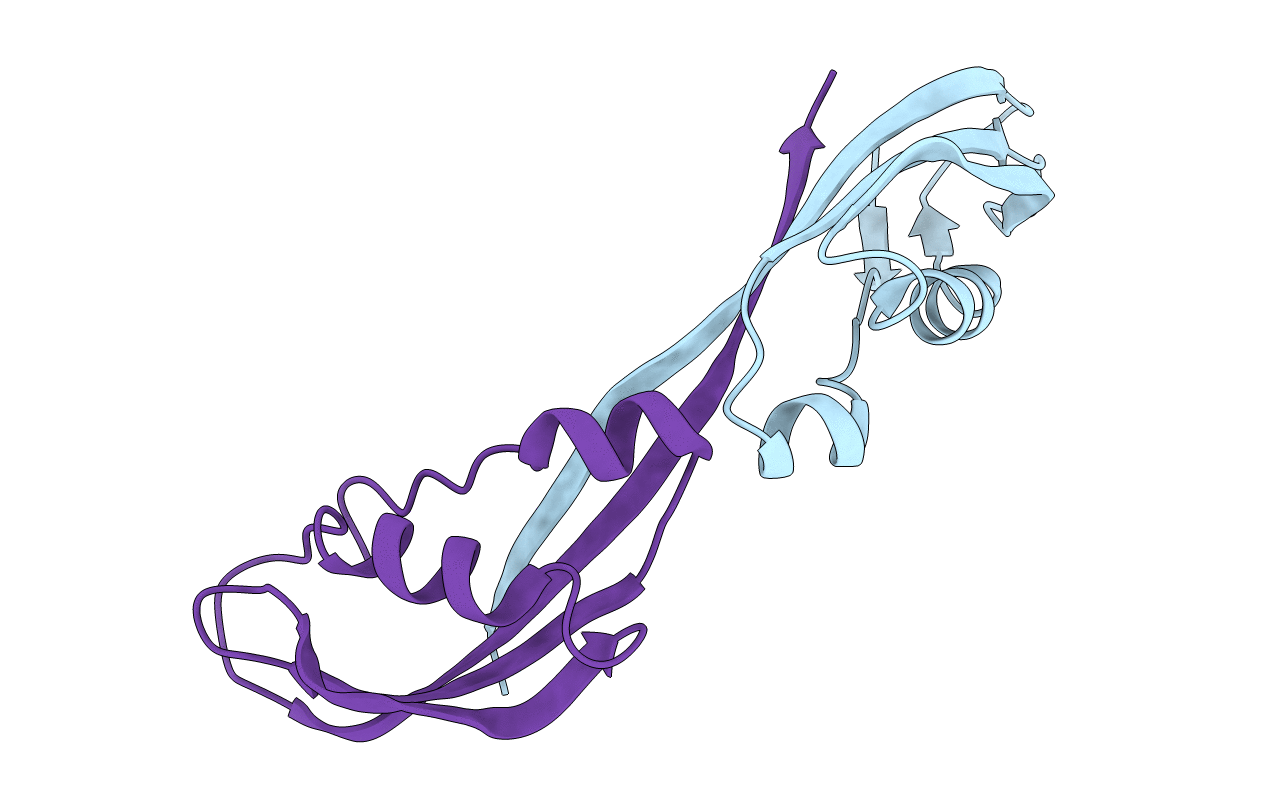
7ZC8 image
Deposition Date 2022-03-25
Release Date 2022-08-17
Last Version Date 2026-06-10
Entry Detail
PDB ID:
7ZC8
Title:
Crystal structure of the C-terminal domain of FusB, a TonB homologue
Biological Source:
Source Organism(s):
Expression System(s):
Method Details:
Experimental Method:
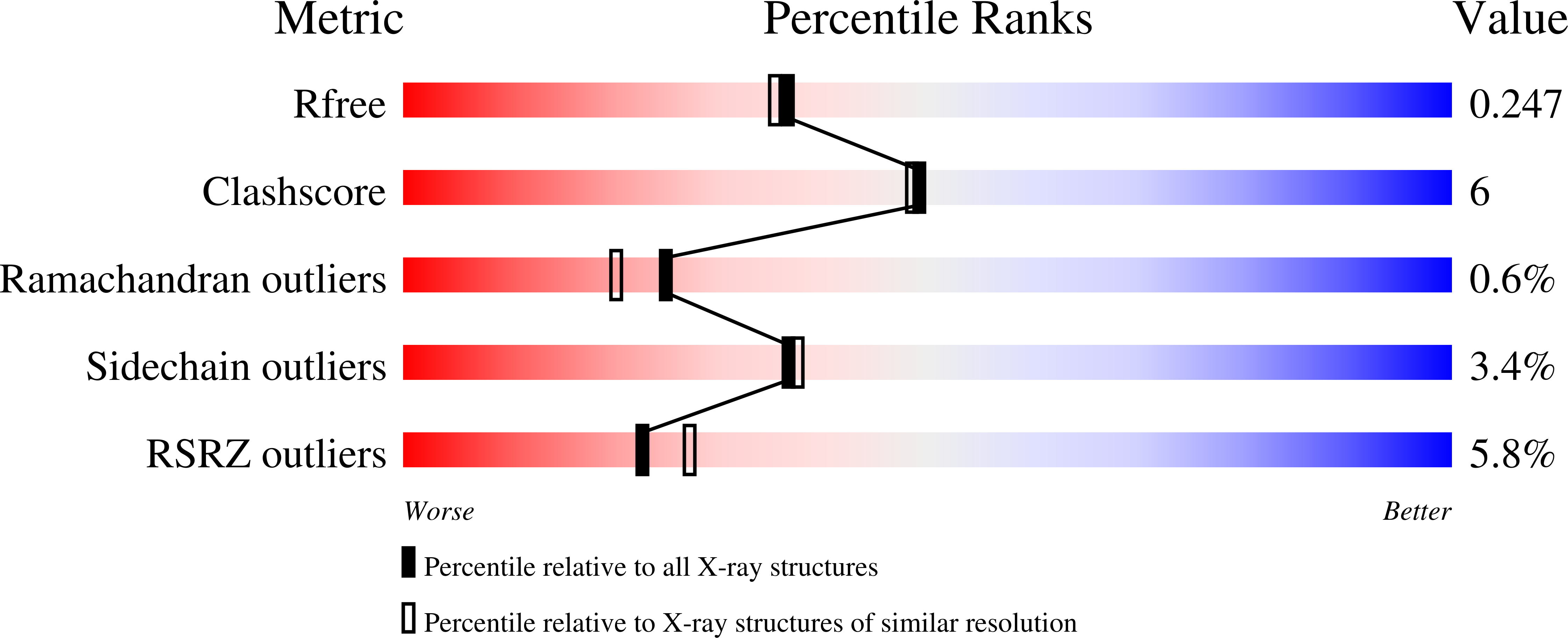
Resolution:
2.08 Å
R-Value Free:
0.23
R-Value Work:
0.21
R-Value Observed:
0.21
Space Group:
P 65
Macromolecular Entities
Structures with similar UniProt ID
Protein Blast
Polymer Type:polypeptide(L)
Molecule:Protein TonB
Chain IDs:A (auth: B), B (auth: A)
Chain Length:87
Number of Molecules:2
Biological Source:Pectobacterium carotovorum
Primary Citation
Receptor-substrate competition for the TonB homolog FusB suggests a model for ferredoxin import.
J.Biol.Chem. 302 113121 113121 (2026)
PMID: 42103222 DOI: 10.1016/j.jbc.2026.113121

Abstact

TonB-dependent uptake systems of Gram-negative bacterial pathogens constitute prominent virulence factors, allowing nutrients - primarily siderophore-bound iron - to cross the highly impermeable outer membrane (OM). Remarkably, the ferredoxin uptake system (Fus) of certain soft rot plant pathogens imports an entire host protein into the periplasm and extracts its bound iron for growth. The inner membrane protein FusB, a TonB homologue, plays two roles in facilitating import. First, like other TonBs, it remodels the globular plug domain obstructing the lumen of the OM receptor FusA to allow ferredoxin passage. Unusually for a TonB protein, FusB then interacts directly with the FusA-bound ferredoxin substrate to facilitate its transport into the periplasm. Here we describe structures of the FusB homodimer as well as the FusB-ferredoxin complex and, using biophysical, biochemical and mutagenesis approaches, we determine the key features of the binding interfaces formed by FusB with FusA and ferredoxin. The C-terminal domain of FusB (FusB-CTD) exists in a monomer-dimer equilibrium in vitro, with the homodimer stabilised by an intermolecular R241-D322 salt bridge. The "FusB-box" of FusA interacts with monomeric FusB-CTD, and FusA D53 outcompetes FusB D322 to bind R241. Upon ferredoxin binding, FusB-CTD undergoes a structural rearrangement, expanding its beta-sheet from three to four strands. In agreement with the proposed sequence of events, ferredoxin binding displaces FusA from FusB with R241 forming an intramolecular salt bridge with D322 to stabilise the newly formed beta-hairpin of FusB. We propose a mechanistic model for ferredoxin import where FusB R241 acts as a molecular switch.

Legend

Protein

Chemical

Disease

Primary Citation of related structures
Feedback Form
Name
Email
Institute
Feedback