

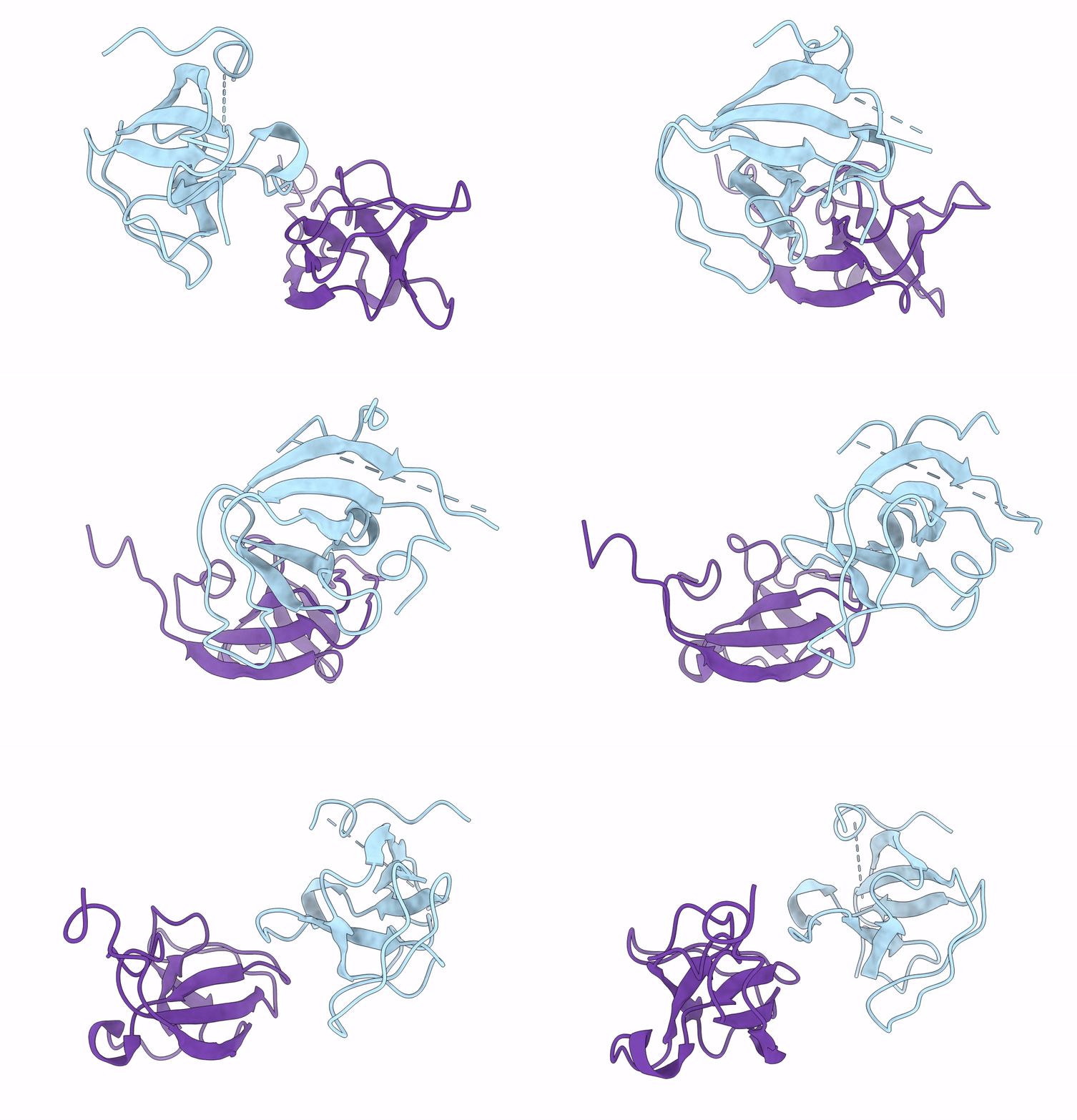
7Z0K image
Deposition Date 2022-02-23
Release Date 2023-03-08
Last Version Date 2024-02-07
Entry Detail
PDB ID:
7Z0K
Title:
human PEX13 SH3 in complex with PEX5 W4 (WxxxF/Y) motif
Biological Source:
Source Organism(s):
Homo sapiens (Taxon ID: 9606)
Expression System(s):
Method Details:
Experimental Method:
Resolution:
2.30 Å
R-Value Free:
0.21
R-Value Work:
0.19
R-Value Observed:
0.19
Space Group:
P 31 2 1
Macromolecular Entities
Protein Blast
Polymer Type:polypeptide(L)
Molecule:Peroxisomal membrane protein
Gene (Uniprot):PEX5, PEX13
Chain IDs:A, B
Chain Length:105
Number of Molecules:2
Biological Source:Homo sapiens
Primary Citation
Modulation of peroxisomal import by the PEX13 SH3 domain and a proximal FxxxF binding motif.
Nat Commun 15 3317 3317 (2024)
PMID: 38632234 DOI: 10.1038/s41467-024-47605-w

Abstact

Import of proteins into peroxisomes depends on PEX5, PEX13 and PEX14. By combining biochemical methods and structural biology, we show that the C-terminal SH3 domain of PEX13 mediates intramolecular interactions with a proximal FxxxF motif. The SH3 domain also binds WxxxF peptide motifs in the import receptor PEX5, demonstrating evolutionary conservation of such interactions from yeast to human. Strikingly, intramolecular interaction of the PEX13 FxxxF motif regulates binding of PEX5 WxxxF/Y motifs to the PEX13 SH3 domain. Crystal structures reveal how FxxxF and WxxxF/Y motifs are recognized by a non-canonical surface on the SH3 domain. The PEX13 FxxxF motif also mediates binding to PEX14. Surprisingly, the potential PxxP binding surface of the SH3 domain does not recognize PEX14 PxxP motifs, distinct from its yeast ortholog. Our data show that the dynamic network of PEX13 interactions with PEX5 and PEX14, mediated by diaromatic peptide motifs, modulates peroxisomal matrix import.

Legend

Protein

Chemical

Disease

Primary Citation of related structures
Feedback Form
Name
Email
Institute
Feedback