

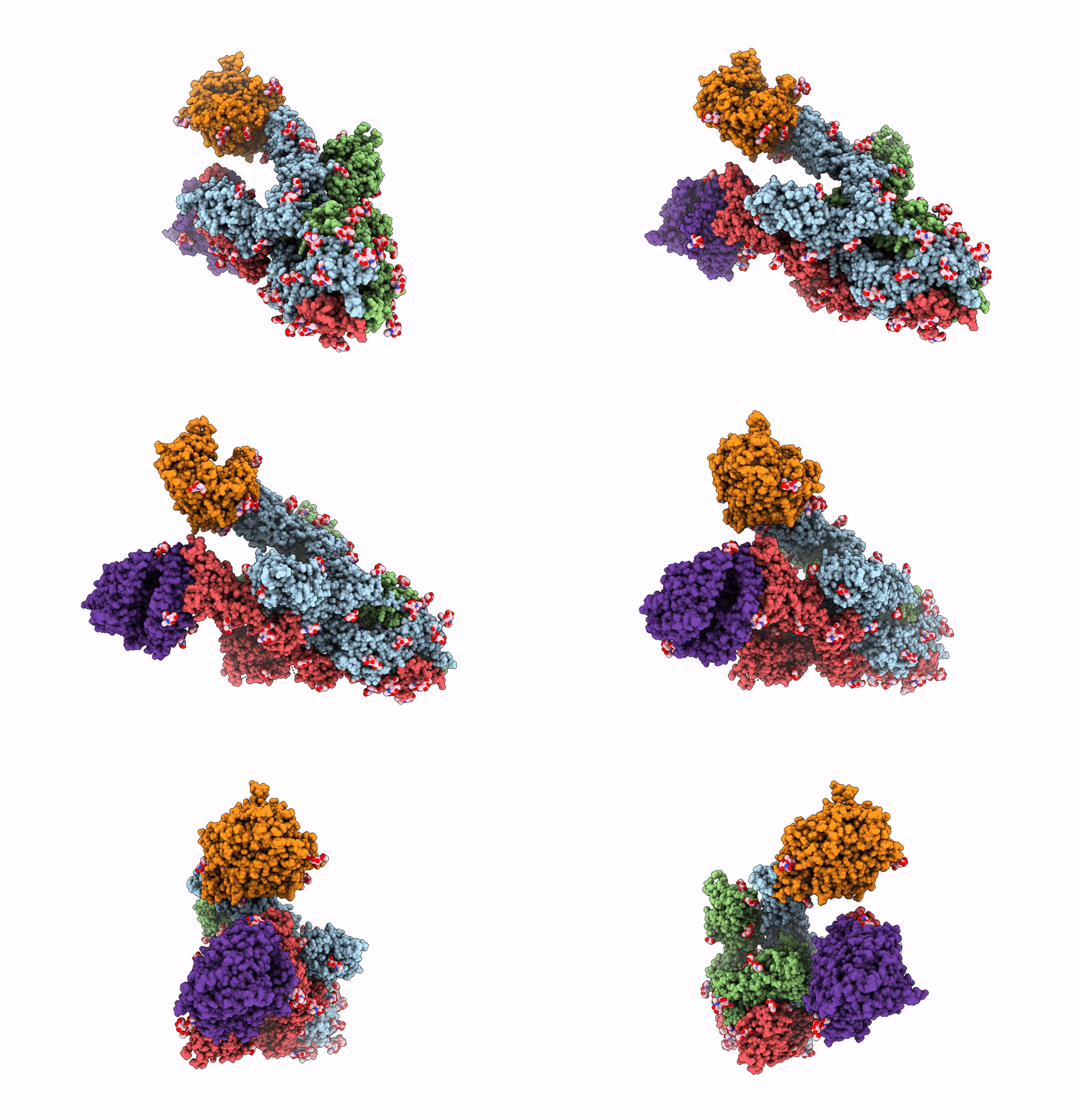
7Y20 image
Deposition Date 2022-06-09
Release Date 2023-08-09
Last Version Date 2024-11-06
Entry Detail
PDB ID:
7Y20
Title:
S-ECD (Omicron BA.3) in complex with two PD of ACE2
Biological Source:
Expression System(s):
Method Details:
Experimental Method:
Resolution:
3.80 Å
Aggregation State:
PARTICLE
Reconstruction Method:
SINGLE PARTICLE
Macromolecular Entities
Polymer Type:polypeptide(L)
Molecule:Spike glycoprotein
Gene (Uniprot):S
Mutagens:F817P, A892P, A899P, A942P, K986P, V987P
Chain IDs:A, B, C
Chain Length:1264
Number of Molecules:3
Biological Source:Severe acute respiratory syndrome coronavirus 2
Polymer Type:polypeptide(L)
Molecule:Processed angiotensin-convert
Gene (Uniprot):ACE2
Chain IDs:D, E (auth: F)
Chain Length:624
Number of Molecules:2
Biological Source:Homo sapiens
Ligand Molecules
Primary Citation
Structural Basis for the Enhanced Infectivity and Immune Evasion of Omicron Subvariants.
Viruses 15 ? ? (2023)
PMID: 37376697 DOI: 10.3390/v15061398

Abstact

The Omicron variants of SARS-CoV-2 have emerged as the dominant strains worldwide, causing the COVID-19 pandemic. Each Omicron subvariant contains at least 30 mutations on the spike protein (S protein) compared to the original wild-type (WT) strain. Here we report the cryo-EM structures of the trimeric S proteins from the BA.1, BA.2, BA.3, and BA.4/BA.5 subvariants, with BA.4 and BA.5 sharing the same S protein mutations, each in complex with the surface receptor ACE2. All three receptor-binding domains of the S protein from BA.2 and BA.4/BA.5 are "up", while the BA.1 S protein has two "up" and one "down". The BA.3 S protein displays increased heterogeneity, with the majority in the all "up" RBD state. The different conformations preferences of the S protein are consistent with their varied transmissibility. By analyzing the position of the glycan modification on Asn343, which is located at the S309 epitopes, we have uncovered the underlying immune evasion mechanism of the Omicron subvariants. Our findings provide a molecular basis of high infectivity and immune evasion of Omicron subvariants, thereby offering insights into potential therapeutic interventions against SARS-CoV-2 variants.

Legend

Protein

Chemical

Disease

Primary Citation of related structures
Feedback Form
Name
Email
Institute
Feedback