

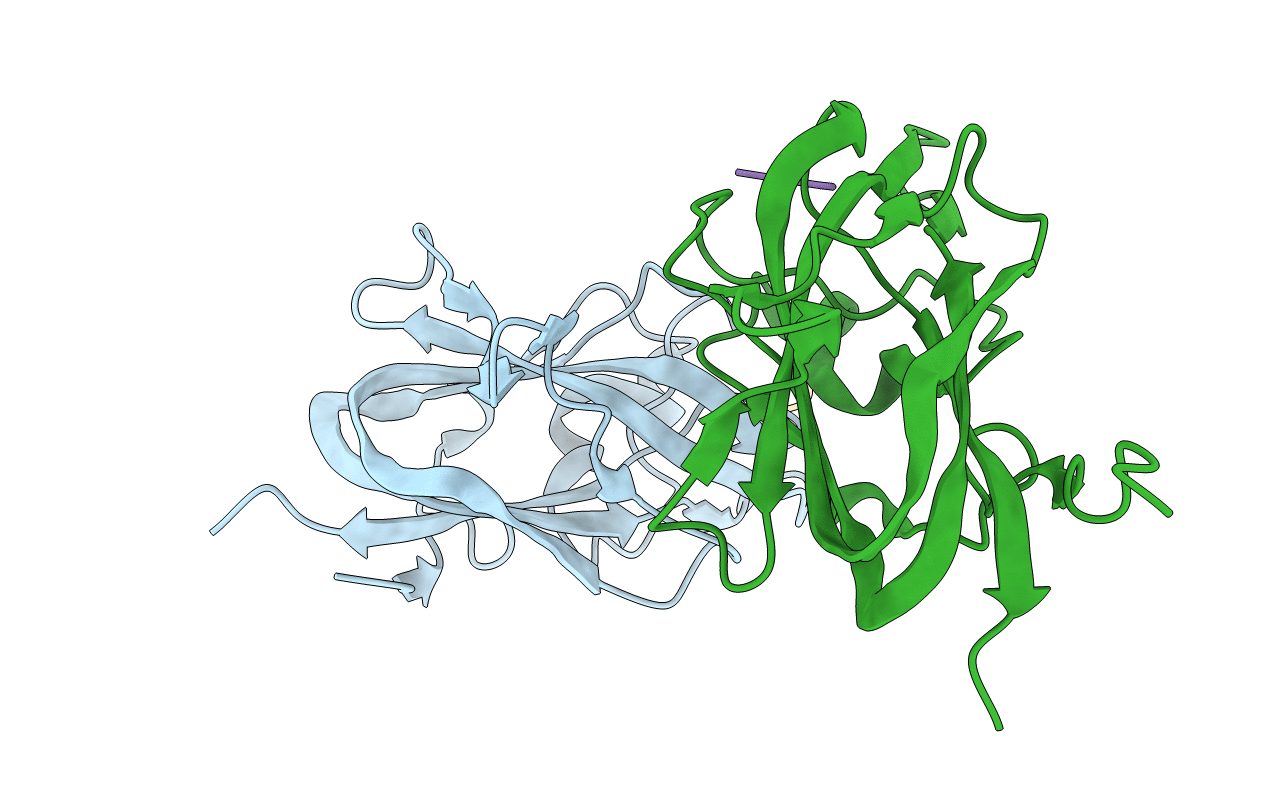
7P5U image
Deposition Date 2021-07-14
Release Date 2022-07-27
Last Version Date 2026-03-25
Entry Detail
PDB ID:
7P5U
Title:
Neuropilin-b1 in a complex with a VEGFB-derived peptide
Biological Source:
Source Organism(s):
Homo sapiens (Taxon ID: 9606)
Expression System(s):
Method Details:
Experimental Method:
Resolution:
1.60 Å
R-Value Free:
0.21
R-Value Work:
0.18
Space Group:
P 21 21 21
Macromolecular Entities
Structures with similar UniProt ID
Protein Blast
Polymer Type:polypeptide(L)
Molecule:Neuropilin-1
Gene (Uniprot):NRP1
Chain IDs:A (auth: AAA), B (auth: BBB)
Chain Length:158
Number of Molecules:2
Biological Source:Homo sapiens
Protein Blast
Polymer Type:polypeptide(L)
Molecule:MGC0122
Chain IDs:C (auth: CCC), D (auth: EEE)
Chain Length:13
Number of Molecules:2
Biological Source:Homo sapiens
Primary Citation
Peptides Derived from Vascular Endothelial Growth Factor B Show Potent Binding to Neuropilin-1.
Chembiochem 23 e202100463 e202100463 (2022)
PMID: 34647407 DOI: 10.1002/cbic.202100463

Abstact

Vascular endothelial growth factors (VEGFs) regulate significant pathways in angiogenesis, myocardial and neuronal protection, metabolism, and cancer progression. The VEGF-B growth factor is involved in cell survival, anti-apoptotic and antioxidant mechanisms, through binding to VEGF receptor 1 and neuropilin-1 (NRP1). We employed surface plasmon resonance technology and X-ray crystallography to analyse the molecular basis of the interaction between VEGF-B and the b1 domain of NRP1, and developed VEGF-B C-terminus derived peptides to be used as chemical tools for studying VEGF-B - NRP1 related pathways. Peptide lipidation was used as a means to stabilise the peptides. VEGF-B-derived peptides containing a C-terminal arginine show potent binding to NRP1-b1. Peptide lipidation increased binding residence time and improved plasma stability. A crystal structure of a peptide with NRP1 demonstrated that VEGF-B peptides bind at the canonical C-terminal arginine binding site. VEGF-B C-terminus imparts higher affinity for NRP1 than the corresponding VEGF-A(165) region. This tight binding may impact on the activity and selectivity of the full-length protein. The VEGF-B(167) derived peptides were more effective than VEGF-A(165) peptides in blocking functional phosphorylation events. Blockers of VEGF-B function have potential applications in diabetes and non-alcoholic fatty liver disease.

Legend

Protein

Chemical

Disease

Primary Citation of related structures
Feedback Form
Name
Email
Institute
Feedback