

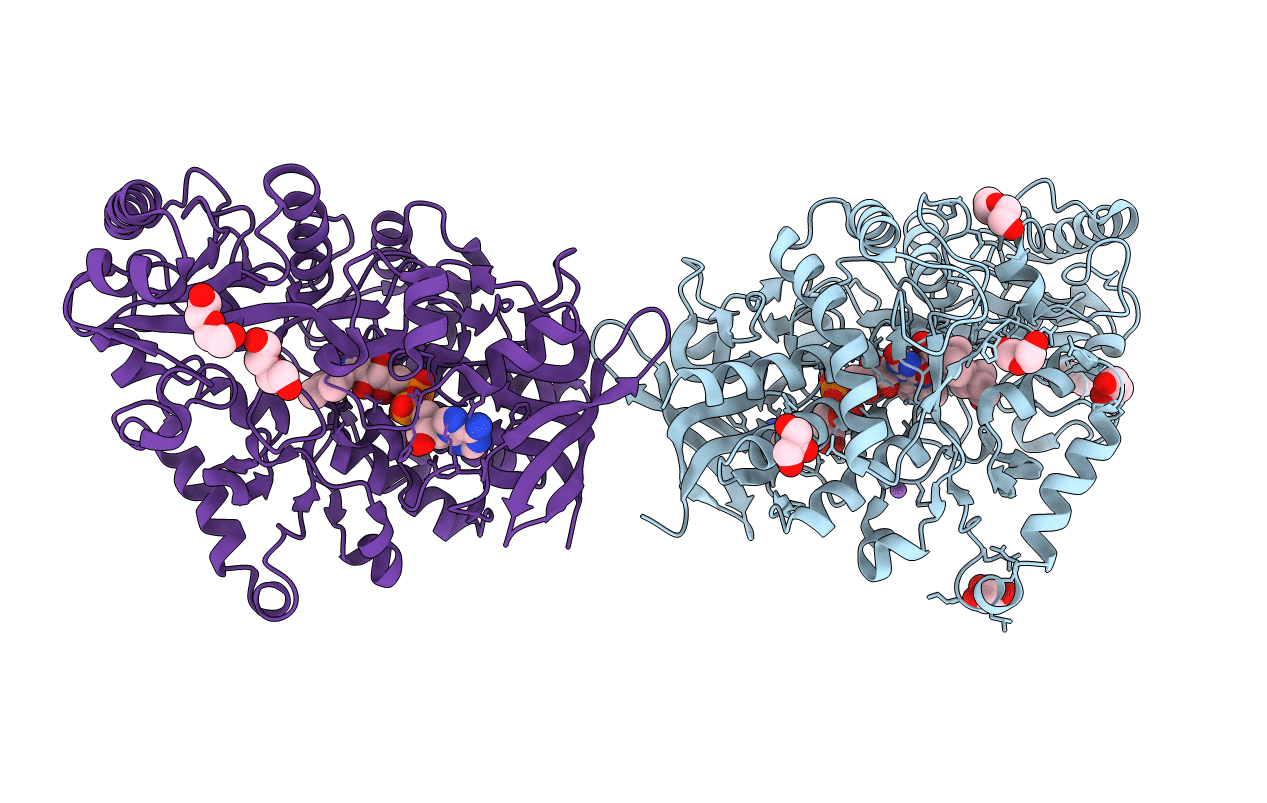
7P18 image
Deposition Date 2021-07-01
Release Date 2021-07-21
Last Version Date 2024-02-07
Entry Detail
PDB ID:
7P18
Keywords:
Title:
Crystal structure of 3-ketosteroid delta1-dehydrogenase from Sterolibacterium denitrificans in complex with 1,4-androstadiene-3,17-dione
Biological Source:
Source Organism(s):
Expression System(s):
Method Details:
Experimental Method:
Resolution:
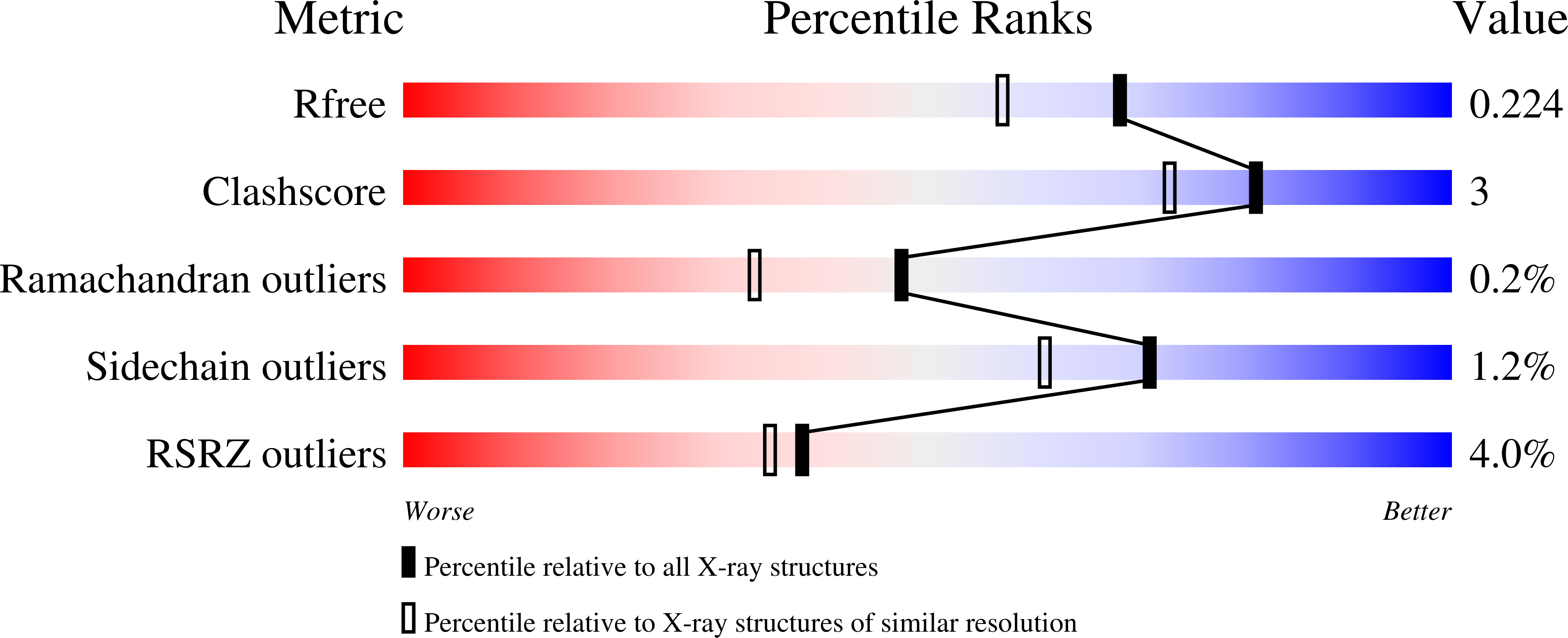
1.84 Å
R-Value Free:
0.21
R-Value Work:
0.18
R-Value Observed:
0.18
Space Group:
P 31 2 1
Macromolecular Entities
Structures with similar UniProt ID
Protein Blast
Polymer Type:polypeptide(L)
Molecule:3-oxosteroid 1-dehydrogenase
Gene (Uniprot):acmB
Chain IDs:A, B
Chain Length:561
Number of Molecules:2
Biological Source:Sterolibacterium denitrificans
Primary Citation
Structure, Mutagenesis, and QM:MM Modeling of 3-Ketosteroid Delta 1 -Dehydrogenase from Sterolibacterium denitrificans ─The Role of a New Putative Membrane-Associated Domain and Proton-Relay System in Catalysis.
Biochemistry 62 808 823 (2023)
PMID: 36625854 DOI: 10.1021/acs.biochem.2c00576

Abstact

3-Ketosteroid Delta(1)-dehydrogenases (KstD) are important microbial flavin enzymes that initiate the metabolism of steroid ring A and find application in the synthesis of steroid drugs. We present a structure of the KstD from Sterolibacterium denitrificans (AcmB), which contains a previously uncharacterized putative membrane-associated domain and extended proton-relay system. The experimental and theoretical studies show that the steroid Delta(1)-dehydrogenation proceeds according to the Ping-Pong bi-bi kinetics and a two-step base-assisted elimination (E2cB) mechanism. The mechanism is validated by evaluating the experimental and theoretical kinetic isotope effect for deuterium-substituted substrates. The role of the active-site residues is quantitatively assessed by point mutations, experimental activity assays, and QM/MM MD modeling of the reductive half-reaction (RHR). The pre-steady-state kinetics also reveals that the low pH (6.5) optimum of AcmB is dictated by the oxidative half-reaction (OHR), while the RHR exhibits a slight optimum at the pH usual for the KstD family of 8.5. The modeling confirms the origin of the enantioselectivity of C2-H activation and substrate specificity for Delta(4)-3-ketosteroids. Finally, the cholest-4-en-3-one turns out to be the best substrate of AcmB in terms of DeltaG of binding and predicted rate of dehydrogenation.

Legend

Protein

Chemical

Disease

Primary Citation of related structures
Feedback Form
Name
Email
Institute
Feedback