

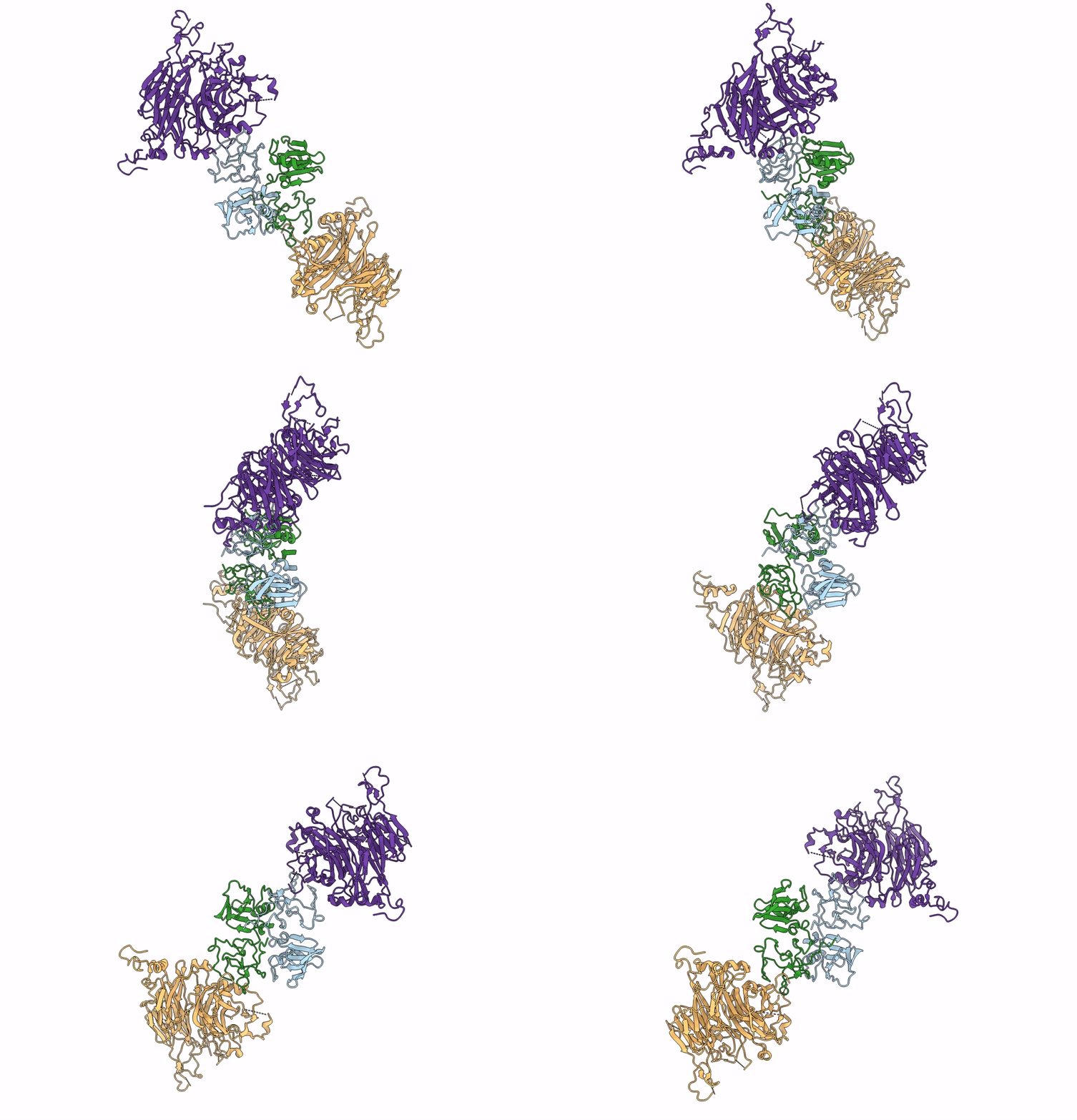
7MOB image
Deposition Date 2021-05-01
Release Date 2021-06-09
Last Version Date 2024-11-13
Entry Detail
PDB ID:
7MOB
Title:
Cryo-EM structure of 2:2 c-MET/NK1 complex
Biological Source:
Source Organism(s):
Homo sapiens (Taxon ID: 9606)
Expression System(s):
Method Details:
Experimental Method:
Resolution:
5.00 Å
Aggregation State:
PARTICLE
Reconstruction Method:
SINGLE PARTICLE

Macromolecular Entities
Polymer Type:polypeptide(L)
Molecule:Hepatocyte growth factor
Gene (Uniprot):HGF
Chain IDs:A, B
Chain Length:210
Number of Molecules:2
Biological Source:Homo sapiens
Polymer Type:polypeptide(L)
Molecule:Hepatocyte growth factor rece
Gene (Uniprot):MET
Chain IDs:C, D
Chain Length:1390
Number of Molecules:2
Biological Source:Homo sapiens
Ligand Molecules
Primary Citation
Structural basis of the activation of c-MET receptor.
Nat Commun 12 4074 4074 (2021)
PMID: 34210960 DOI: 10.1038/s41467-021-24367-3

Abstact

The c-MET receptor is a receptor tyrosine kinase (RTK) that plays essential roles in normal cell development and motility. Aberrant activation of c-MET can lead to both tumors growth and metastatic progression of cancer cells. C-MET can be activated by either hepatocyte growth factor (HGF), or its natural isoform NK1. Here, we report the cryo-EM structures of c-MET/HGF and c-MET/NK1 complexes in the active state. The c-MET/HGF complex structure reveals that, by utilizing two distinct interfaces, one HGF molecule is sufficient to induce a specific dimerization mode of c-MET for receptor activation. The binding of heparin as well as a second HGF to the 2:1 c-MET:HGF complex further stabilize this active conformation. Distinct to HGF, NK1 forms a stable dimer, and bridges two c-METs in a symmetrical manner for activation. Collectively, our studies provide structural insights into the activation mechanisms of c-MET, and reveal how two isoforms of the same ligand use dramatically different mechanisms to activate the receptor.

Legend

Protein

Chemical

Disease

Primary Citation of related structures
Feedback Form
Name
Email
Institute
Feedback