

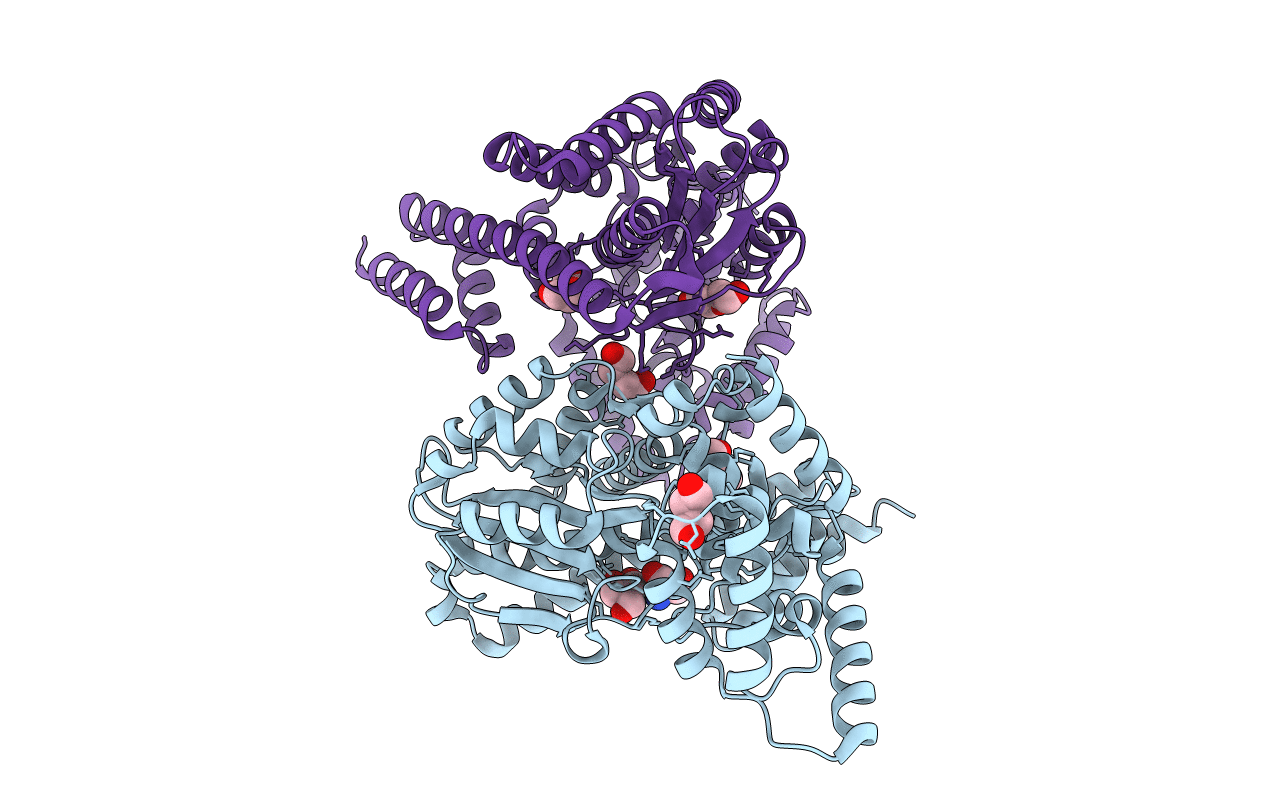
7KJ6 image
Deposition Date 2020-10-26
Release Date 2021-08-18
Last Version Date 2024-10-09
Entry Detail
PDB ID:
7KJ6
Keywords:
Title:
Structure of Legionella Effector LegA15
Biological Source:
Method Details:
Experimental Method:
Resolution:
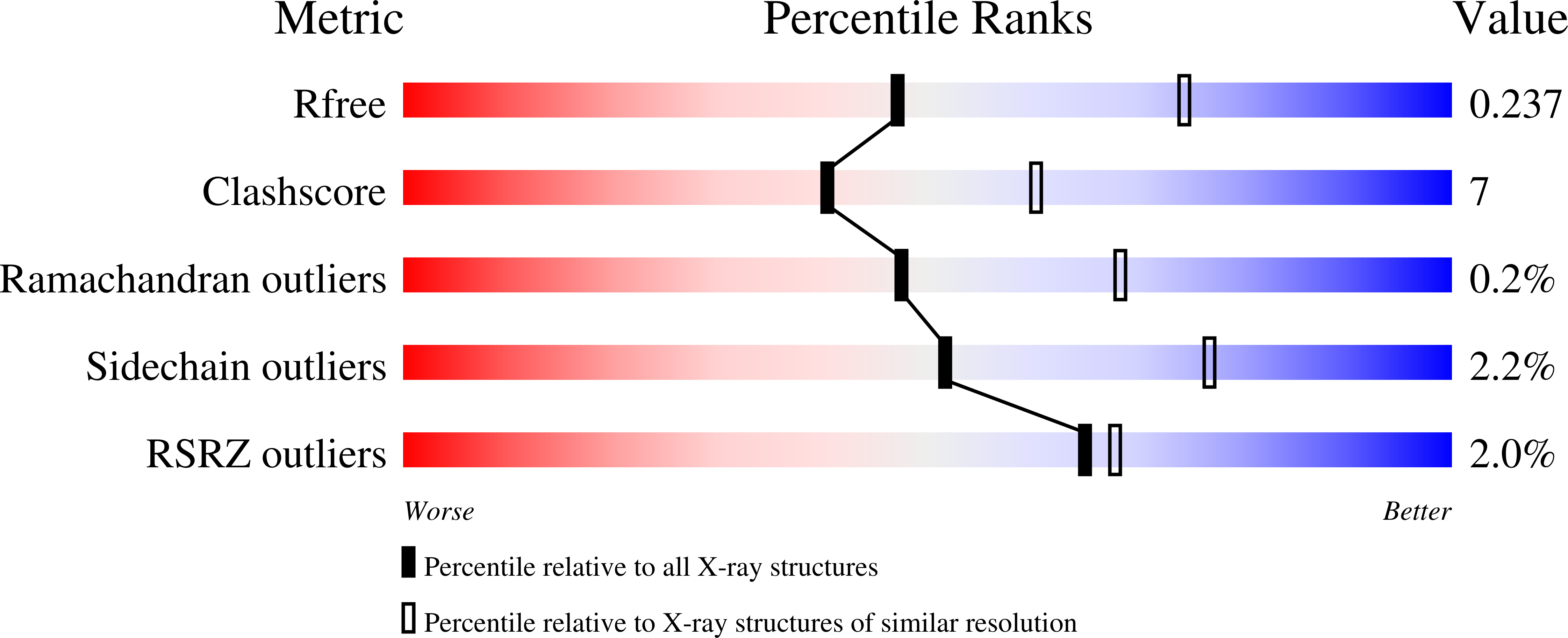
2.50 Å
R-Value Free:
0.23
R-Value Work:
0.19
R-Value Observed:
0.19
Space Group:
P 1 21 1
Macromolecular Entities
Structures with similar UniProt ID
Protein Blast
Polymer Type:polypeptide(L)
Molecule:Ankyrin repeat-containing pro
Gene (Uniprot):legA15
Chain IDs:A, B
Chain Length:473
Number of Molecules:2
Biological Source:Legionella pneumophila subsp. pneumophila (strain Philadelphia 1 / ATCC 33152 / DSM 7513)
Modified Residue
Compound ID Chain ID Parent Comp ID Details 2D Image
MSE A MET modified residue
Primary Citation
Legionella effector LegA15/AnkH contains an unrecognized cysteine protease-like domain and displays structural similarity to LegA3/AnkD, but differs in host cell localization.
Acta Crystallogr D Struct Biol 77 1535 1542 (2021)
PMID: 34866609 DOI: 10.1107/S2059798321010469

Abstact

Legionella pneumophila is a human pathogen that causes Legionnaires' disease, a severe form of pneumonia. It can be found in various aquatic environments ranging from cooling towers to ponds. In addition to causing disease in humans, it can also infect free-living amoebae commonly found in various aquatic environments. Once inside a human lung macrophage, it creates a niche called the Legionella-containing vacuole where it can evade phagolysosomal degradation and replicate. During infection, normal cellular functions are hijacked by proteins that are secreted by the pathogen, called bacterial effectors. Here, the structural characterization of the effector LegA15/AnkD is reported. The protein contains an ankyrin-repeat domain followed by a cysteine protease-like (CPL) domain with a putative catalytic triad consisting of His268-Asn290-Cys361. The CPL domain shows similarity to the CE clan in the MEROPS database, which contains ubiquitin-like hydrolases. The C-terminal segment of LegA15, including the CPL domain, shows structural similarity to another effector, LegA3/AnkH, while they share only 12% sequence identity. When expressed in mammalian cells, LegA15 is localized within the cytoplasm, in contrast to LegA3, which localizes to the nucleus.

Legend

Protein

Chemical

Disease

Primary Citation of related structures
Feedback Form
Name
Email
Institute
Feedback