

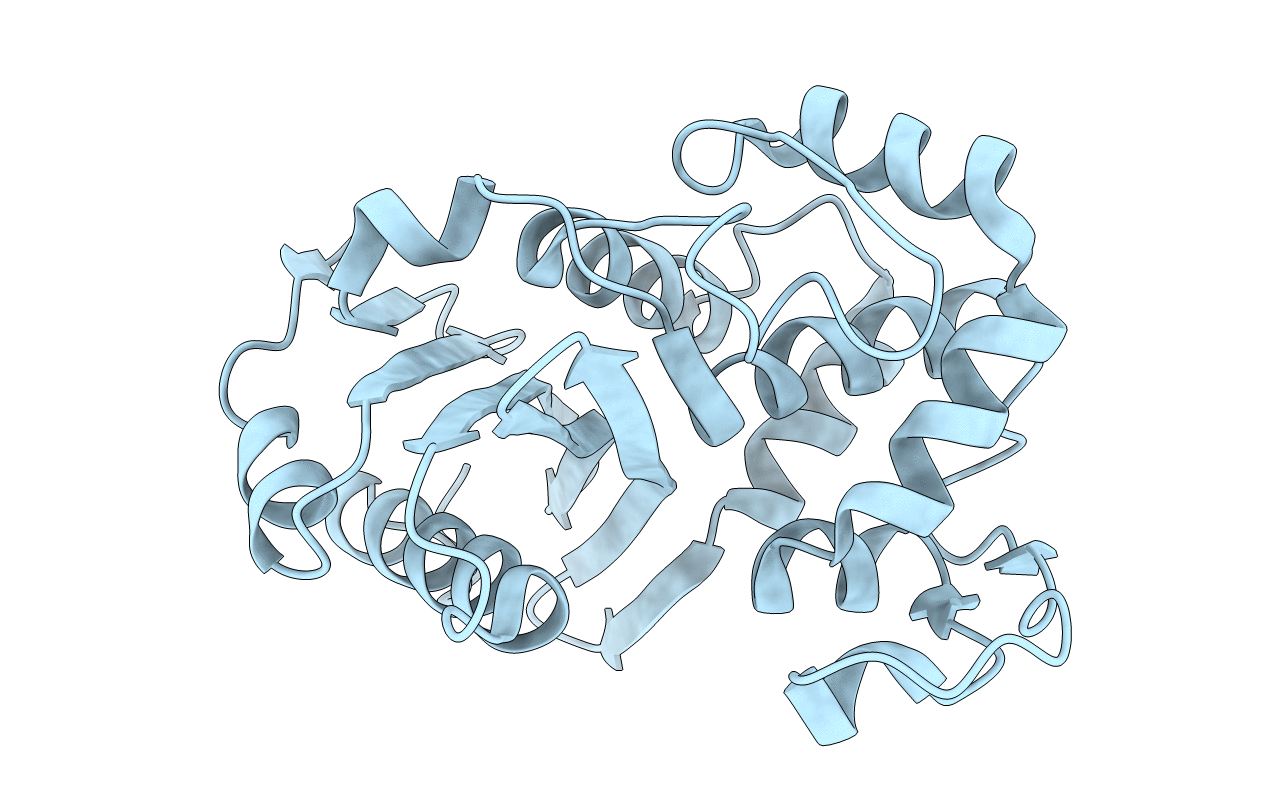
7K3M image
Deposition Date 2020-09-11
Release Date 2020-09-23
Last Version Date 2026-03-25
Entry Detail
PDB ID:
7K3M
Keywords:
Title:
Crystal Structure of the Beta Lactamase Class D from Chitinophaga pinensis by Serial Crystallography
Biological Source:
Source Organism(s):
Expression System(s):
Method Details:
Experimental Method:
Resolution:
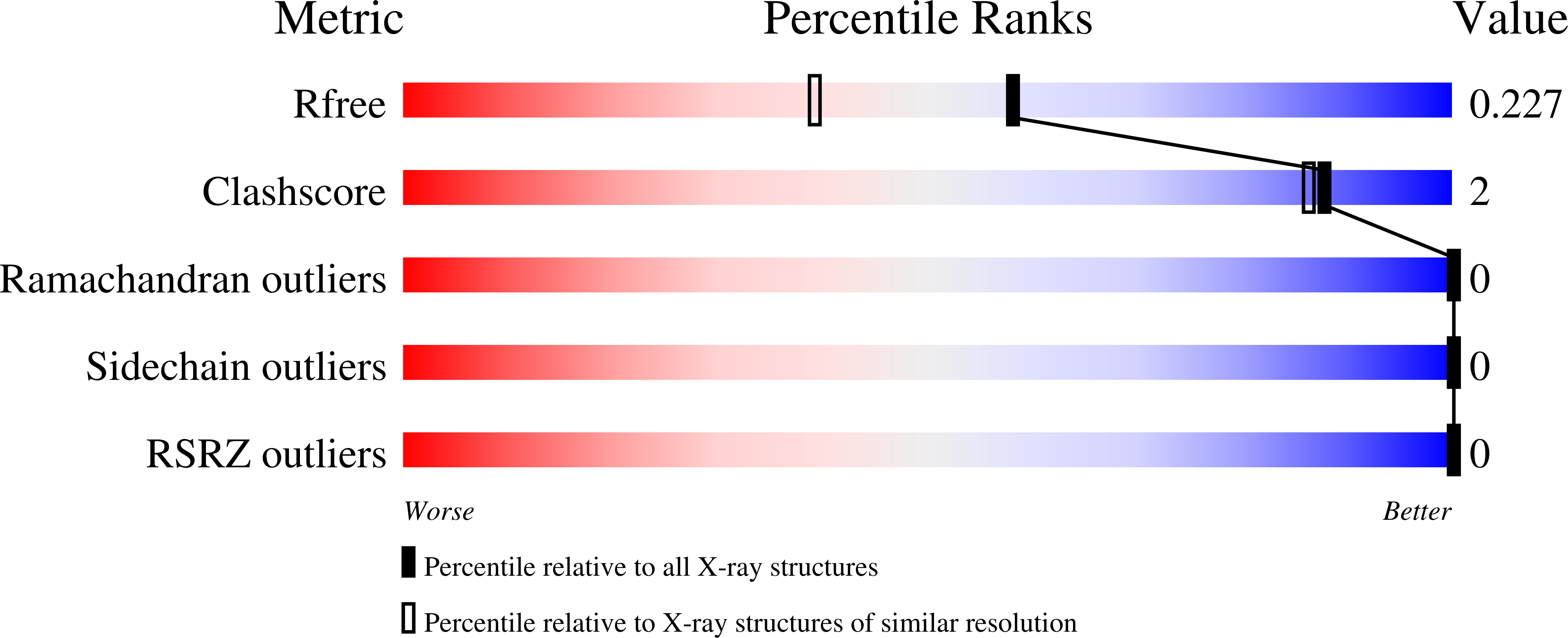
1.80 Å
R-Value Free:
0.22
R-Value Work:
0.17
R-Value Observed:
0.18
Space Group:
P 21 21 21
Macromolecular Entities
Structures with similar UniProt ID
Protein Blast
Polymer Type:polypeptide(L)
Molecule:Beta-lactamase
Chain IDs:A
Chain Length:250
Number of Molecules:1
Biological Source:Chitinophaga pinensis DSM 2588
Modified Residue
Compound ID Chain ID Parent Comp ID Details 2D Image
KCX A LYS modified residue
MSE A MET modified residue
Primary Citation
Fixed-target serial crystallography at the Structural Biology Center.
J Synchrotron Radiat 29 1141 1151 (2022)
PMID: 36073872 DOI: 10.1107/S1600577522007895

Abstact

Serial synchrotron crystallography enables the study of protein structures under physiological temperature and reduced radiation damage by collection of data from thousands of crystals. The Structural Biology Center at Sector 19 of the Advanced Photon Source has implemented a fixed-target approach with a new 3D-printed mesh-holder optimized for sample handling. The holder immobilizes a crystal suspension or droplet emulsion on a nylon mesh, trapping and sealing a near-monolayer of crystals in its mother liquor between two thin Mylar films. Data can be rapidly collected in scan mode and analyzed in near real-time using piezoelectric linear stages assembled in an XYZ arrangement, controlled with a graphical user interface and analyzed using a high-performance computing pipeline. Here, the system was applied to two beta-lactamases: a class D serine beta-lactamase from Chitinophaga pinensis DSM 2588 and L1 metallo-beta-lactamase from Stenotrophomonas maltophilia K279a.

Legend

Protein

Chemical

Disease

Primary Citation of related structures
Feedback Form
Name
Email
Institute
Feedback