

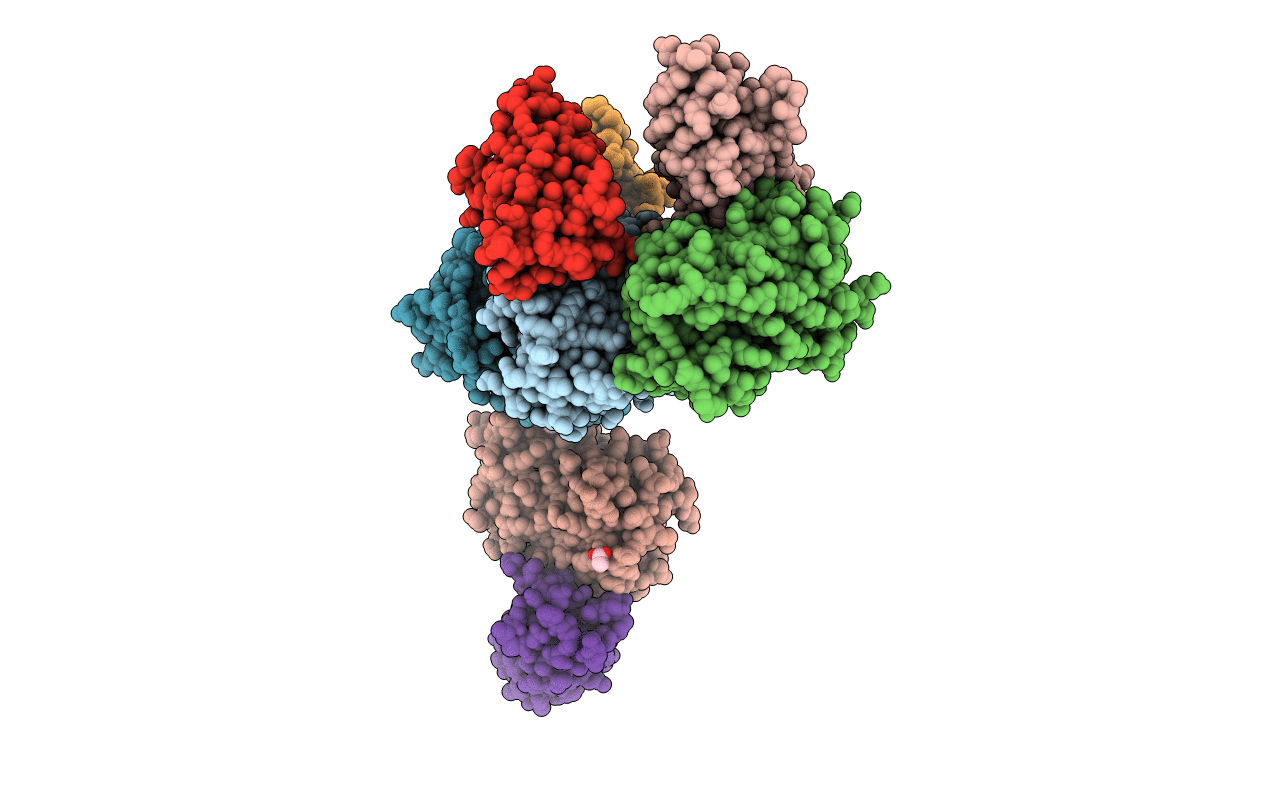
7CZ0 image
Deposition Date 2020-09-06
Release Date 2021-09-08
Last Version Date 2026-07-01
Entry Detail
PDB ID:
7CZ0
Title:
Crystal structure of a thermostable green fluorescent protein (TGP) with a synthetic nanobody (Sb92)
Biological Source:
Source Organism(s):
Expression System(s):
Method Details:
Experimental Method:
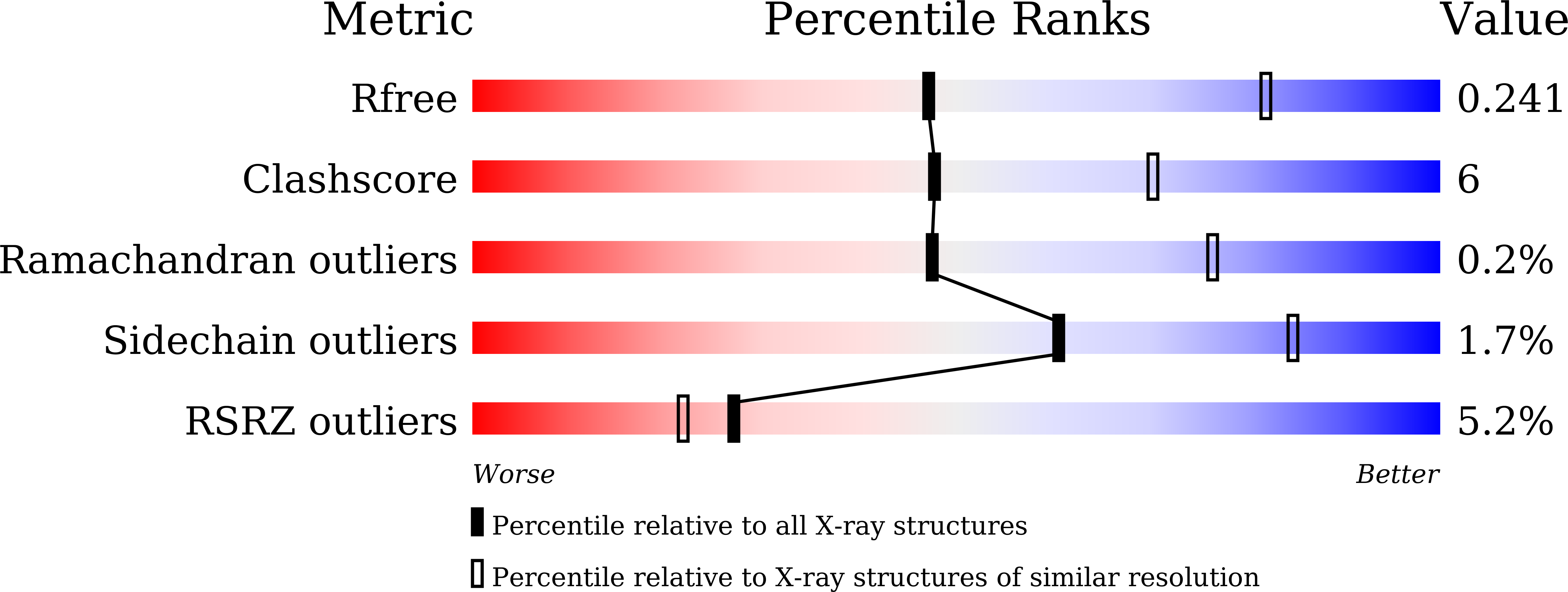
Resolution:
2.77 Å
R-Value Free:
0.24
R-Value Work:
0.20
R-Value Observed:
0.20
Space Group:
P 21 21 2
Macromolecular Entities
Polymer Type:polypeptide(L)
Molecule:Thermostable green fluorescen
Chain IDs:A, B, C, D
Chain Length:234
Number of Molecules:4
Biological Source:Galaxea fascicularis
Polymer Type:polypeptide(L)
Molecule:Synthetic nanobody (Sybody) 9
Chain IDs:E, F, G, H
Chain Length:144
Number of Molecules:4
Biological Source:synthetic construct
Primary Citation
Structure-based design of covalent nanobody binders for a thermostable green fluorescence protein.
Acta Biochim.Biophys.Sin. 57 1363 1370 (2024)
PMID: 39719878 DOI: 10.3724/abbs.2024233

Abstact

The use of green fluorescence protein (GFP) has advanced numerous areas of life sciences. An ultra-thermostable GFP (TGP), engineered from a coral GFP, offers potential advantages over traditional jellyfish-derived GFP because of its high stability. However, owing to its later discovery, TGP lacks the extensive toolsets available for GFP, such as heavy chain-only antibody binders known as nanobodies. In this study, we report the crystal structure of TGP in complex with Sb92, a synthetic nanobody identified from a previous in vitro screening, revealing Sb92's precise three-dimensional epitope. This structural insight, alongside the previously characterized Sb44-TGP complex, allows us to rationally design disulfide bonds between the antigen and the antibody for tighter interactions. Using biochemical analysis, we identify two bridged complexes (TGP A18C-Sb44 V100C and TGP E118C-Sb92 S57C), with the TGP-Sb92 disulfide pair showing high resistance to reducing agents. Our study expands the toolkit available for TGP and should encourage its wider applications.

Legend

Protein

Chemical

Disease

Primary Citation of related structures
Feedback Form
Name
Email
Institute
Feedback