

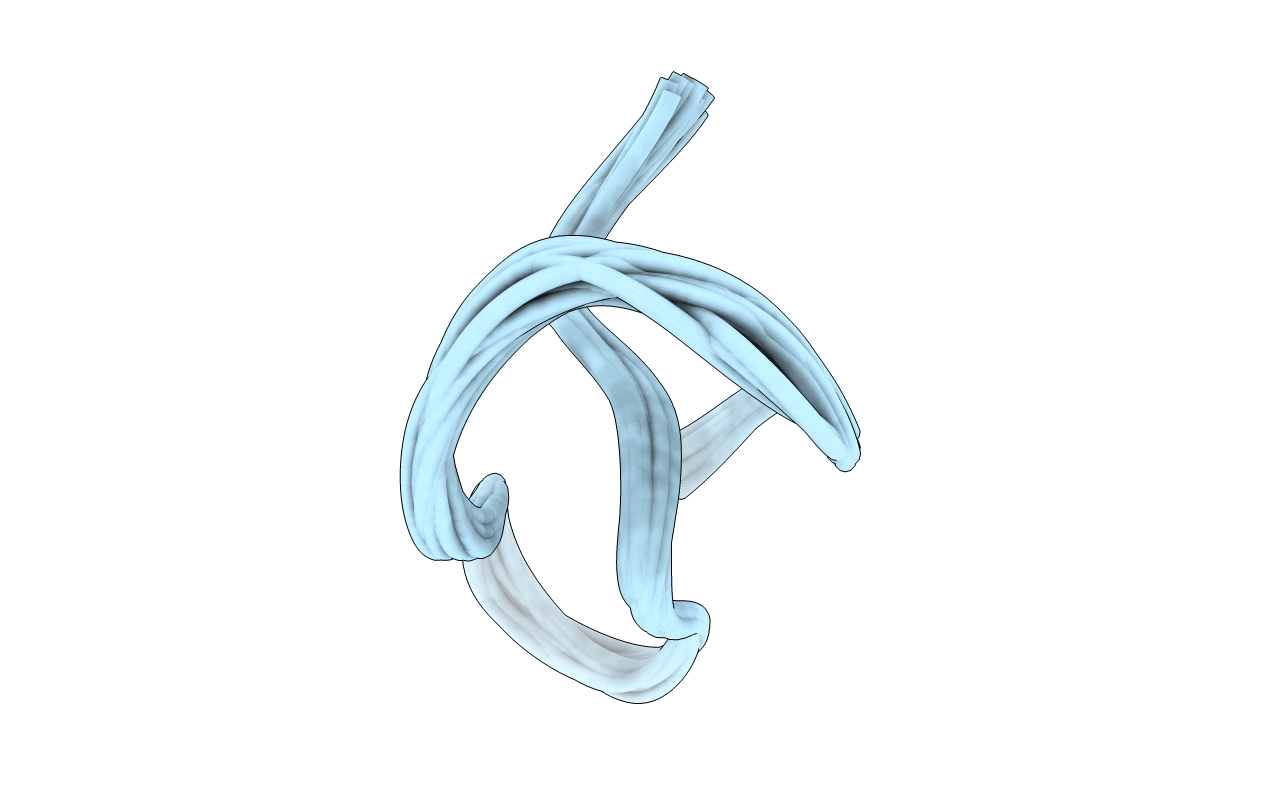
7BZ9 image
Deposition Date 2020-04-27
Release Date 2021-04-28
Last Version Date 2024-05-15
Entry Detail
PDB ID:
7BZ9
Keywords:
Title:
Template lasso peptide C24 mutant I4A
Biological Source:
Source Organism(s):
Expression System(s):
Method Details:
Experimental Method:
Conformers Calculated:
200
Conformers Submitted:
20
Selection Criteria:
structures with the lowest energy

Macromolecular Entities
Protein Blast
Polymer Type:polypeptide(L)
Molecule:lasso peptide
Chain IDs:A
Chain Length:15
Number of Molecules:1
Biological Source:Streptomyces sp.
Ligand Molecules
Primary Citation
Rational generation of lasso peptides based on biosynthetic gene mutations and site-selective chemical modifications.
Chem Sci 12 12353 12364 (2021)
PMID: 34603665 DOI: 10.1039/d1sc02695j

Abstact

Lasso peptides are a unique family of natural products whose structures feature a specific threaded fold, which confers these peptides the resistance to thermal and proteolytic degradation. This stability gives lasso peptides excellent pharmacokinetic properties, which together with their diverse reported bioactivities have garnered extensive attention because of their drug development potential. Notably, the threaded fold has proven quite inaccessible by chemical synthesis, which has hindered efficient generation of structurally diverse lasso peptides. We herein report the discovery of a new lasso peptide stlassin (1) by gene activation based on a Streptomyces heterologous expression system. Site-directed mutagenesis on the precursor peptide-encoding gene is carried out systematically, generating 17 stlassin derivatives (2-17 and 21) with residue-replacements at specific positions of 1. The solution NMR structures of 1, 3, 4, 14 and 16 are determined, supporting structural comparisons that ultimately enabled the rational production of disulfide bond-containing derivatives 18 and 19, whose structures do not belong to any of the four classes currently used to classify lasso peptides. Several site-selective chemical modifications are first applied on 16 and 21, efficiently generating new derivatives (20, 22-27) whose structures bear various decorations beyond the peptidyl monotonicity. The high production yields of these stlassin derivatives facilitate biological assays, which show that 1, 4, 16, 20, 21 and 24 possess antagonistic activities against the binding of lipopolysaccharides to toll-like receptor 4 (TLR4). These results demonstrate proof-of-concept for the combined mutational/chemical generation of lasso peptide libraries to support drug lead development.

Legend

Protein

Chemical

Disease

Primary Citation of related structures
Feedback Form
Name
Email
Institute
Feedback