

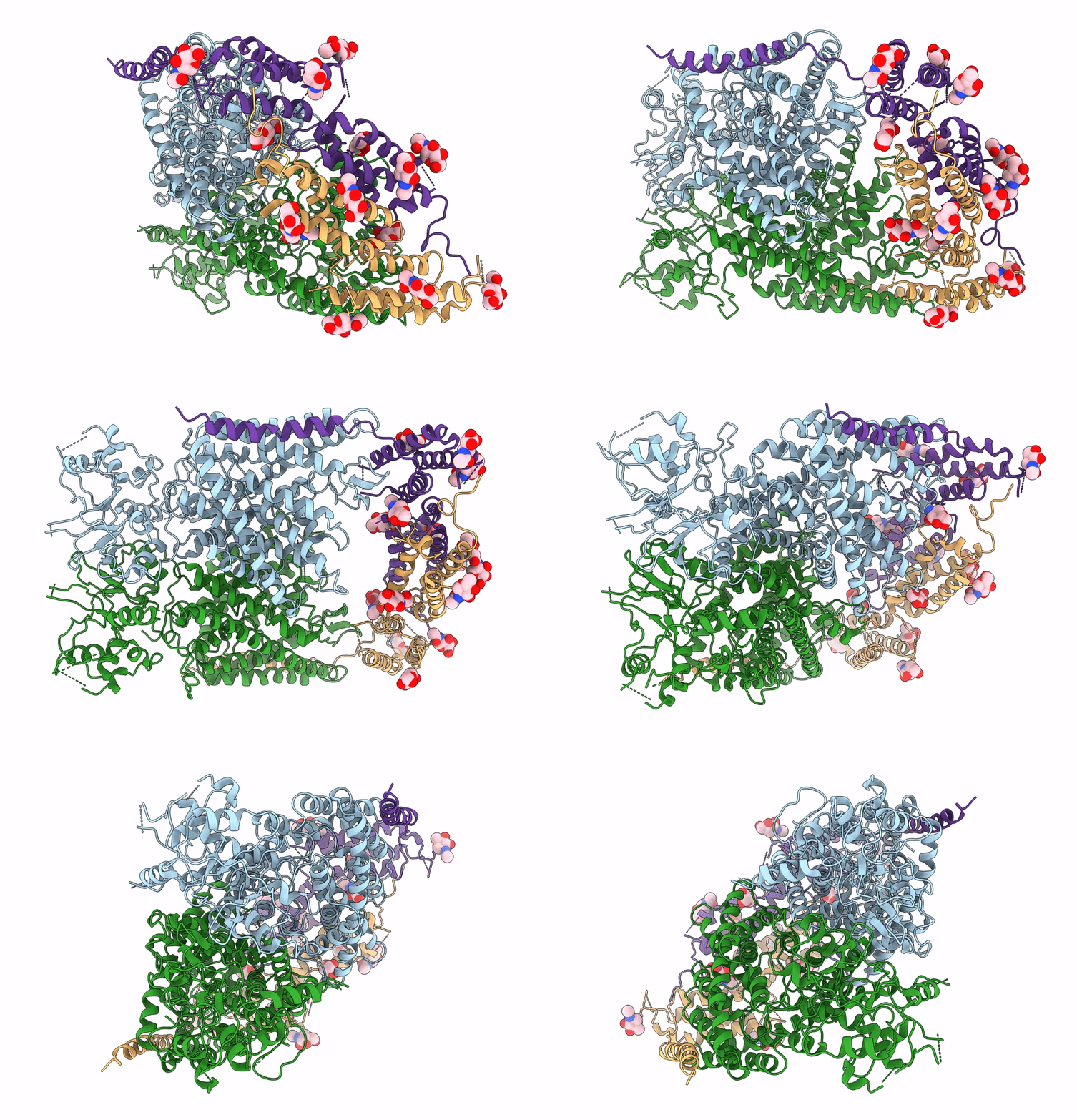
7BXU image
Deposition Date 2020-04-20
Release Date 2020-09-16
Last Version Date 2024-10-16
Entry Detail
PDB ID:
7BXU
Title:
CLC-7/Ostm1 membrane protein complex
Biological Source:
Source Organism(s):
Homo sapiens (Taxon ID: 9606)
Expression System(s):
Method Details:
Experimental Method:
Resolution:
3.70 Å
Aggregation State:
PARTICLE
Reconstruction Method:
SINGLE PARTICLE
Macromolecular Entities
Polymer Type:polypeptide(L)
Molecule:H(+)/Cl(-) exchange transport
Gene (Uniprot):CLCN7
Chain IDs:B (auth: A), D (auth: B)
Chain Length:805
Number of Molecules:2
Biological Source:Homo sapiens
Polymer Type:polypeptide(L)
Molecule:Osteopetrosis-associated tran
Gene (Uniprot):OSTM1
Chain IDs:A (auth: C), C (auth: D)
Chain Length:334
Number of Molecules:2
Biological Source:Homo sapiens
Ligand Molecules
Primary Citation
Molecular insights into the human CLC-7/Ostm1 transporter.
Sci Adv 6 eabb4747 eabb4747 (2020)
PMID: 32851177 DOI: 10.1126/sciadv.abb4747

Abstact

CLC family proteins translocate chloride ions across cell membranes to maintain the membrane potential, regulate the transepithelial Cl- transport, and control the intravesicular pH among different organelles. CLC-7/Ostm1 is an electrogenic Cl-/H+ antiporter that mainly resides in lysosomes and osteoclast ruffled membranes. Mutations in human CLC-7/Ostm1 lead to lysosomal storage disorders and severe osteopetrosis. Here, we present the cryo-electron microscopy (cryo-EM) structure of the human CLC-7/Ostm1 complex and reveal that the highly glycosylated Ostm1 functions like a lid positioned above CLC-7 and interacts extensively with CLC-7 within the membrane. Our complex structure reveals a functionally crucial domain interface between the amino terminus, TMD, and CBS domains of CLC-7. Structural analyses and electrophysiology studies suggest that the domain interaction interfaces affect the slow gating kinetics of CLC-7/Ostm1. Thus, our study deepens understanding of CLC-7/Ostm1 transporter and provides insights into the molecular basis of the disease-related mutations.

Legend

Protein

Chemical

Disease

Primary Citation of related structures
Feedback Form
Name
Email
Institute
Feedback