

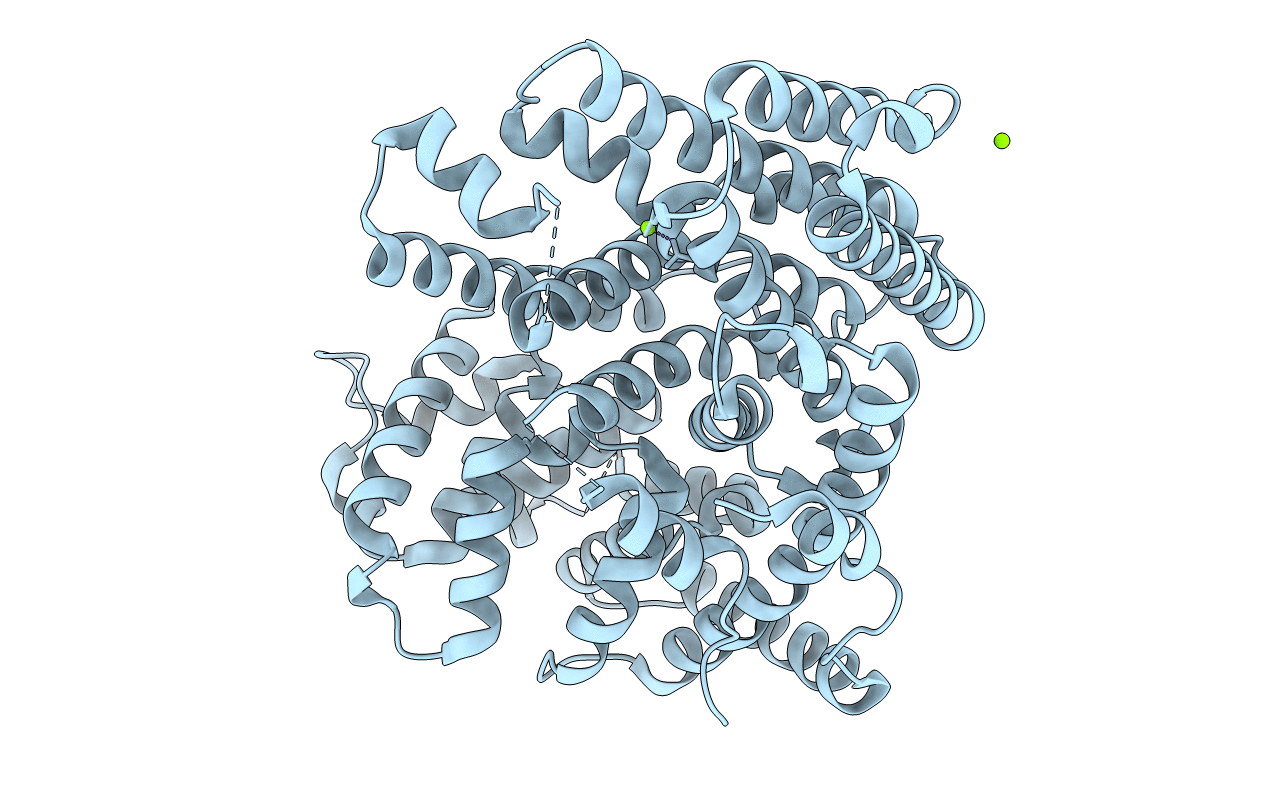
6k16 image
Deposition Date 2019-05-09
Release Date 2019-06-12
Last Version Date 2023-11-22
Entry Detail
PDB ID:
6K16
Keywords:
Title:
Crystal Structure of Sesquisabinene B Synthase 1 from Santalum album
Biological Source:
Source Organism(s):
Santalum album (Taxon ID: 35974)
Expression System(s):
Method Details:
Experimental Method:
Resolution:
2.20 Å
R-Value Free:
0.22
R-Value Work:
0.19
R-Value Observed:
0.20
Space Group:
C 1 2 1

Macromolecular Entities
Structures with similar UniProt ID
Protein Blast
Polymer Type:polypeptide(L)
Molecule:Sesquisabinene B synthase 1
Mutagens:G185K
Chain IDs:A
Chain Length:555
Number of Molecules:1
Biological Source:Santalum album
Ligand Molecules
Primary Citation
Dynamic coupling analysis on plant sesquiterpene synthases provides leads for the identification of product specificity determinants.
Biochem Biophys Res Commun 536 107 114 (2020)
PMID: 33387748 DOI: .

Abstact

Sesquiterpene synthases catalyse cyclisation of farnesyl pyrophosphate to produce diverse sesquiterpenes. Despite utilising the same substrate and exhibiting significant sequence and structural homology, these enzymes form different products. Previous efforts were based on identifying the effect of divergent residues present at the catalytic binding pocket on the product specificity of these enzymes. However, the rationales deduced for the product specificity from these studies were not generic enough to be applicable to other phylogenetically distant members of this family. To address this problem, we have developed a novel approach combining sequence, structural and dynamical information of plant sesquiterpene synthases (SSQs) to predict product modulating residues (PMRs). We tested this approach on the SSQs with known PMRs and also on sesquisabinene synthase 1 (SaSQS1), a SSQ from Indian sandalwood. Our results show that the dynamical sectors of SSQs obtained from molecular dynamics simulation and their hydrophobicity and vicinity indices together provide leads for the identification of PMRs. The efficacy of the technique was tested on SaSQS1 using mutagenesis. To the best of our knowledge, this is a first technique of this kind which provides cues on PMRs of SSQs, with divergent phylogenetic relationship.

Legend

Protein

Chemical

Disease

Primary Citation of related structures
Feedback Form
Name
Email
Institute
Feedback