

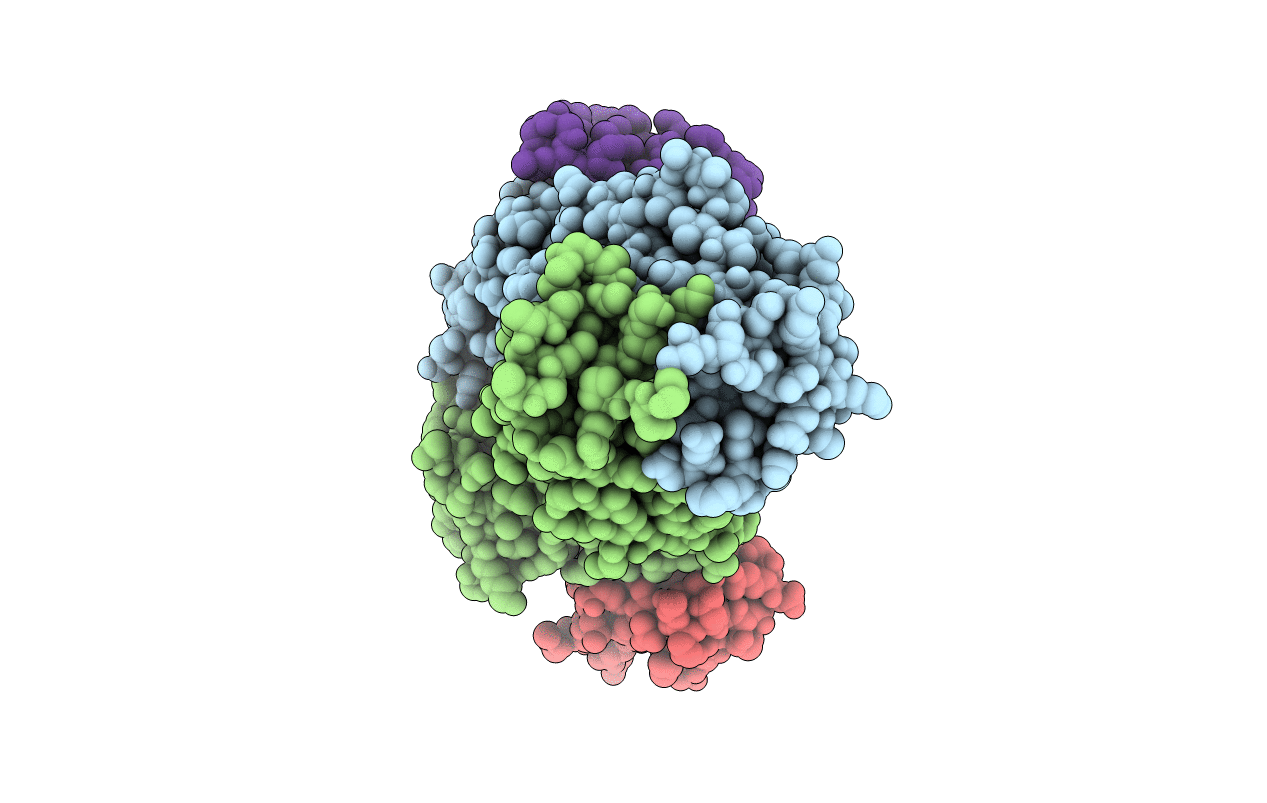
6bae image
Deposition Date 2017-10-12
Release Date 2018-09-05
Last Version Date 2024-11-13
Entry Detail
PDB ID:
6BAE
Keywords:
Title:
Trastuzumab Fab v3 in complex with CQFDLSTRRLKC
Biological Source:
Source Organism(s):
Method Details:
Experimental Method:
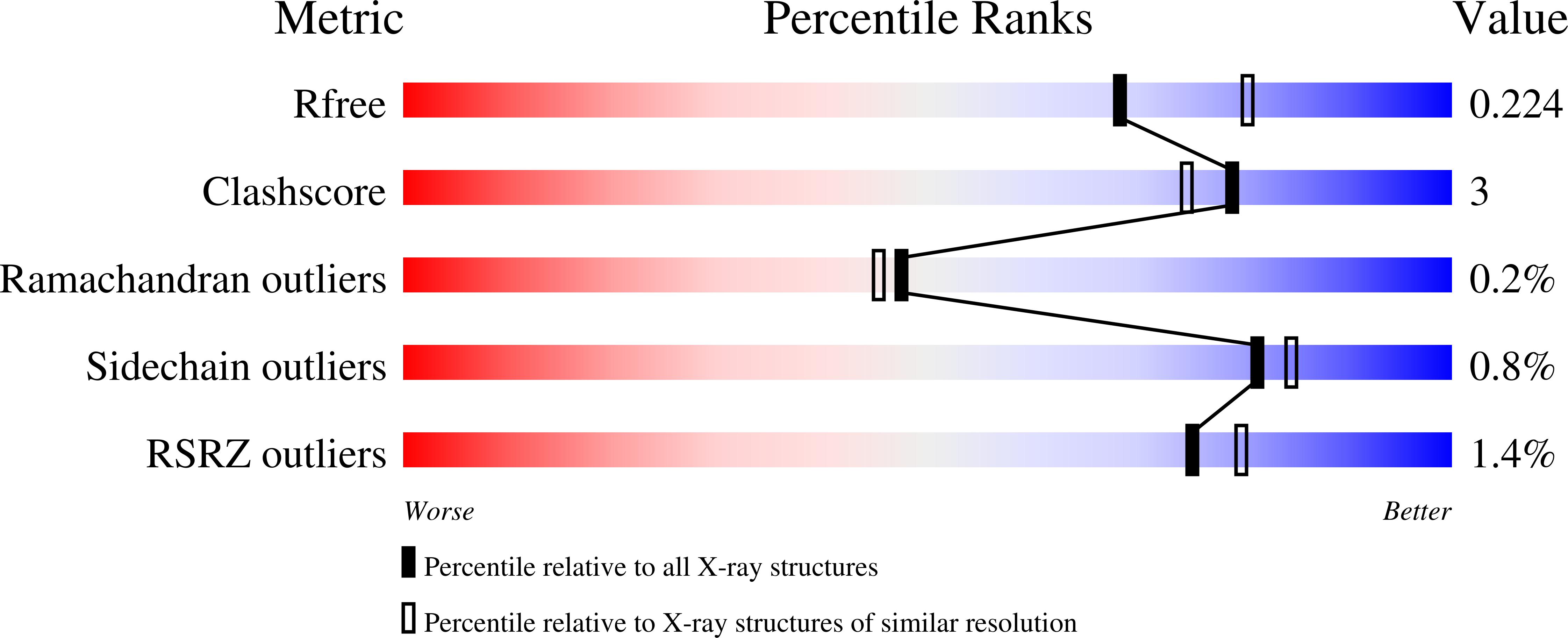
Resolution:
2.14 Å
R-Value Free:
0.22
R-Value Work:
0.17
R-Value Observed:
0.17
Space Group:
P 21 21 21
Macromolecular Entities
Structures with similar UniProt ID
Protein Blast
Polymer Type:polypeptide(L)
Molecule:Trastuzumab Fab light chain
Gene (Uniprot):IGKC
Chain IDs:A
Chain Length:214
Number of Molecules:1
Biological Source:Mus musculus, Homo sapiens
Structures with similar UniProt ID
Protein Blast
Polymer Type:polypeptide(L)
Molecule:Trastuzumab Fab heavy chain
Mutagens:A175C, R217K
Chain IDs:B
Chain Length:223
Number of Molecules:1
Biological Source:Mus musculus, Homo sapiens
Structures with similar UniProt ID
Protein Blast
Polymer Type:polypeptide(L)
Molecule:Immunoglobulin G binding prot
Chain IDs:D (auth: C)
Chain Length:54
Number of Molecules:1
Biological Source:Staphylococcus aureus
Protein Blast
Polymer Type:polypeptide(L)
Molecule:meditope
Chain IDs:E (auth: D)
Chain Length:14
Number of Molecules:1
Biological Source:synthetic construct
Structures with similar UniProt ID
Protein Blast
Polymer Type:polypeptide(L)
Molecule:Protein L
Mutagens:T17I, D38A, Y56N, T57H, I58M
Chain IDs:C (auth: E)
Chain Length:64
Number of Molecules:1
Biological Source:Finegoldia magna
Primary Citation
Template-Catalyzed, Disulfide Conjugation of Monoclonal Antibodies Using a Natural Amino Acid Tag.
Bioconjug. Chem. 29 2074 2081 (2018)
PMID: 29763554 DOI: 10.1021/acs.bioconjchem.8b00284

Abstact

The high specificity and favorable pharmacological properties of monoclonal antibodies (mAbs) have prompted significant interest in re-engineering this class of molecules to add novel functionalities for enhanced therapeutic and diagnostic potential. Here, we used the high affinity, meditope-Fab interaction to template and drive the rapid, efficient, and stable site-specific formation of a disulfide bond. We demonstrate that this template-catalyzed strategy provides a consistent and reproducible means to conjugate fluorescent dyes, cytotoxins, or "click" chemistry handles to meditope-enabled mAbs (memAbs) and memFabs. More importantly, we demonstrate this covalent functionalization is achievable using natural amino acids only, opening up the opportunity to genetically encode cysteine meditope "tags" to biologics. As proof of principle, genetically encoded, cysteine meditope tags were added to the N- and/or C-termini of fluorescent proteins, nanobodies, and affibodies, each expressed in bacteria, purified to homogeneity, and efficiently conjugated to different memAbs and meFabs. We further show that multiple T-cell and Her2-targeting bispecific molecules using this strategy potently activate T-cell signaling pathways in vitro. Finally, the resulting products are highly stable as evidenced by serum stability assays (>14 d at 37 degrees C) and in vivo imaging of tumor xenographs. Collectively, the platform offers the opportunity to build and exchange an array of functional moieties, including protein biologics, among any cysteine memAb or Fab to rapidly create, test, and optimize stable, multifunctional biologics.

Legend

Protein

Chemical

Disease

Primary Citation of related structures
Feedback Form
Name
Email
Institute
Feedback