

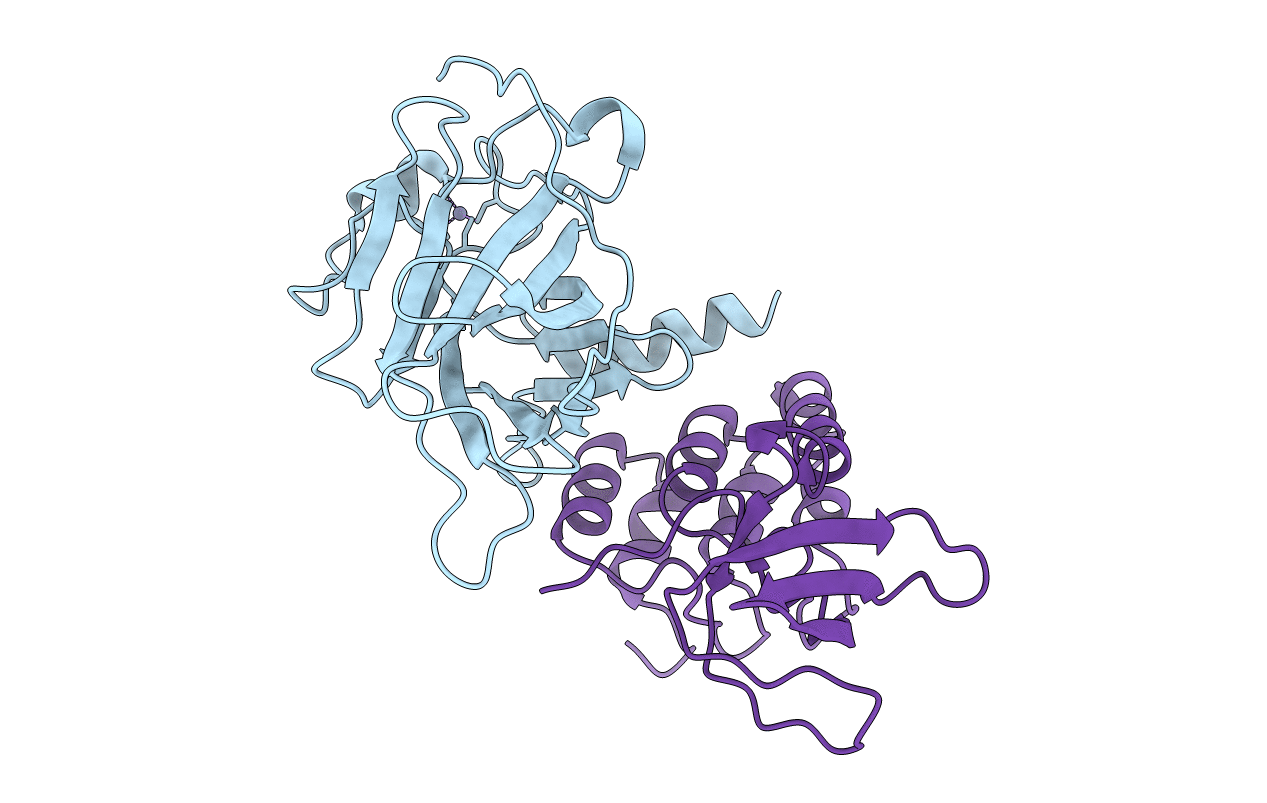
6RZ3 image
Deposition Date 2019-06-12
Release Date 2019-10-30
Last Version Date 2024-01-24
Entry Detail
PDB ID:
6RZ3
Title:
Crystal structure of a complex between the DNA-binding domain of p53 and the carboxyl-terminal conserved region of iASPP
Biological Source:
Source Organism(s):
Homo sapiens (Taxon ID: 9606)
Expression System(s):
Method Details:
Experimental Method:
Resolution:
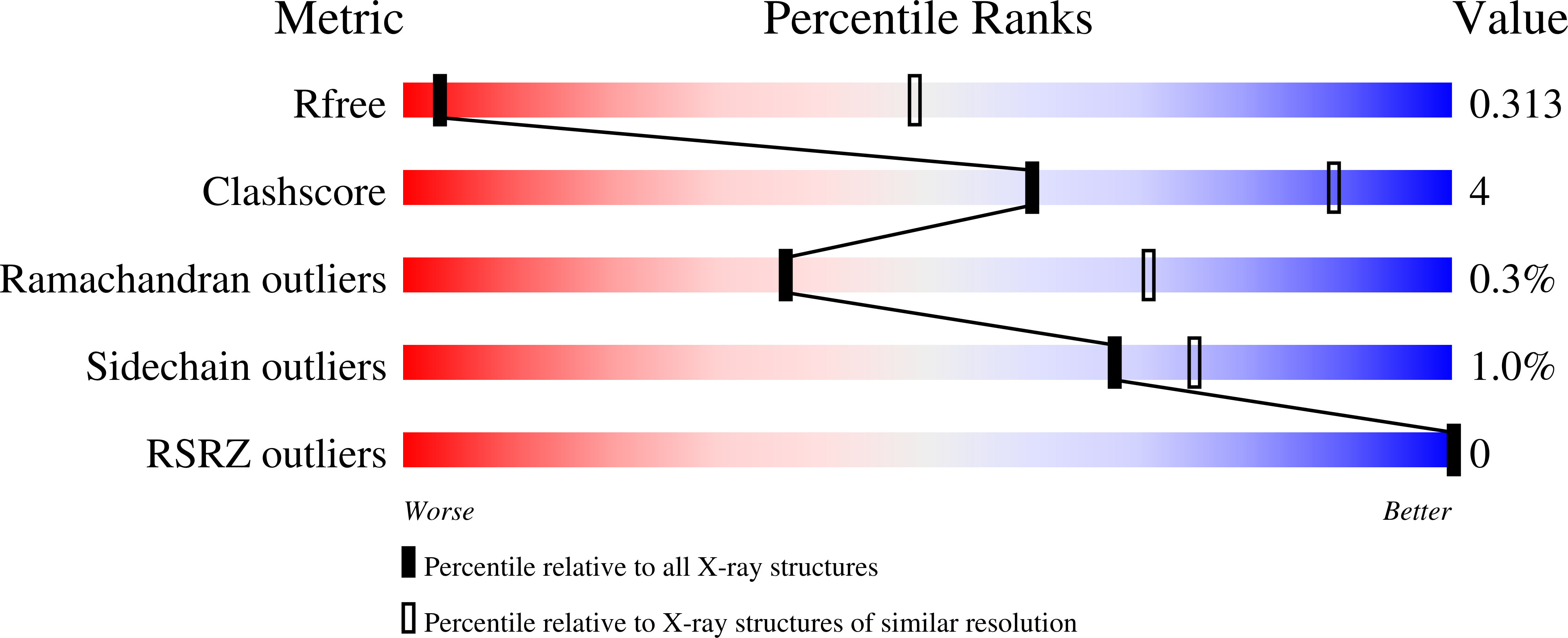
4.23 Å
R-Value Free:
0.29
R-Value Work:
0.24
R-Value Observed:
0.24
Space Group:
P 41 21 2
Macromolecular Entities
Polymer Type:polypeptide(L)
Molecule:Cellular tumor antigen p53
Gene (Uniprot):TP53
Chain IDs:A
Chain Length:232
Number of Molecules:1
Biological Source:Homo sapiens
Polymer Type:polypeptide(L)
Molecule:RelA-associated inhibitor
Gene (Uniprot):PPP1R13L
Chain IDs:B
Chain Length:238
Number of Molecules:1
Biological Source:Homo sapiens
Ligand Molecules
Primary Citation
iASPP mediates p53 selectivity through a modular mechanism fine-tuning DNA recognition.
Proc. Natl. Acad. Sci. U.S.A. 116 17470 17479 (2019)
PMID: 31395738 DOI: 10.1073/pnas.1909393116

Abstact

The most frequently mutated protein in human cancer is p53, a transcription factor (TF) that regulates myriad genes instrumental in diverse cellular outcomes including growth arrest and cell death. Cell context-dependent p53 modulation is critical for this life-or-death balance, yet remains incompletely understood. Here we identify sequence signatures enriched in genomic p53-binding sites modulated by the transcription cofactor iASPP. Moreover, our p53-iASPP crystal structure reveals that iASPP displaces the p53 L1 loop-which mediates sequence-specific interactions with the signature-corresponding base-without perturbing other DNA-recognizing modules of the p53 DNA-binding domain. A TF commonly uses multiple structural modules to recognize its cognate DNA, and thus this mechanism of a cofactor fine-tuning TF-DNA interactions through targeting a particular module is likely widespread. Previously, all tumor suppressors and oncoproteins that associate with the p53 DNA-binding domain-except the oncogenic E6 from human papillomaviruses (HPVs)-structurally cluster at the DNA-binding site of p53, complicating drug design. By contrast, iASPP inhibits p53 through a distinct surface overlapping the E6 footprint, opening prospects for p53-targeting precision medicine to improve cancer therapy.

Legend

Protein

Chemical

Disease

Primary Citation of related structures
Feedback Form
Name
Email
Institute
Feedback