

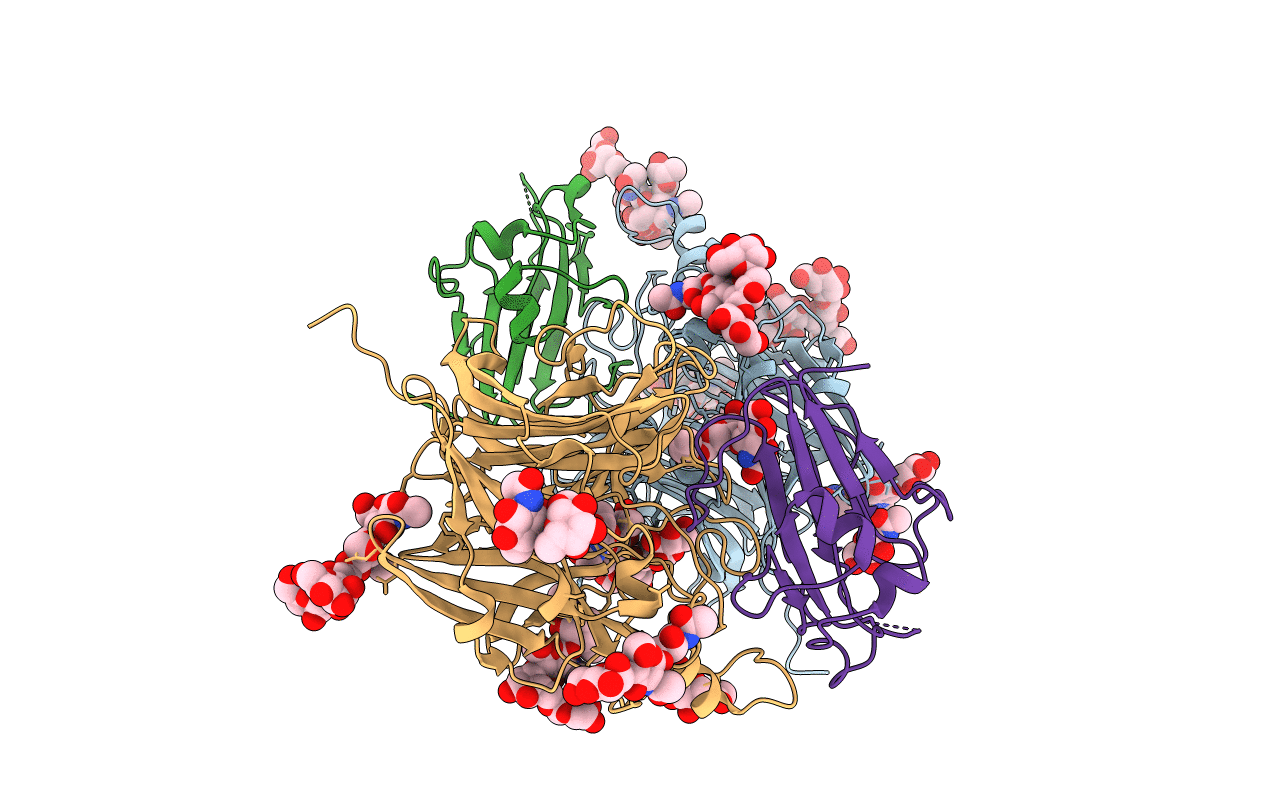
6P7Y image
Deposition Date 2019-06-06
Release Date 2019-09-25
Last Version Date 2024-11-20
Entry Detail
PDB ID:
6P7Y
Keywords:
Title:
Crystal Structure of the Cedar henipavirus Attachment G Glycoprotein globular domain in complex with the receptor ephrin-B2
Biological Source:
Source Organism(s):
Cedar virus (Taxon ID: 1221391)
Homo sapiens (Taxon ID: 9606)
Method Details:
Experimental Method:
Resolution:
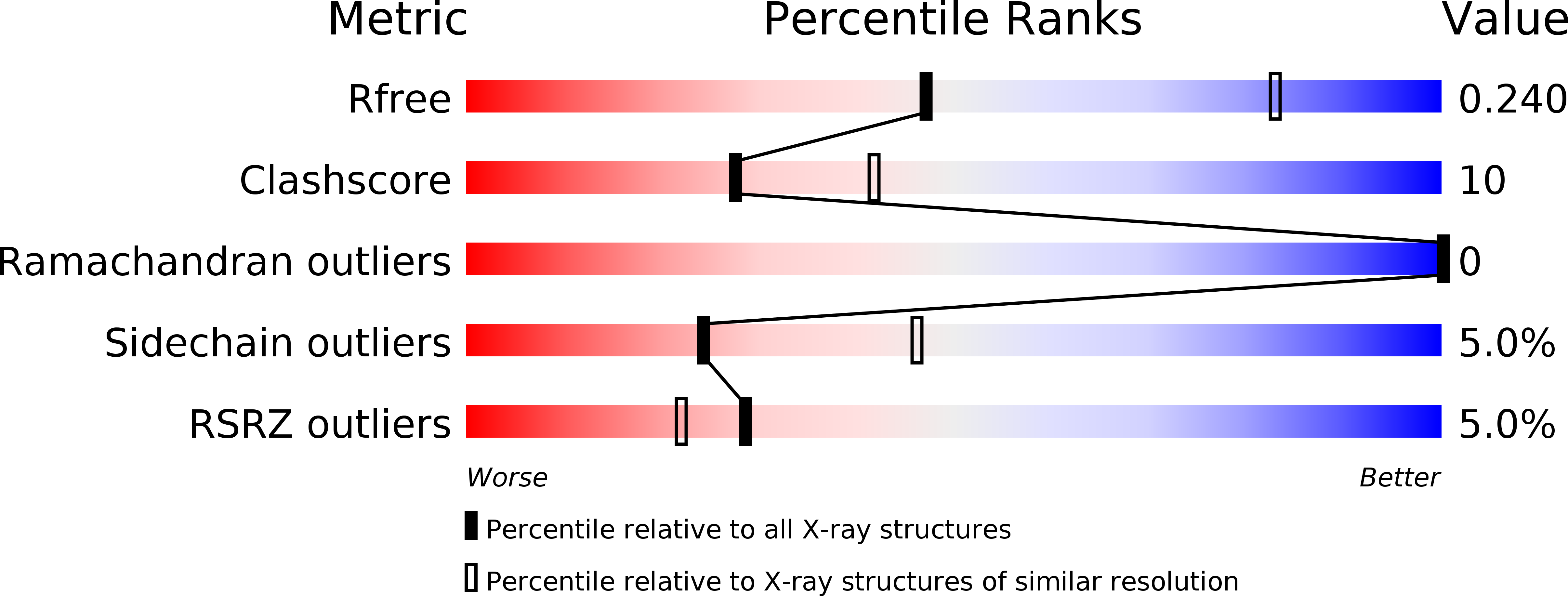
2.84 Å
R-Value Free:
0.23
R-Value Work:
0.20
R-Value Observed:
0.20
Space Group:
P 65
Macromolecular Entities
Structures with similar UniProt ID
Protein Blast
Polymer Type:polypeptide(L)
Molecule:Attachment glycoprotein
Gene (Uniprot):G
Chain IDs:A, C
Chain Length:430
Number of Molecules:2
Biological Source:Cedar virus
Structures with similar UniProt ID
Protein Blast
Polymer Type:polypeptide(L)
Molecule:Ephrin-B2
Gene (Uniprot):EFNB2
Chain IDs:B, D
Chain Length:144
Number of Molecules:2
Biological Source:Homo sapiens
Ligand Molecules
Primary Citation
Structural and functional analyses reveal promiscuous and species specific use of ephrin receptors by Cedar virus.
Proc. Natl. Acad. Sci. U.S.A. 116 20707 20715 (2019)
PMID: 31548390 DOI: 10.1073/pnas.1911773116

Abstact

Cedar virus (CedV) is a bat-borne henipavirus related to Nipah virus (NiV) and Hendra virus (HeV), zoonotic agents of fatal human disease. CedV receptor-binding protein (G) shares only ∼30% sequence identity with those of NiV and HeV, although they can all use ephrin-B2 as an entry receptor. We demonstrate that CedV also enters cells through additional B- and A-class ephrins (ephrin-B1, ephrin-A2, and ephrin-A5) and report the crystal structure of the CedV G ectodomain alone and in complex with ephrin-B1 or ephrin-B2. The CedV G receptor-binding site is structurally distinct from other henipaviruses, underlying its capability to accommodate additional ephrin receptors. We also show that CedV can enter cells through mouse ephrin-A1 but not human ephrin-A1, which differ by 1 residue in the key contact region. This is evidence of species specific ephrin receptor usage by a henipavirus, and implicates additional ephrin receptors in potential zoonotic transmission.

Legend

Protein

Chemical

Disease

Primary Citation of related structures
Feedback Form
Name
Email
Institute
Feedback