

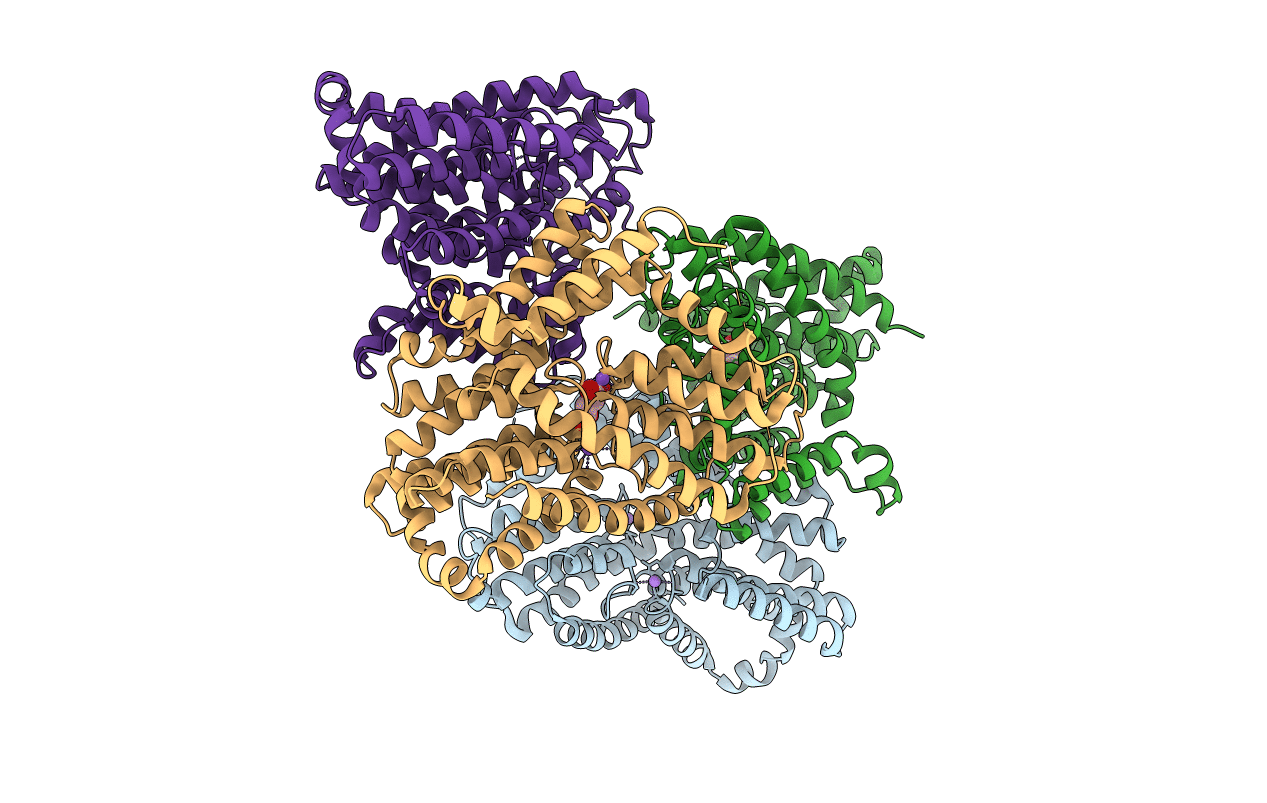
6OKZ image
Deposition Date 2019-04-15
Release Date 2020-10-28
Last Version Date 2026-02-25
Entry Detail
PDB ID:
6OKZ
Title:
Structure of VcINDY bound to Fumarate
Biological Source:
Method Details:
Experimental Method:
Resolution:
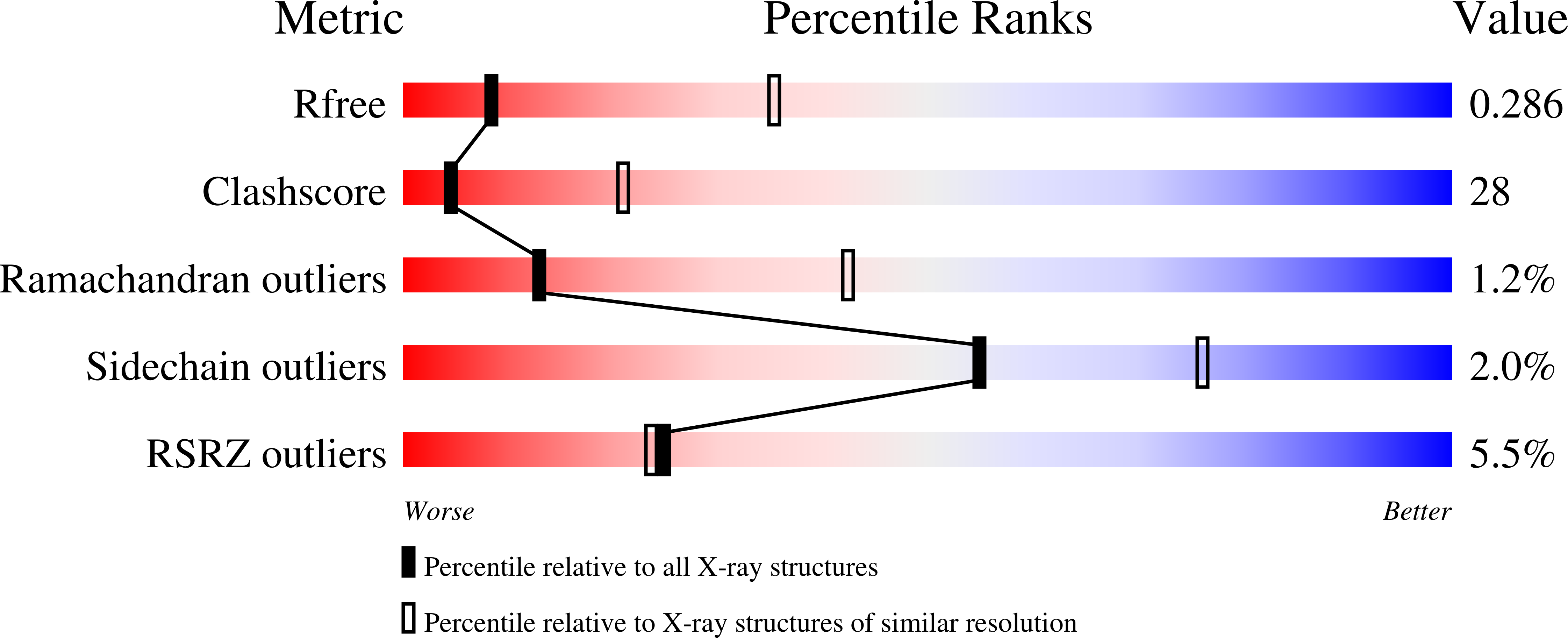
3.29 Å
R-Value Free:
0.28
R-Value Work:
0.24
R-Value Observed:
0.24
Space Group:
P 1 21 1
Macromolecular Entities
Structures with similar UniProt ID
Protein Blast
Polymer Type:polypeptide(L)
Molecule:Transporter, NadC family
Gene (Uniprot):VC_A0025
Chain IDs:A (auth: C), B (auth: D), C (auth: A), D (auth: B)
Chain Length:449
Number of Molecules:4
Biological Source:Vibrio cholerae serotype O1 (strain ATCC 39315 / El Tor Inaba N16961)
Primary Citation
Elevator mechanism dynamics in a sodium-coupled dicarboxylate transporter.
Proc. Natl. Acad. Sci. U.S.A. 123 e2500723123 e2500723123 (2026)
PMID: 41490488 DOI: 10.1073/pnas.2500723123

Abstact

VcINDY, the sodium-dependent dicarboxylate transporter from Vibrio cholerae, is responsible for C(4)-carboxylate uptake into cells. The molecular mechanism of how VcINDY physically moves substrates across the membrane, and does so in an energetically efficient manner, is unclear. Here, we use single-molecule fluorescence resonance energy transfer experiments to directly observe the individual mechanistic steps that VcINDY takes to translocate substrates across a lipid bilayer, and then test key predictions of transport cycle mechanistic models. Our data provide the first direct, dynamic evidence that VcINDY undergoes stochastic, elevator-type conformational motions that enable substrate translocation. The dynamics of these elevator motions are approximately an order of magnitude faster than the turnover rate for substrate transport, demonstrating that VcINDY undergoes multiple rounds of substrate translocation before a productive transport cycle is completed. Furthermore, the two protomers of the VcINDY homodimer undergo the substrate translocation motions in a noncooperative manner, and thus likely engage in independent transport reactions. The relative substrate independence of those motions supports the notion that the VcINDY transport cycle maintains strict cosubstrate coupling by a mechanism other than translocation inhibition. Thermodynamic modeling provides insight into how a cooperative binding mechanism is one such generalized approach to optimizing transport for many secondary active transporters.

Legend

Protein

Chemical

Disease

Primary Citation of related structures
Feedback Form
Name
Email
Institute
Feedback