

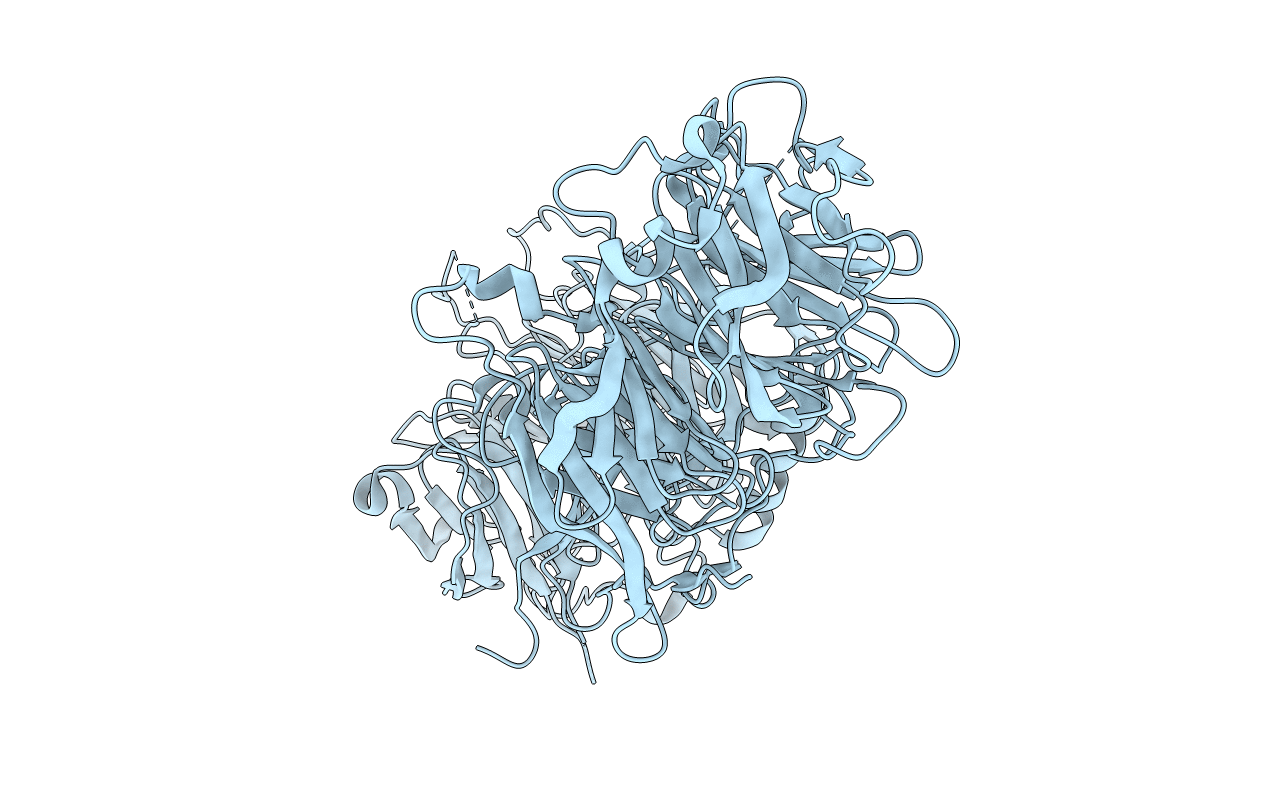
6N8P image
Deposition Date 2018-11-30
Release Date 2019-05-08
Last Version Date 2024-03-13
Entry Detail
PDB ID:
6N8P
Title:
Crystal structure of the human cell polarity protein Lethal Giant Larvae 2 (Lgl2). Unphosphorylated, crystal form 1.
Biological Source:
Source Organism(s):
Homo sapiens (Taxon ID: 9606)
Expression System(s):
Method Details:
Experimental Method:
Resolution:
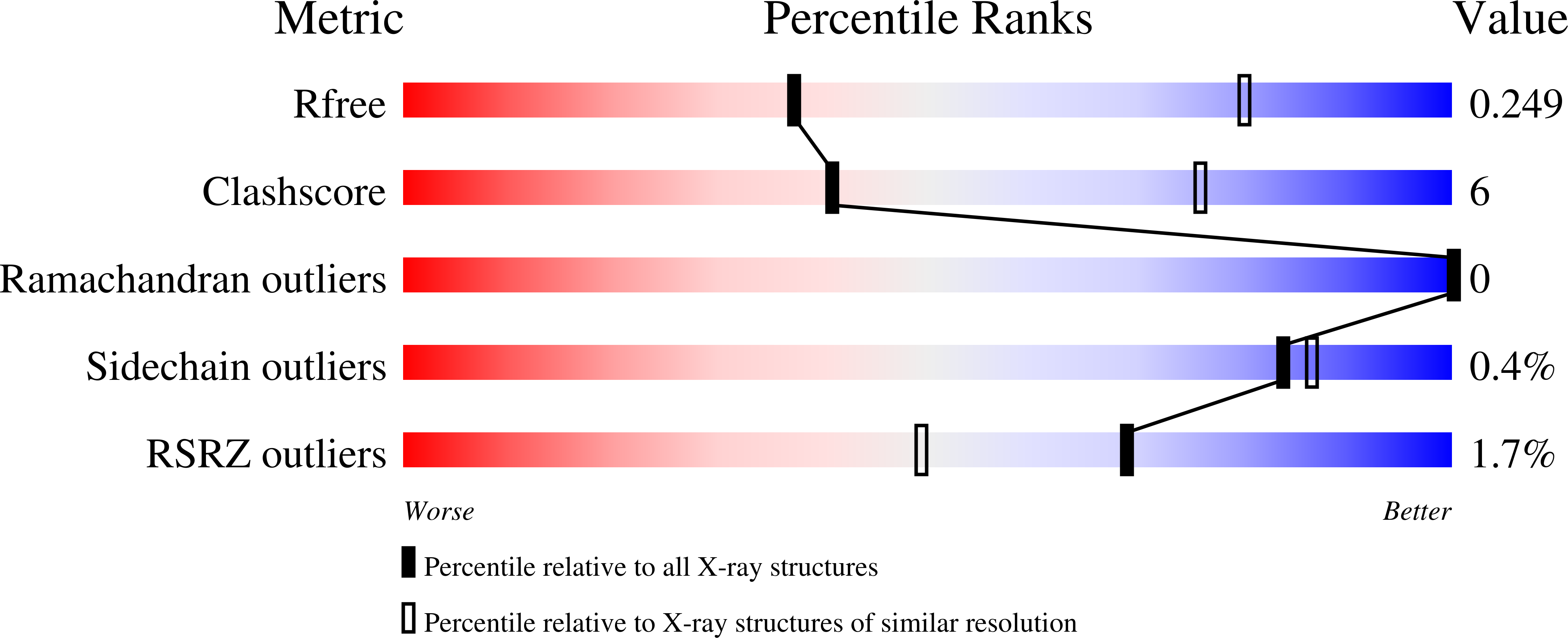
3.19 Å
R-Value Free:
0.24
R-Value Work:
0.20
R-Value Observed:
0.20
Space Group:
P 21 21 21
Macromolecular Entities
Polymer Type:polypeptide(L)
Molecule:Lethal(2) giant larvae protei
Gene (Uniprot):LLGL2
Chain IDs:A
Chain Length:979
Number of Molecules:1
Biological Source:Homo sapiens
Ligand Molecules
Primary Citation
Structural insights into the aPKC regulatory switch mechanism of the human cell polarity protein lethal giant larvae 2.
Proc. Natl. Acad. Sci. U.S.A. 116 10804 10812 (2019)
PMID: 31088962 DOI: 10.1073/pnas.1821514116

Abstact

Metazoan cell polarity is controlled by a set of highly conserved proteins. Lethal giant larvae (Lgl) functions in apical-basal polarity through phosphorylation-dependent interactions with several other proteins as well as the plasma membrane. Phosphorylation of Lgl by atypical protein kinase C (aPKC), a component of the partitioning-defective (Par) complex in epithelial cells, excludes Lgl from the apical membrane, a crucial step in the establishment of epithelial cell polarity. We present the crystal structures of human Lgl2 in both its unphosphorylated and aPKC-phosphorylated states. Lgl2 adopts a double β-propeller structure that is unchanged by aPKC phosphorylation of an unstructured loop in its second β-propeller, ruling out models of phosphorylation-dependent conformational change. We demonstrate that phosphorylation controls the direct binding of purified Lgl2 to negative phospholipids in vitro. We also show that a coil-helix transition of this region that is promoted by phosphatidylinositol 4,5-bisphosphate (PIP2) is also phosphorylation-dependent, implying a highly effective phosphorylative switch for membrane association.

Legend

Protein

Chemical

Disease

Primary Citation of related structures
Feedback Form
Name
Email
Institute
Feedback