

6KGJ image
Deposition Date 2019-07-11
Release Date 2020-01-22
Last Version Date 2023-11-22
Entry Detail
PDB ID:
6KGJ
Keywords:
Title:
M1Q-hNTAQ1 C28S
Biological Source:
Source Organism(s):
Homo sapiens (Taxon ID: 9606)
Expression System(s):
Method Details:
Experimental Method:
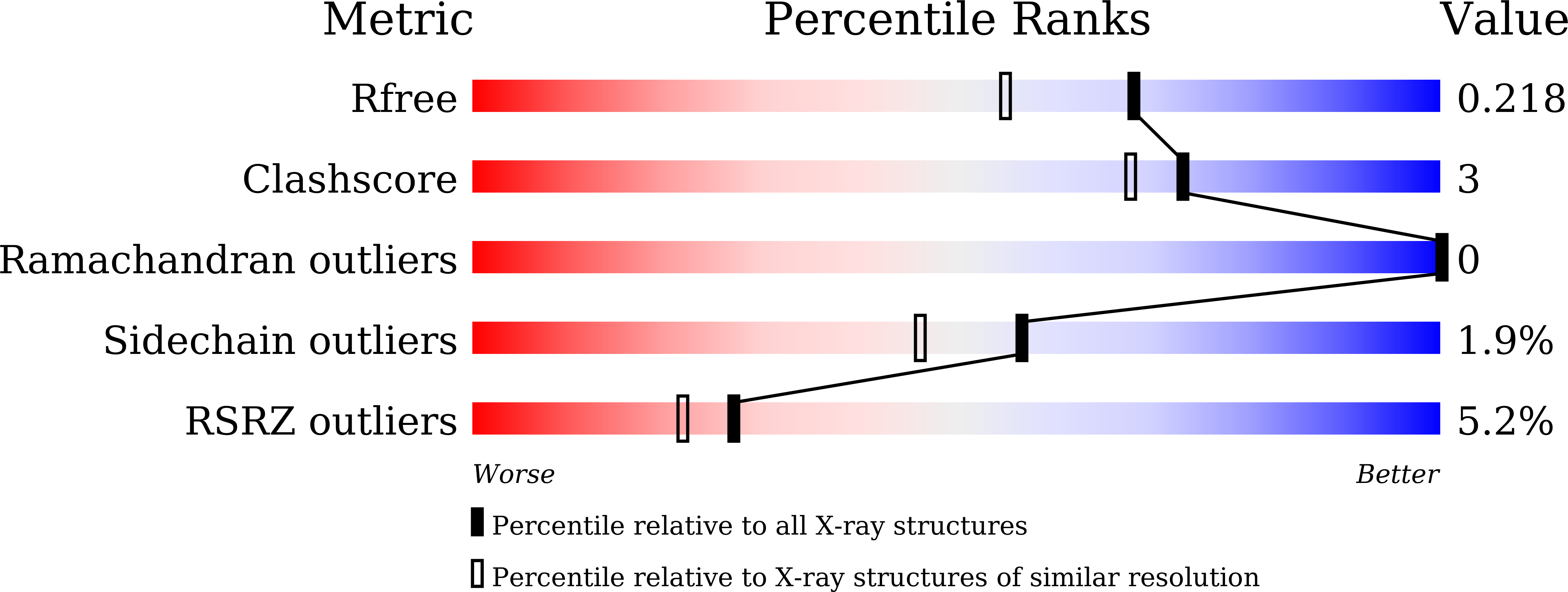
Resolution:
1.80 Å
R-Value Free:
0.22
R-Value Work:
0.21
R-Value Observed:
0.21
Space Group:
I 2 2 2
Macromolecular Entities
Structures with similar UniProt ID
Protein Blast
Polymer Type:polypeptide(L)
Molecule:Protein N-terminal glutamine
Gene (Uniprot):NTAQ1
Mutagens:C28S
Chain IDs:A (auth: B), B (auth: A)
Chain Length:202
Number of Molecules:2
Biological Source:Homo sapiens
Primary Citation
Use of the LC3B-fusion technique for biochemical and structural studies of proteins involved in the N-degron pathway.
J.Biol.Chem. ? ? ? (2020)
PMID: 31919097 DOI: 10.1074/jbc.RA119.010912

Abstact

The N-degron pathway, formerly the N-end rule pathway, is a protein degradation process that determines the half-life of proteins based on their N-terminal residues. In contrast to the well-established in vivo studies over decades, in vitro studies of this pathway, including biochemical characterization and high-resolution structures, are relatively limited. In this study, we have developed a unique fusion technique using microtubule-associated protein 1A/1B light chain 3B, a key marker protein of autophagy, to tag the N terminus of the proteins involved in the N-degron pathway, which enables high yield of homogeneous target proteins with variable N-terminal residues for diverse biochemical studies including enzymatic and binding assays and substrate identification. Intriguingly, crystallization showed a markedly enhanced probability, even for the N-degron complexes. To validate our results, we determined the structures of select proteins in the N-degron pathway and compared them with the Protein Data Bank-deposited proteins. Furthermore, several biochemical applications of this technique were introduced. Therefore, this technique can be used as a general tool for the in vitro study of the N-degron pathway.

Legend

Protein

Chemical

Disease

Primary Citation of related structures
Feedback Form
Name
Email
Institute
Feedback