

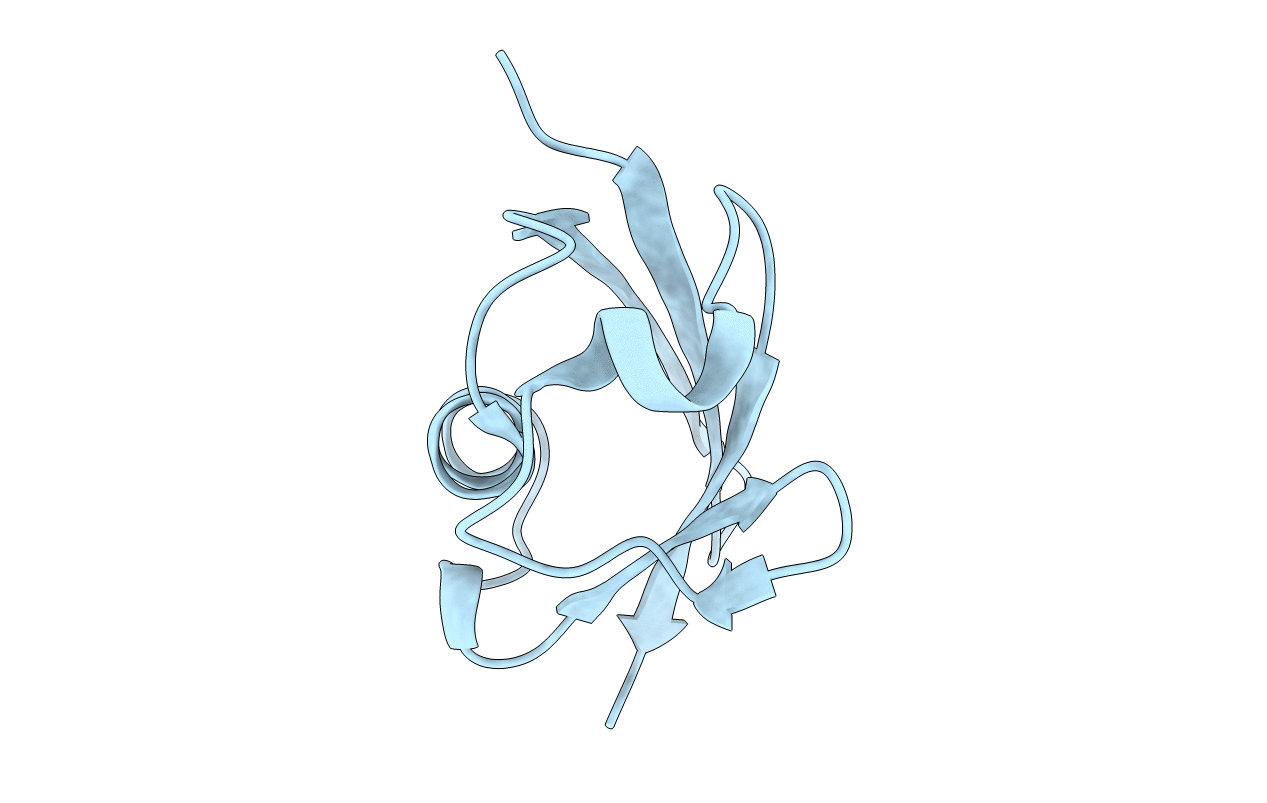
6JL3 image
Deposition Date 2019-03-03
Release Date 2020-02-19
Last Version Date 2023-11-22
Entry Detail
PDB ID:
6JL3
Title:
Crystal Structure of the UBL domain of Plasmodium Falciparum Dsk2
Biological Source:
Source Organism(s):
Expression System(s):
Method Details:
Experimental Method:
Resolution:
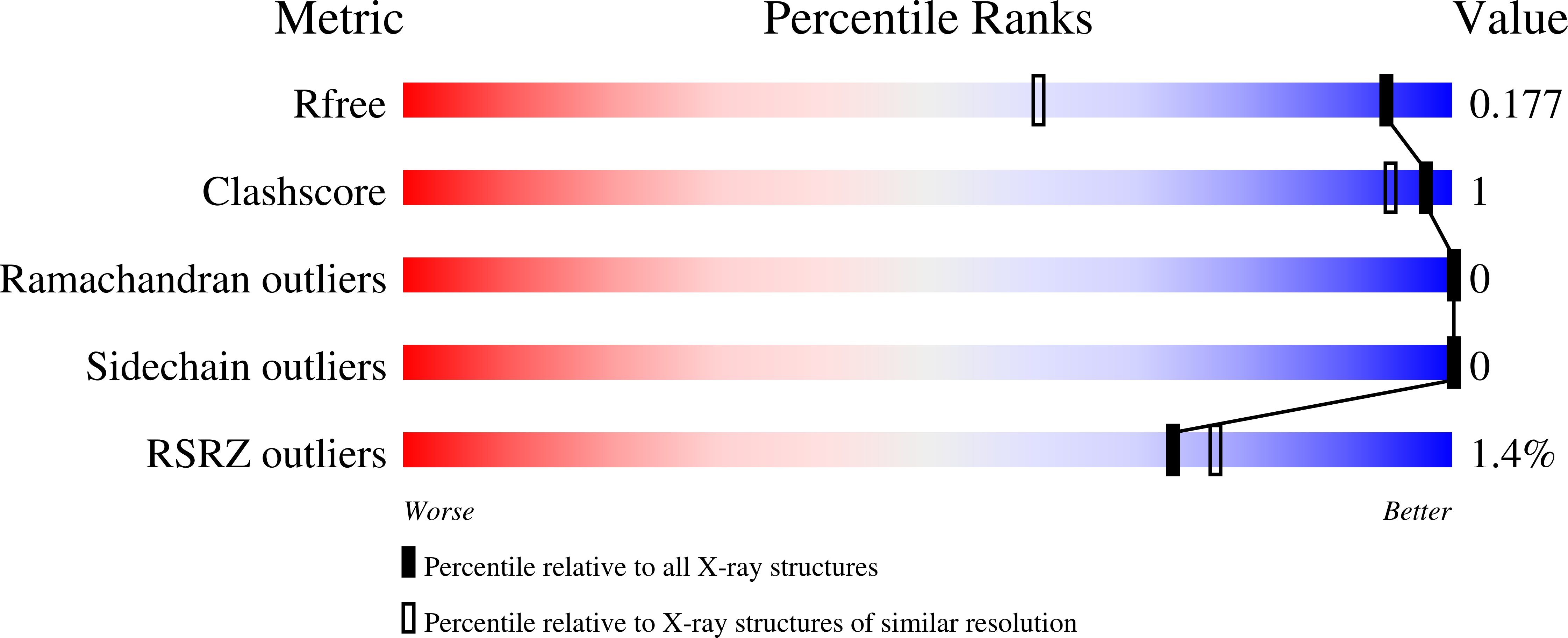
1.30 Å
R-Value Free:
0.16
R-Value Work:
0.15
R-Value Observed:
0.15
Space Group:
P 41 21 2
Macromolecular Entities
Polymer Type:polypeptide(L)
Molecule:Ubiquitin domain-containing p
Gene (Uniprot):PF3D7_1113400
Chain IDs:A
Chain Length:79
Number of Molecules:1
Biological Source:Plasmodium falciparum
Primary Citation
The recognition of proteasomal receptors by Plasmodium falciparum DSK2.
Molecular and biochemical parasitology 236 111266 111266 (2020)
PMID: 32057831 DOI: .

Abstact

One of the pathways by which proteins are targeted for degradation by the proteasome involve transport by shuttle proteins to proteasomal receptors. The malaria parasite Plasmodium falciparum has recently been found to possess a similar pathway, with the shuttle protein PfDsk2 being the major player. In this study, we have demonstrated how PfDsk2 and its recognition by proteasomal receptors differ from the mammalian system. Our crystal structure of unbound PfDsk2 UBL domain at 1.30 Å revealed an additional 310-helix compared to the human homolog, as well as a few significant differences in its putative binding interface with the proteasome receptors, PfRpn10 and PfRpn13. Moreover, the non-binding face of UBL showed a reversal of surface charge compared to HsDsk2 shuttle protein, instead resembling HOIL-like E3 ligase UBL domain. The affinity of the interaction with the proteasomal receptors remained similar to the human system, and dissociation constants of the same order of magnitude. On the other hand, we have found evidence of a novel interaction between PfRpn13DEUBAD with the PfDsk2UBL suggesting that PfDsk2 may work in cooperation with deubiquitinating enzymes for proofreading ubiquitinated substrates. Our study provides the first molecular look at shuttle proteins in Apicomplexan parasites and hints at how their interaction landscape might be broader than what we may expect.

Legend

Protein

Chemical

Disease

Primary Citation of related structures
Feedback Form
Name
Email
Institute
Feedback