

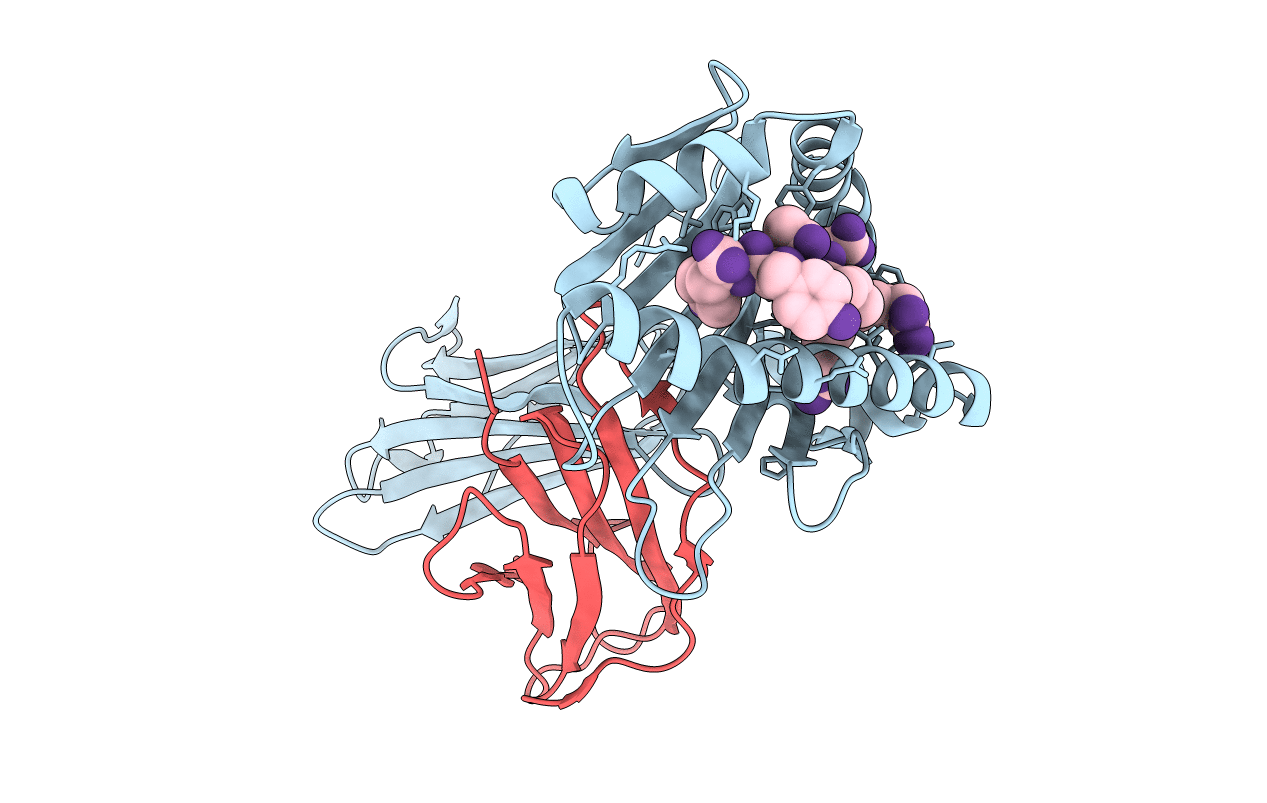
6IRL image
Deposition Date 2018-11-13
Release Date 2020-03-18
Last Version Date 2024-10-16
Entry Detail
PDB ID:
6IRL
Keywords:
Title:
Crystal structure of 8-mer peptide from avian influenza H5N1 virus in complex with BF2*1501
Biological Source:
Source Organism(s):
Expression System(s):
Method Details:
Experimental Method:
Resolution:
2.10 Å
R-Value Free:
0.21
R-Value Work:
0.18
R-Value Observed:
0.18
Space Group:
P 21 21 21

Macromolecular Entities
Polymer Type:polypeptide(L)
Molecule:MHC class I molecule
Gene (Uniprot):BF2
Chain IDs:A
Chain Length:273
Number of Molecules:1
Biological Source:Gallus gallus
Polymer Type:polypeptide(L)
Molecule:Beta-2-microglobulin
Gene (Uniprot):B2M
Chain IDs:B
Chain Length:101
Number of Molecules:1
Biological Source:Gallus gallus
Polymer Type:polypeptide(L)
Molecule:ARG-ARG-GLU-VAL-HIS-THR-TYR-T
Gene (Uniprot):PA
Chain IDs:C
Chain Length:8
Number of Molecules:1
Biological Source:Influenza A virus
Primary Citation
Structures of the MHC-I molecule BF2*1501 disclose the preferred presentation of an H5N1 virus-derived epitope.
J. Biol. Chem. 295 5292 5306 (2020)
PMID: 32152225 DOI: 10.1074/jbc.RA120.012713

Abstact

Lethal infections by strains of the highly-pathogenic avian influenza virus (HPAIV) H5N1 pose serious threats to both the poultry industry and public health worldwide. A lack of confirmed HPAIV epitopes recognized by cytotoxic T lymphocytes (CTLs) has hindered the utilization of CD8+ T-cell-mediated immunity and has precluded the development of effectively diversified epitope-based vaccination approaches. In particular, an HPAIV H5N1 CTL-recognized epitope based on the peptide MHC-I-β2m (pMHC-I) complex has not yet been designed. Here, screening a collection of selected peptides of several HPAIV strains against a specific pathogen-free pMHC-I (pBF2*1501), we identified a highly-conserved HPAIV H5N1 CTL epitope, named HPAIV-PA123-130 We determined the structure of the BF2*1501-PA123-130 complex at 2.1 Å resolution to elucidate the molecular mechanisms of a preferential presentation of the highly-conserved PA123-130 epitope in the chicken B15 lineage. Conformational characteristics of the PA123-130 epitope with a protruding Tyr-7 residue indicated that this epitope has great potential to be recognized by specific TCRs. Moreover, significantly increased numbers of CD8+ T cells specific for the HPAIV-PA123-130 epitope in peptide-immunized chickens indicated that a repertoire of CD8+ T cells can specifically respond to this epitope. We anticipate that the identification and structural characterization of the PA123-130 epitope reported here could enable further studies of CTL immunity against HPAIV H5N1. Such studies may aid in the development of vaccine development strategies using well-conserved internal viral antigens in chickens.

Legend

Protein

Chemical

Disease

Primary Citation of related structures
Feedback Form
Name
Email
Institute
Feedback