

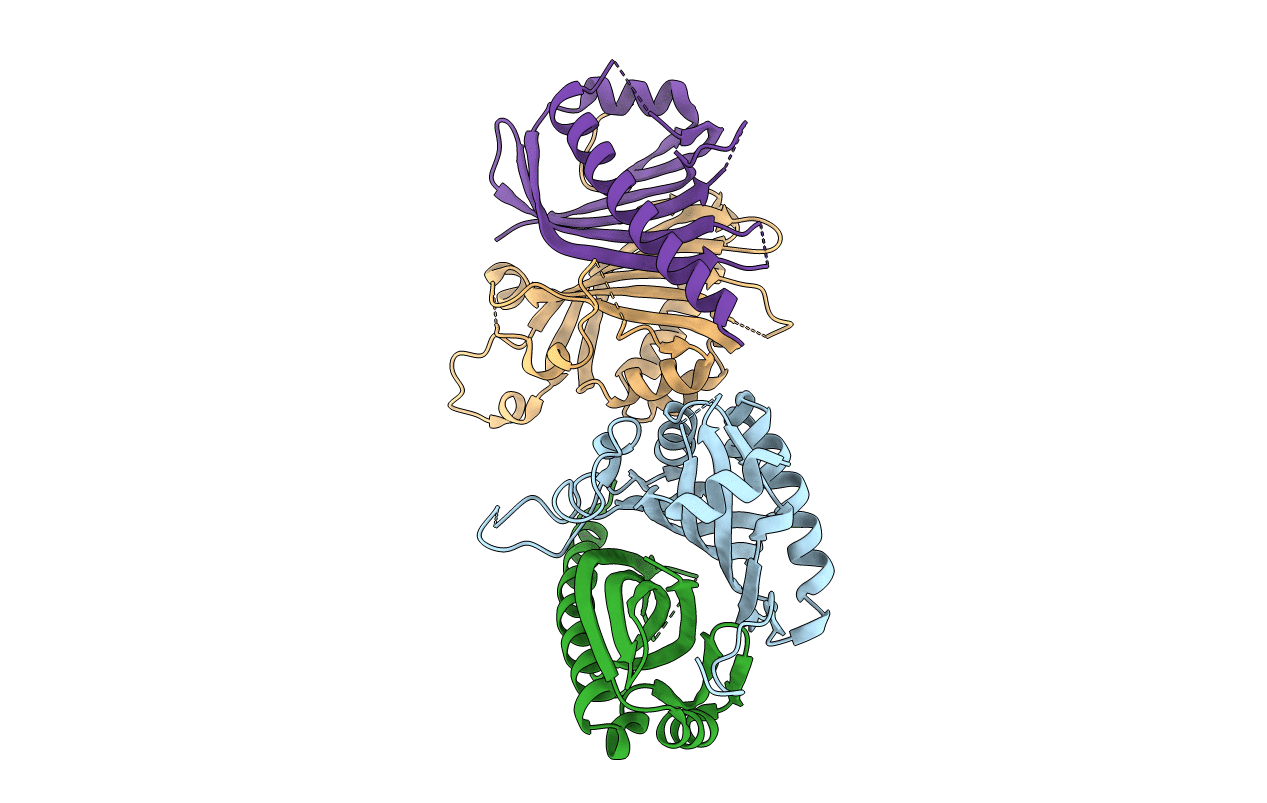
6IHJ image
Deposition Date 2018-09-30
Release Date 2019-08-14
Last Version Date 2023-11-22
Entry Detail
PDB ID:
6IHJ
Title:
Crystal structure of Drosophila Nxf1 NTF2 domain in complex with Nxt1/p15
Biological Source:
Source Organism(s):
Expression System(s):
Method Details:
Experimental Method:
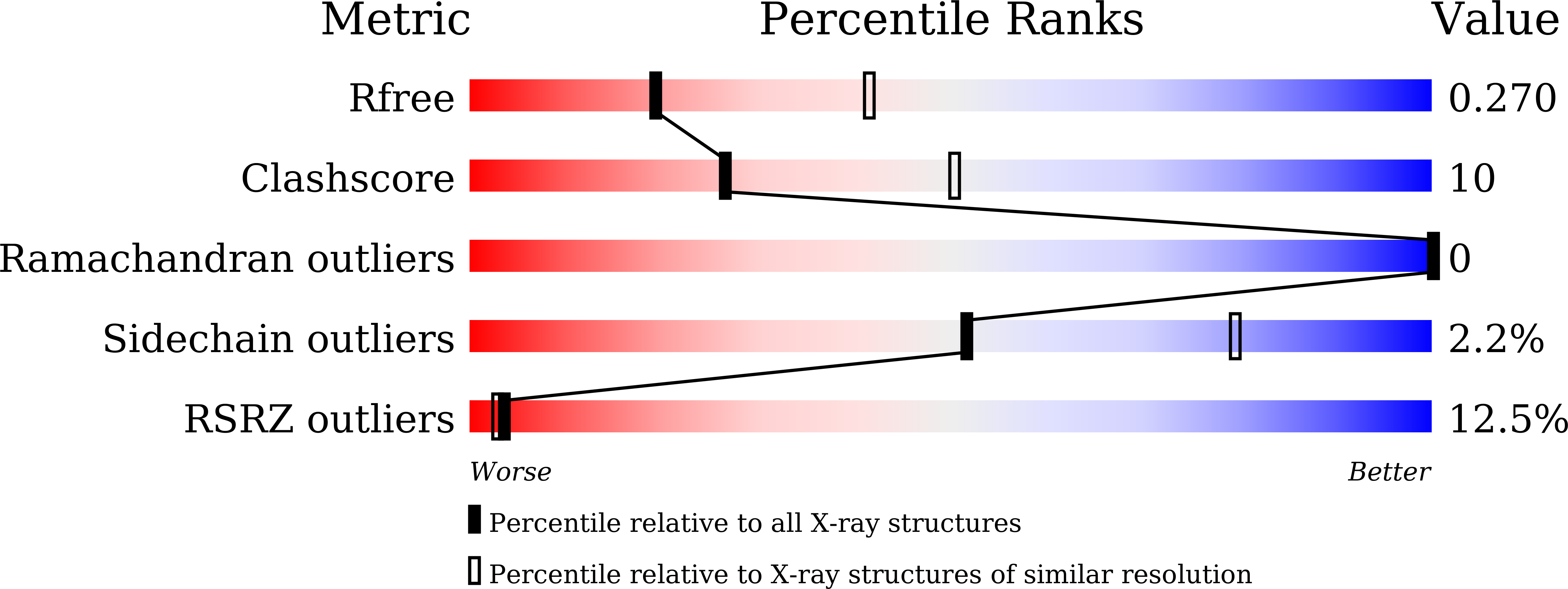
Resolution:
2.70 Å
R-Value Free:
0.26
R-Value Work:
0.22
R-Value Observed:
0.22
Space Group:
P 62
Macromolecular Entities
Structures with similar UniProt ID
Protein Blast
Polymer Type:polypeptide(L)
Molecule:Nuclear RNA export factor 1
Gene (Uniprot):sbr
Chain IDs:A, B (auth: C)
Chain Length:191
Number of Molecules:2
Biological Source:Drosophila melanogaster
Structures with similar UniProt ID
Protein Blast
Polymer Type:polypeptide(L)
Molecule:NTF2-related export protein
Gene (Uniprot):Nxt1
Chain IDs:C (auth: B), D
Chain Length:135
Number of Molecules:2
Biological Source:Drosophila melanogaster
Primary Citation
A Pandas complex adapted for piRNA-guided transcriptional silencing and heterochromatin formation.
Nat. Cell Biol. 21 1261 1272 (2019)
PMID: 31570835 DOI: 10.1038/s41556-019-0396-0

Abstact

The repression of transposons by the Piwi-interacting RNA (piRNA) pathway is essential to protect animal germ cells. In Drosophila, Panoramix enforces transcriptional silencing by binding to the target-engaged Piwi-piRNA complex, although the precise mechanisms by which this occurs remain elusive. Here, we show that Panoramix functions together with a germline-specific paralogue of a nuclear export factor, dNxf2, and its cofactor dNxt1 (p15), to suppress transposon expression. The transposon RNA-binding protein dNxf2 is required for animal fertility and Panoramix-mediated silencing. Transient tethering of dNxf2 to nascent transcripts leads to their nuclear retention. The NTF2 domain of dNxf2 competes dNxf1 (TAP) off nucleoporins, a process required for proper RNA export. Thus, dNxf2 functions in a Panoramix-dNxf2-dependent TAP/p15 silencing (Pandas) complex that counteracts the canonical RNA exporting machinery and restricts transposons to the nuclear peripheries. Our findings may have broader implications for understanding how RNA metabolism modulates heterochromatin formation.

Legend

Protein

Chemical

Disease

Primary Citation of related structures
Feedback Form
Name
Email
Institute
Feedback