

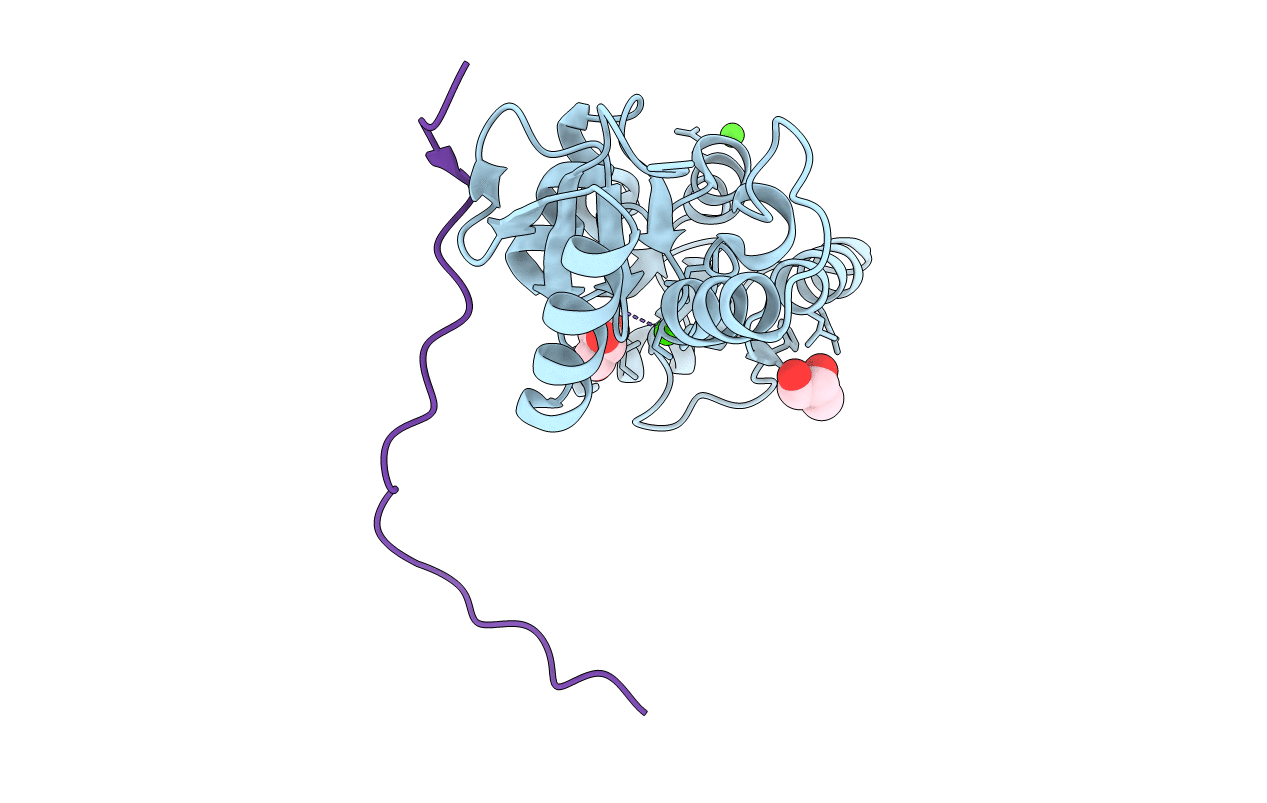
6HM3 image
Deposition Date 2018-09-12
Release Date 2018-10-17
Last Version Date 2024-11-06
Entry Detail
PDB ID:
6HM3
Keywords:
Title:
Crystal structure of Rad4 BRCT1,2 in complex with a Sld3 phosphopeptide
Biological Source:
Method Details:
Experimental Method:
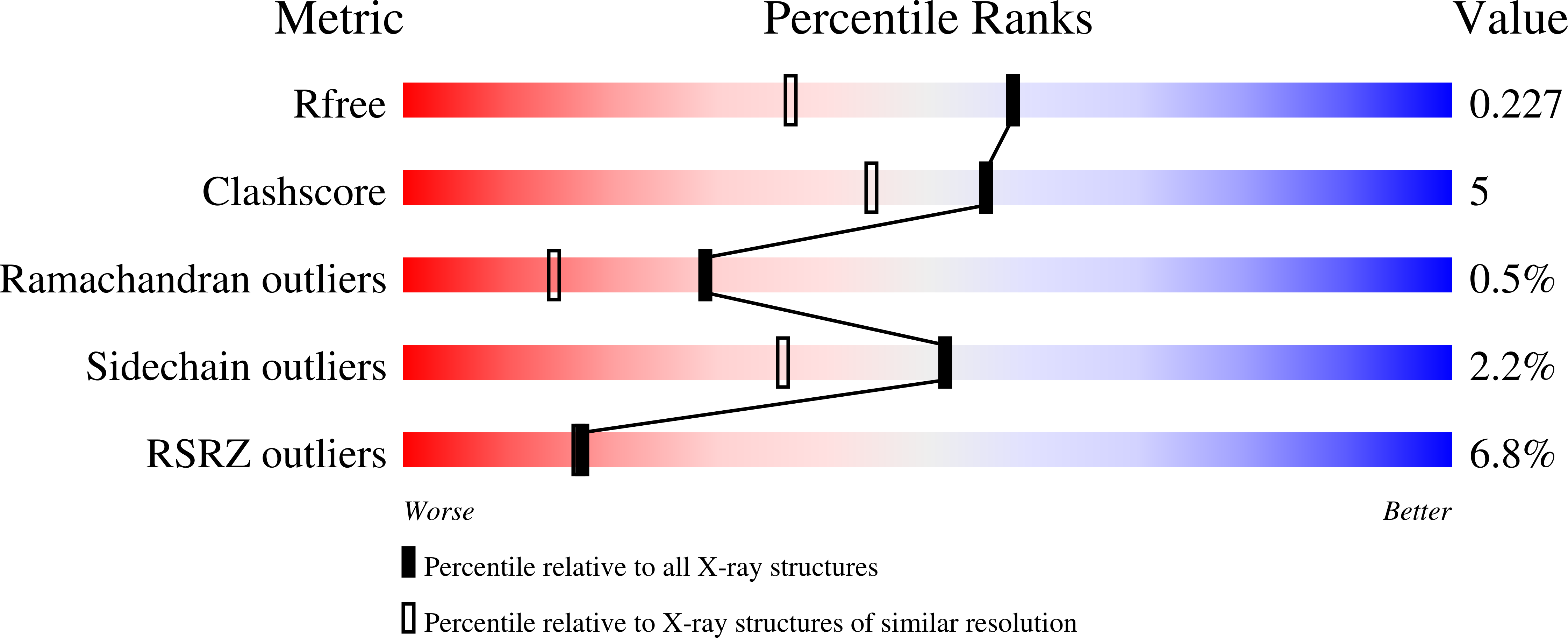
Resolution:
1.77 Å
R-Value Free:
0.22
R-Value Work:
0.19
R-Value Observed:
0.19
Space Group:
P 21 21 21
Macromolecular Entities
Structures with similar UniProt ID
Protein Blast
Polymer Type:polypeptide(L)
Molecule:S-M checkpoint control protei
Gene (Uniprot):rad4
Chain IDs:A
Chain Length:186
Number of Molecules:1
Biological Source:Schizosaccharomyces pombe (strain 972 / ATCC 24843)
Structures with similar UniProt ID
Protein Blast
Polymer Type:polypeptide(L)
Molecule:DNA replication regulator sld
Gene (Uniprot):sld3
Chain IDs:B
Chain Length:30
Number of Molecules:1
Biological Source:Schizosaccharomyces pombe
Modified Residue
Compound ID Chain ID Parent Comp ID Details 2D Image
TPO B THR modified residue
Primary Citation
BRCT domains of the DNA damage checkpoint proteins TOPBP1/Rad4 display distinct specificities for phosphopeptide ligands.
Elife 7 ? ? (2018)
PMID: 30295604 DOI: 10.7554/eLife.39979

Abstact

TOPBP1 and its fission yeast homologueRad4, are critical players in a range of DNA replication, repair and damage signalling processes. They are composed of multiple BRCT domains, some of which bind phosphorylated motifs in other proteins. They thus act as multi-point adaptors bringing proteins together into functional combinations, dependent on post-translational modifications downstream of cell cycle and DNA damage signals. We have now structurally and/or biochemically characterised a sufficient number of high-affinity complexes for the conserved N-terminal region of TOPBP1 and Rad4 with diverse phospho-ligands, including human RAD9 and Treslin, and Schizosaccharomyces pombe Crb2 and Sld3, to define the determinants of BRCT domain specificity. We use this to identify and characterise previously unknown phosphorylation-dependent TOPBP1/Rad4-binding motifs in human RHNO1 and the fission yeast homologue of MDC1, Mdb1. These results provide important insights into how multiple BRCT domains within TOPBP1/Rad4 achieve selective and combinatorial binding of their multiple partner proteins.

Legend

Protein

Chemical

Disease

Primary Citation of related structures
Feedback Form
Name
Email
Institute
Feedback