

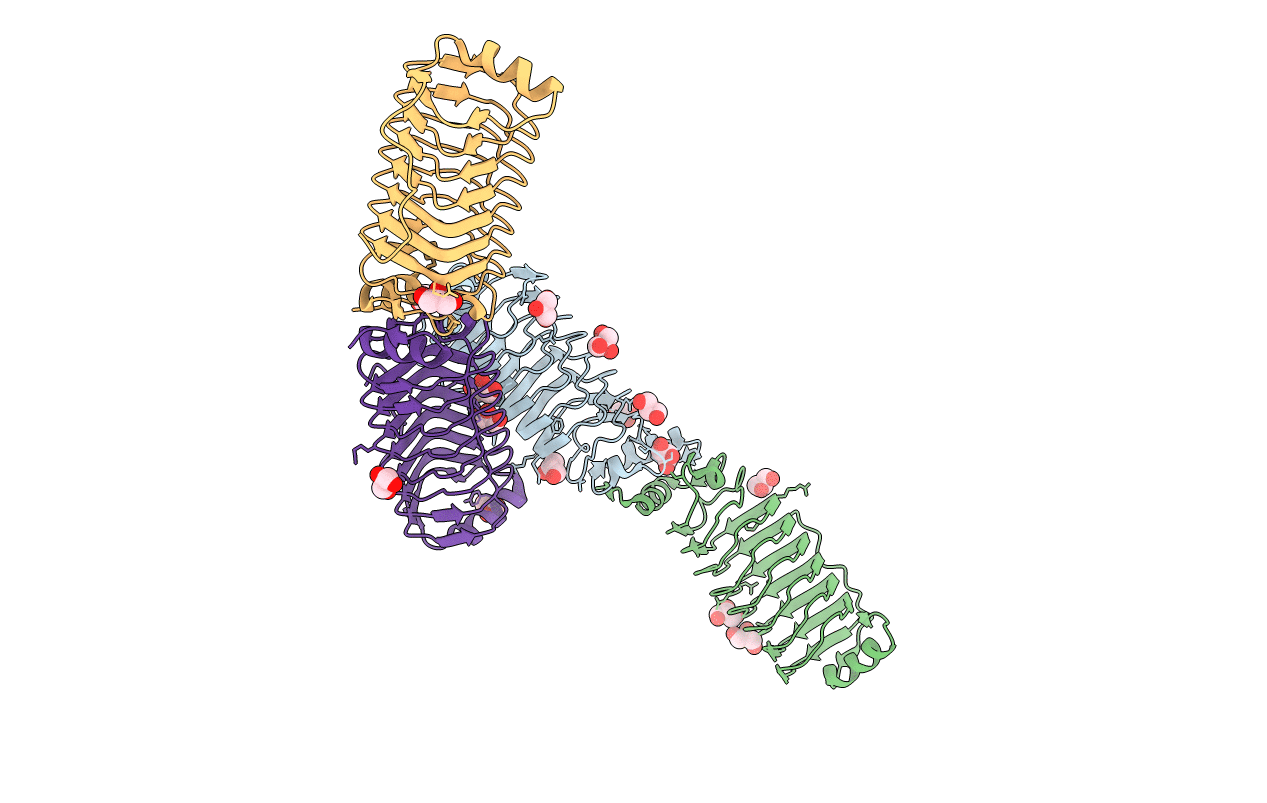
6FLS image
Deposition Date 2018-01-27
Release Date 2018-08-15
Last Version Date 2024-05-08
Entry Detail
PDB ID:
6FLS
Title:
Pentapeptide repeat family protein from Clostridium botulinum
Biological Source:
Source Organism(s):
Expression System(s):
Method Details:
Experimental Method:
Resolution:
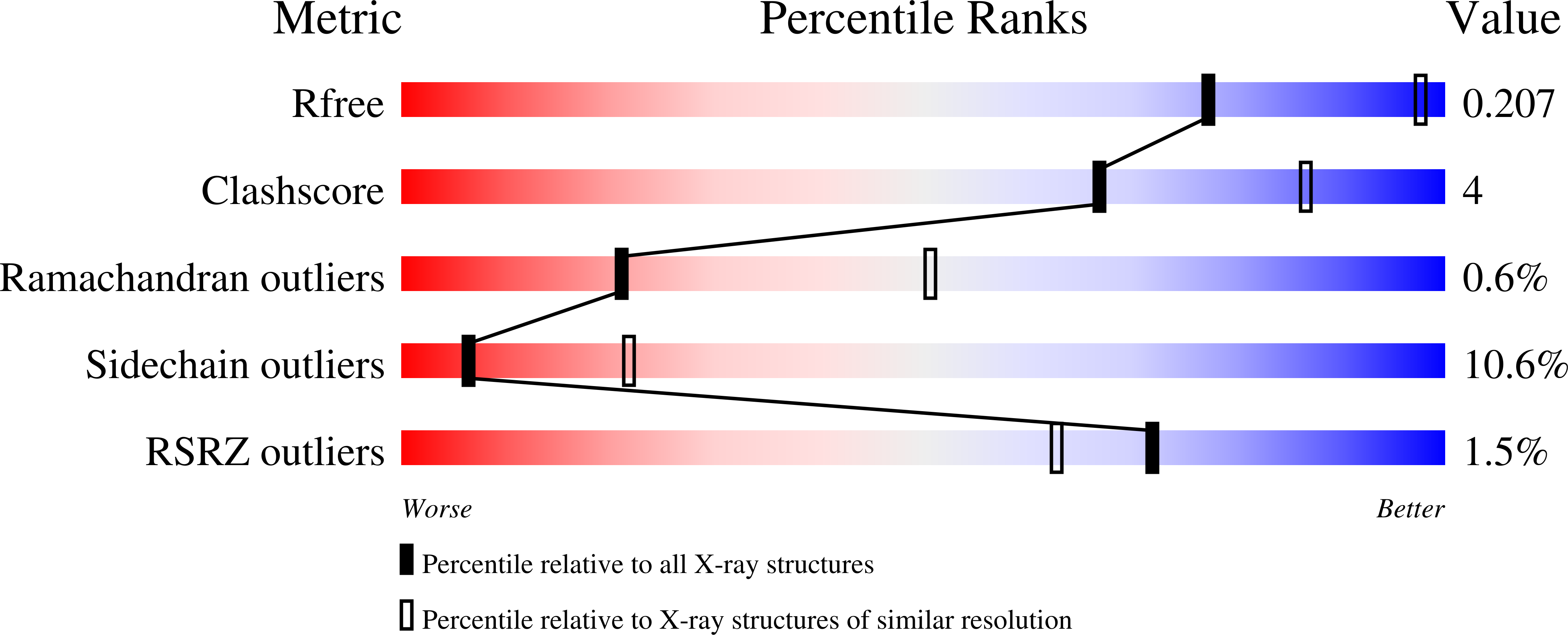
2.80 Å
R-Value Free:
0.20
R-Value Work:
0.16
R-Value Observed:
0.17
Space Group:
P 1 21 1
Macromolecular Entities
Polymer Type:polypeptide(L)
Molecule:Pentapeptide repeat family pr
Chain IDs:A, B, C (auth: D), D (auth: C)
Chain Length:239
Number of Molecules:4
Biological Source:Clostridium botulinum
Ligand Molecules
Primary Citation
Cotranslational Folding of a Pentarepeat beta-Helix Protein.
J. Mol. Biol. 430 5196 5206 (2018)
PMID: 30539762 DOI: 10.1016/j.jmb.2018.10.016

Abstact

It is becoming increasingly clear that many proteins start to fold cotranslationally before the entire polypeptide chain has been synthesized on the ribosome. One class of proteins that a priori would seem particularly prone to cotranslational folding is repeat proteins, that is, proteins that are built from an array of nearly identical sequence repeats. However, while the folding of repeat proteins has been studied extensively in vitro with purified proteins, only a handful of studies have addressed the issue of cotranslational folding of repeat proteins. Here, we have determined the structure and studied the cotranslational folding of a β-helix pentarepeat protein from the human pathogen Clostridium botulinum-a homolog of the fluoroquinolone resistance protein MfpA-using an assay in which the SecM translational arrest peptide serves as a force sensor to detect folding events. We find that cotranslational folding of a segment corresponding to the first four of the eight β-helix coils in the protein produces enough force to release ribosome stalling and that folding starts when this unit is ~35 residues away from the P-site, near the distal end of the ribosome exit tunnel. An additional folding transition is seen when the whole PENT moiety emerges from the exit tunnel. The early cotranslational formation of a folded unit may be important to avoid misfolding events in vivo and may reflect the minimal size of a stable β-helix since it is structurally homologous to the smallest known β-helix protein, a four-coil protein that is stable in solution.

Legend

Protein

Chemical

Disease

Primary Citation of related structures
Feedback Form
Name
Email
Institute
Feedback